My Approach: Integrating Yoga, Science, and Philosophy
Yoga is a logical process, not a shortcut. Here is how I combine ancient texts with engineering principles to help you build lasting stability.
Is there a list of asanas for specific diseases? In this video, I explain why yoga is not a prescriptive science but a holistic one that addresses the unique, multi-dimensional nature of an individual's health.
I discuss the safety of yoga for people with health conditions. With proper guidance from an experienced teacher and personalized modifications, yoga can be a safe and effective therapy for many ailments.
In our fast-paced world, rest is not a luxury; it is essential. I discuss the importance of balancing activity with adequate rest, drawing wisdom from the Bhagavad Gita's concept of 'Yukta Vihara' or a balanced lifestyle.
How do you stay motivated to practice yoga regularly? The key is to prioritize health and build a habit through 'Tapas' or disciplined effort, until the practice itself becomes the driving force.
What are the benefits of yoga and how long do they take to appear? While some benefits like relaxation can be immediate, the ultimate goal of yoga, or 'Samadhi', is a lifelong process that transcends timeframes.
Here, I share the story behind the name 'Yogavijnana'. It represents the union of Yoga (practice) and Vijnana (science), which is the core of my teaching philosophy and resonates with my background as an engineer.
Feedback is crucial for improvement. I explain my process of seeking honest feedback from students, especially in the initial stages, to create an open environment and continuously refine my programs.
A core insight from my teaching: the pressure to be perfect is a major source of stress. Yoga teaches us to focus on progress, not perfection, embracing the journey of gradual improvement.
I often remind my students that teaching yoga and practicing yoga are two different things. It is vital for teachers to maintain their personal practice to continue their own journey inward.
About My Approach: Yoga, Science, and Philosophy
I do not believe in handing out a generic list of asanas for every ailment. When we work together, we start by mapping out the 'why' behind your current physical or mental patterns. Whether you are dealing with chronic back pain or high-stress levels at work, we look at your lifestyle and physiological constraints first, then design a step-by-step process that actually fits your reality—not just a rigid set of poses.
The Intersection of Engineering and Ancient Wisdom
My journey began in the world of technology, and that systematic, logical mindset never left me. When I founded Yogavijnana, I wanted to create a space where 'Yoga' (practice) meets 'Vijnana' (science). This means our approach is inherently structured. We do not just perform poses; we study the movement, the breath, and the physiology behind why a particular sequence works for your specific body type.
Why Process Beats Prescription
You will often hear me say that Yoga is not a prescriptive science. If you have a problem, I cannot simply give you a 'pill' of yoga postures to fix it instantly. Instead, we focus on Abhyasa (consistent practice). The Yoga Sutras remind us that practice done consistently, for a long time, and with devotion, becomes firmly grounded. My job is to help you set that foundation.
The Role of a Teacher
The texts emphasize gurupadista margena—learning on the path shown by a teacher. A teacher sees the subtle misalignment you cannot feel yourself. Whether we are working on workplace posture correction, deep-dive Pranayama, or philosophy, my goal is to guide you safely through that process until your own practice becomes the primary driver of your health.
We keep it practical. If you are in a corporate setting, we use the chairs in your office to improve your back health. If you are a serious student, we dig into the science of how breathing affects your nervous system. Whatever your starting point, we approach it as a science to be explored, not just a workout to be completed.
Similar work from other experts
Browse through Curated picks from other experts on mytribe
 8
8


Integrating Ancient Yoga Philosophy Into Modern Life
My Yoga Lineage and Teaching Philosophy
The Philosophy of Yoga: Ancient Wisdom for Modern Life
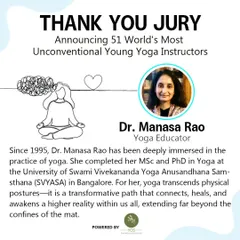
My Personal Path: Philosophy and Practice
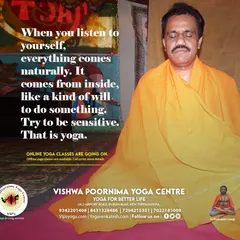
The Path to a Better Life: Philosophy and Transformation
Expert Talks & Yoga Philosophy
More from Corporate Yoga & Wellness by Yogavijnana
More services by Yogavijnana