Pranayama and Breathing Techniques for Beginners
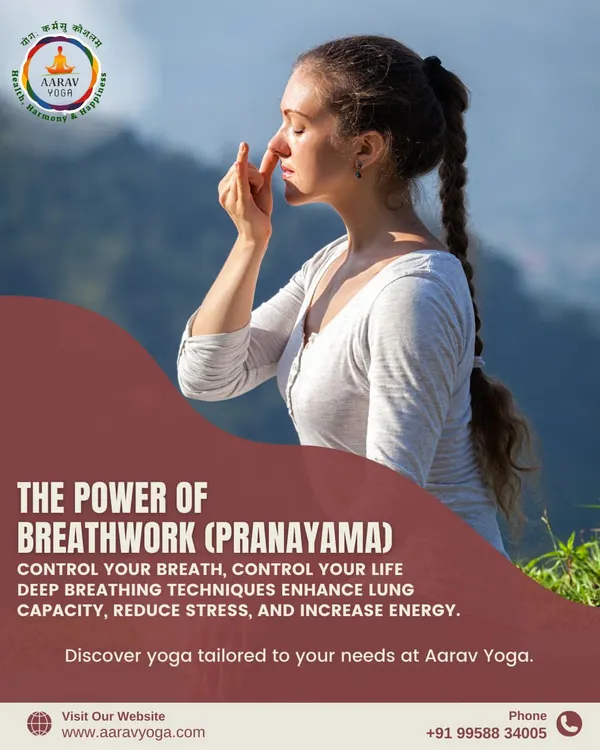
Breath is the easiest way to reset your day. Whether you feel stressed or just need more energy, these fundamental breathing techniques help ground you. Let's learn to breathe right, together.
**How to Practice Kapalbhati (Skull Shining Breath):** Kapalbhati is an energizing breathing technique. I explain the mechanics of the forceful exhalation and passive inhalation, and show variations in speed for beginners and more experienced practitioners. I also cover who should avoid this practice.
**The Difference Between Anulom Vilom and Nadi Shuddhi:** Are these two pranayamas the same? I clarify the key difference: Nadi Shuddhi includes breath retention (kumbhaka) between the inhale and exhale, making it a more advanced practice than the continuous flow of Anulom Vilom.
About Breathing for Calm (Pranayama)
Practicing pranayama effectively depends on timing and technique, not just effort. I always recommend doing these exercises on an empty stomach, ideally first thing in the morning, to ensure your body is ready to absorb the energy. Start slow with your breath—never force it—and keep your spine tall to allow your lungs to expand fully.
Pranayama is more than just deep breathing; it is a systematic approach to balancing your nervous system. Many students confuse common techniques, so I break them down to ensure you practice safely.
Anulom Vilom vs. Nadi Shuddhi
The primary difference lies in the retention of breath, or kumbhaka. Anulom Vilom is a continuous rhythmic flow, perfect for beginners looking to settle their minds. Nadi Shuddhi involves holding the breath for a second or two between inhalation and exhalation, which deepens the practice. I guide you through both, ensuring you start with the flow before advancing to retention.
Building a Safe Practice
Safety is non-negotiable in my classes. If you have high blood pressure, recent head injuries, or have undergone surgery, certain forceful techniques like Kapalbhati are not recommended. In my sessions, we focus on:
- Alignment: Keeping the spine straight and shoulders relaxed to maximize lung capacity.
- Modifications: Learning to pace your breath based on your current lung capacity.
- Consistency: Establishing a daily routine to manage stress and improve digestion.
Whether you are joining my group sessions or a private 1-on-1 package, I monitor your form via live video to offer real-time corrections. We often explain the finer points in Kannada for clarity—nimma bennannu straight aagi itkolli (keep your back straight)—because understanding the why behind a movement is just as important as the movement itself.
Similar work from other experts
Browse through Curated picks from other experts on mytribe
 9
9Master Your Breath, Master Your Mind with Pranayama
Pranayama: Master Your Breath for Calm & Energy
Breath & Stillness: Pranayama and Meditation
The Power of Breath: Guided Pranayama
Mindful Moments: Pranayama & Meditation
Pranayama and Meditation for Mental Clarity
More from Yoga for Beginners by Yoga for Cure
More services by Yoga for Cure