The Art of Tailoring: Our Process & Craft
True bespoke tailoring is a journey of 80 hours of handwork. Go behind the scenes to see how we blend traditional techniques like Kulti with a modern, precision-based fitting process.
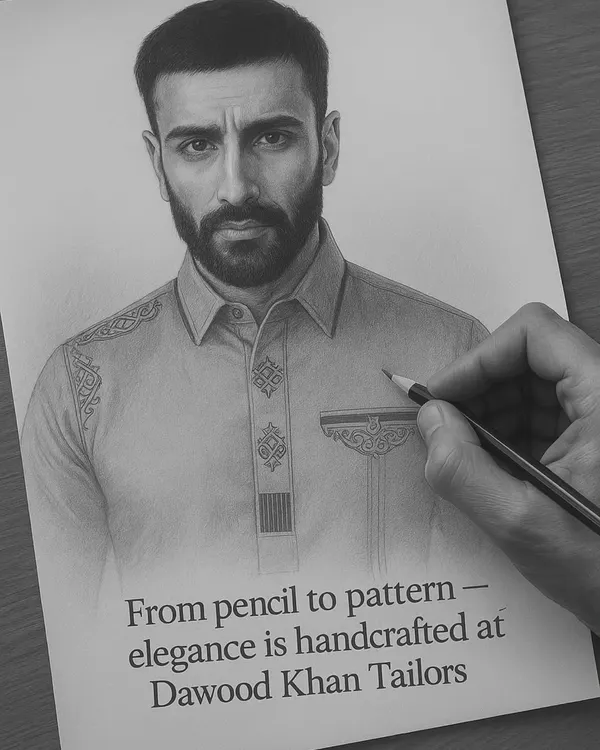
This is where it all begins. Our master cutters study over 30 measurements and a client's posture to create a unique paper pattern, a blueprint for the garment. This is the first step in a process that involves over 80 hours of handwork.
A highly skilled artisan is required for bespoke pattern-making. Here, our master cutter uses his experience and a precise eye for detail to draw the pattern directly onto the cloth, accounting for every nuance of the human form.
The baste fitting is a crucial and time-consuming part of the process. The garment is loosely stitched so our masters can see how the fabric drapes on the client's body. It's less about the fit at this stage and more about achieving the perfect balance.
A baste fitting in progress. Relying on a measuring tape alone is not enough. A cloth fitting allows our master tailor to see how the garment sits on the shoulders, neck, and back, making adjustments with large basting stitches.
This is the second fitting, where the full canvas and lining have been added. Now it's all about nitpicking. I am checking the back for cleanliness and making small adjustments to refine the fit to absolute precision.
A glimpse into the art of pad stitching, or 'Kulti'. An artisan carefully stitches the canvas to the lapel fabric. This traditional technique provides structure while ensuring the lapel has a natural, elegant roll.
An artisan's hand at work, creating delicate embroidery. This gentle giant, an elephant, is taking form one stitch at a time, showcasing the patience and skill that goes into our bespoke couture.
Our embroidery artisan, Mukhtaar ji, at his frame. He is the artist who translates your story into thread, diving into the depths of detail to bring your vision to life on fabric.
Watch creativity in action. This video shows the journey of a 3D camel embroidery, from a simple outline to a vibrant, multi-textured design full of character and life.
Our buttons are cross-stitched and hand-tacked, not machine-finished. This ensures they are sturdy and durable, and also allows for greater flexibility and a more refined aesthetic.
About The Art of Tailoring: Our Process & Craft
A truly bespoke fit isn't measured with a tape alone. During our baste fitting, we stitch the garment together with large white threads so we can see exactly how the fabric drapes across your shoulders and back. It is here that we catch the micro-adjustments needed for a second-skin feel, long before the final suit is sewn.
Beyond the Surface: The Full Canvas Construction
Most off-the-rack suits use glue to attach the canvas to the fabric, which can stiffen over time and peel away. Our suits use a full canvas construction where the horsehair canvas is hand-tacked to the fabric. This allows the jacket to breathe, move with your body, and mold to your shape over years of wear.
Kulti: The Secret to the Lapel Roll
If you have ever wondered why a high-end suit lapel looks soft and rounded rather than flat and stiff, it is due to 'Kulti' or pad stitching. Our artisans use this traditional technique to stitch the canvas to the lapel fabric by hand. It creates a subtle tension that gives the lapel a natural, elegant roll that you simply cannot achieve with machine-stitching.
The Anatomy of a Perfect Fit
Our process is built on precision, not speed. We start with over 30 measurements that account for your unique posture and shoulder slope, not just your chest size.
- Paper Patterns: We draft a unique paper pattern for every client, serving as the blueprint for your garment.
- The Baste Fitting: We don't just pin fabric; we construct a deconstructed version of your suit. This lets us check the sleeve pitch and waist suppression while you are moving, sitting, and standing.
- Hand-Finished Details: From the Surgeon's Cuffs with working buttons to the cross-stitched, hand-tacked buttons that offer better flexibility, every element is designed for performance as much as aesthetics.
Whether you are commissioning a formal Jodhpuri or a daily-wear shirt, the goal remains the same: clothes that feel like a second skin.
Similar work from other experts
Browse through Curated picks from other experts on mytribe

The Art of Custom Tailoring
 5
5
The Art of Custom Tailoring
Crafting Your Perfect Outfit
The Art of Our Couture Craftsmanship
The Bespoke Tailoring Process: Getting Your Perfect Fit
The Art of Bespoke Tailoring in Delhi
More from Bespoke Menswear (Formal & Business) by Threadsmith
More services by Threadsmith