My Training Methodology: Bridging Science and Performance
I don't just teach theory. My own training is the laboratory where I test the biomechanics, periodization, and velocity-based training protocols I use to coach others.
Hitting a 200kg trap bar deadlift. This lift is a great developer of total body strength and power, and its mechanics allow for high force production with less stress on the lumbar spine compared to a conventional deadlift.
Executing a power clean at 80kg, achieving a peak velocity of 2.05 m/s. I use VBT to ensure I'm training with maximal intent and hitting the velocity targets required for explosive power development.
A close-up of a heavy sumo deadlift. This lift requires immense grit and technical precision, targeting the glutes, hamstrings, and adductors while demanding significant core stability.
Working up to a 170kg sumo deadlift. Even when energy is low or recovering from an injury, smart, progressive loading allows for continued strength development.
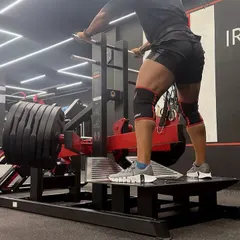
A montage of my training session, including front squats with accommodating resistance, Bulgarian split squats, and Nordic hamstring curls. This demonstrates how I structure a session to target multiple qualities like maximal strength, unilateral stability, and eccentric hamstring strength.
A complex training pair: a heavy front squat followed immediately by a medicine ball throw and a split jerk. This method uses post-activation potentiation to enhance rate of force development (RFD) and explosive power.
A dynamic training session featuring hang power snatches, banded back squats, and box jumps. This workout is designed to improve impulse and explosive strength across different movement patterns.
A training block combining max power (cleans), max strength (back squats), and hypertrophy (rest-pause Bulgarian front squats). This is an example of how I apply undulating periodization principles to my own programming.
An overhead Bulgarian split squat with variable resistance. This advanced exercise challenges unilateral stability, core stiffness, and shoulder mobility all at once.
Practicing the split jerk. This Olympic lift variation is a pure expression of vertical power, requiring precise timing, coordination, and stability to receive the bar overhead.
About Practice What I Preach: My Own Training
Before I integrate a new modality into an athlete's program, it is already in my routine. Take Velocity Based Training (VBT) for example. When I perform a power clean, I am not just monitoring the weight on the bar; I am tracking peak velocity to ensure I am hitting the power-to-weight target required for explosive development. If my velocity metrics drop below the programmed threshold, I adjust volume in real-time. This is how I ensure my coaching is rooted in live data rather than static textbook assumptions.
The Laboratory of My Own Training
I view my training as an extension of my coaching philosophy. If I am guiding a cricket player or a powerlifter through an intensive strength phase, I need to know exactly how those stressors feel and how they respond to acute recovery strategies.
Applying Advanced Periodization In my own sessions, I utilize undulating periodization, which you can see in my weekly blocks. I don't rely on linear progression alone. By rotating focus between max strength, power, and hypertrophy, I manage central nervous system fatigue while maintaining a high training stimulus. This is the same logic I apply when programming for athletes who have tight tournament schedules or multiple training sessions per day.
Biomechanics and Technical Precision My focus on biomechanics is non-negotiable. Whether I am teaching a client or executing a heavy sumo deadlift myself, the objective is maximal force production with optimal joint stress distribution. You will often see me using accommodating resistance, like bands or chains, to modify the force curve of a lift. This forces the body to adapt to resistance where it is mechanically strongest, helping to overcome sticking points.
What This Means for My Coaching
- Evidence-Based, Not Opinion-Based: Every program I build is stress-tested. If a training variable does not produce the expected adaptation in my own training, I do not introduce it to my clients.
- Data Literacy: I teach coaches how to look beyond the weight on the bar. Whether it is using Excel for load management or analyzing bar path with video analysis, my mentorship focuses on the tools that actually improve an athlete's game.
- Grit and Intent: Science dictates the method, but intent dictates the outcome. I train with the same focus I demand from my athletes, keeping the mental side of the game sharp alongside the physical.
Similar work from other experts
Browse through Curated picks from other experts on mytribe
Strength and Conditioning Research & Training Insights
The Science of Strength: Debunking Fitness Myths
 12
12
Science-Backed Training Principles for Peak Performance
My Evidence-Based Approach to Training Philosophy
Advanced Training Protocols for Muscle Growth & Strength
My Personal Gym Workout Routines & Techniques
More from Professional Development for S&C Coaches by Snehit Rai
More services by Snehit Rai