Reimagining Materials and Architectural Form
We believe architecture is a conversation between land and built form. Our material experiments focus on taking traditional, locally-sourced elements and re-engineering them for modern durability and climate response.
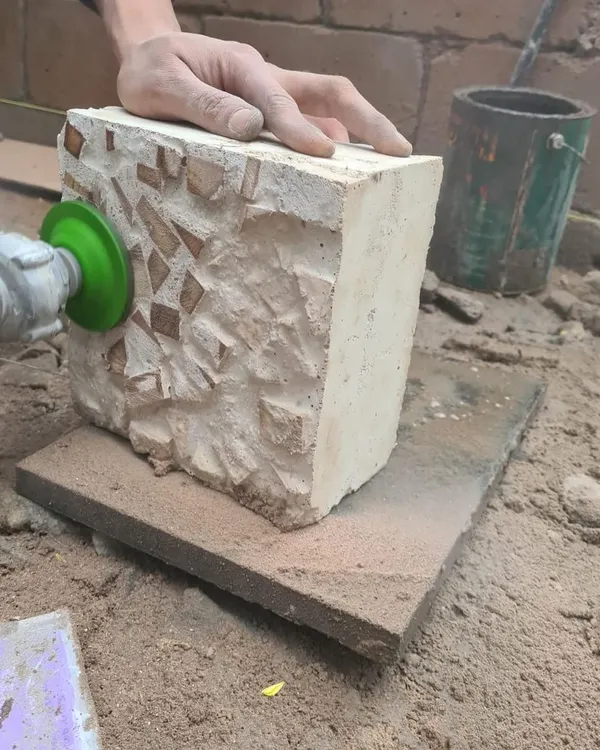
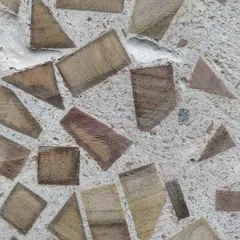
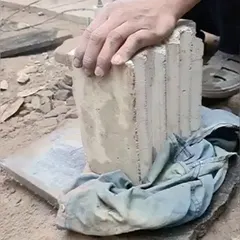
For Stone Print Villa, we revived the use of Jaisalmer yellow sandstone by developing a blending process with lentil paste and jaggery sap. This strengthened the porous stone, allowing for the fine chiselling and precision cuts seen in these on-site application photos.
This diagram illustrates our stone blending process. By treating the stone dust with natural binders and a resin coat, we created a workable material that retained its original character but was durable enough for intricate facade work.
The corner of Stone Print Villa is wrapped in modular panels cast from a stone-resin composite and cut by CNC. The same unit scales across the facade, flipping at junctions to create a continuous, rhythmic pattern that articulates the building's form.
The entrance of Stone Print Villa showcases the result of our material experimentation. The facade is clad in two types of Indian stone and our custom stone-resin prototype, creating a rich tapestry of textures, patterns, and ornamentation.
The folded stone-resin screens at Stone Print Villa act as a breathable skin. Developed through multiple iterations, the geometry is calibrated to manage glare and encourage ventilation, demonstrating a climate-responsive approach to facade design.
For a residence in Hapur, we designed bespoke metal "shoes" as protective screens. These elements provide a distinct identity to the elevation while addressing functional needs like ventilation and security.
Fabricated from 8mm thick metal sheets, these screens are placed in a rhythmic pattern of upright and rotated elements. This arrangement gives the facade a balanced yet dynamic look while addressing the local issue of monkey menace.
Thatch is one of the oldest roofing techniques, but its high maintenance is a challenge. We are exploring how to evolve this vernacular material, questioning whether it can be treated or hybridized to perform in a contemporary context.
For one project, we pivoted from natural to synthetic thatch to address longevity and weather durability. While it was an unusual choice for us, it was a maintenance-driven decision that did not compromise on the look and finish.
We are always exploring bold structural forms. This sketch over a site photo shows our concept for a residential project in Noida, which kicks off with a massive 31-foot wide concrete arch cast on-site, creating a raw, powerful statement.
About Material & Form Exploration
To make Jaisalmer sandstone work for fine facade detailing, we developed a blend using local ingredients like lentil paste, jaggery, and resin. This allowed us to cast intricate motifs that hold their strength and color, proving that traditional materials can solve contemporary structural challenges without losing their soul.
For us, a facade is not just a visual boundary. It is a breathing skin. We treat material experimentation as a form of research, constantly asking how ancient techniques can perform in modern urban conditions. Whether it is Jaisalmer stone or repurposed metal, we look for ways to make the material work harder and last longer.
Why Material Matters
We often find that standard construction practices overlook the potential of local resources. By blending stone dust with resin and organic binders, we create new composites that offer the warmth of traditional sandstone with the precision of CNC manufacturing. This approach lets us achieve complex geometries, such as folded screens or rhythmic panels, that respond to sun paths and airflow without requiring expensive, imported alternatives.
Climate-Responsive Engineering
Our designs are rarely static. We analyze the specific environmental stressors of a site. In Hapur, for instance, we used 8mm metal screens to create protective barriers that also manage ventilation, effectively shielding the interiors from harsh light and external disruptions. This is not just about aesthetics. It is about creating a building that feels comfortable to live in throughout the year, even in the peak heat of May.
The Process of Exploration
We do not believe in templates. Every facade begins with site analysis, followed by material prototyping. We develop 1:1 scale mockups to test durability and weathering before finalizing a design. This rigorous process ensures that the architectural form we propose is buildable and retains its character over time. We invite clients who are willing to experiment and look beyond the conventional, as we believe true innovation often lies in the balance between modern engineering and the memory of materials.
Similar work from other experts
Browse through Curated picks from other experts on mytribe
 14
14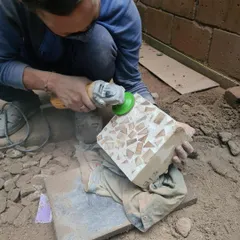
The Art of Materiality
 4
4
The Art of the Facade: Designing Buildings That Breathe
 12
12
Facade Design and Materiality for Modern Homes
 28
28
Craftsmanship and Materiality in Architectural Design
 32
32
Sculpted Exteriors & Dynamic Facades
 12
12
Material Craft: Bamboo, Stone & Upcycled Elements
More from Facade Design & Material Innovation by SIAN Architects
More services by SIAN Architects