Demystifying the Legal Process
The legal system should not be a maze. I break down FIRs, court petitions, and Supreme Court procedures so you are not just a bystander in your own case. Let's make the law work for you.
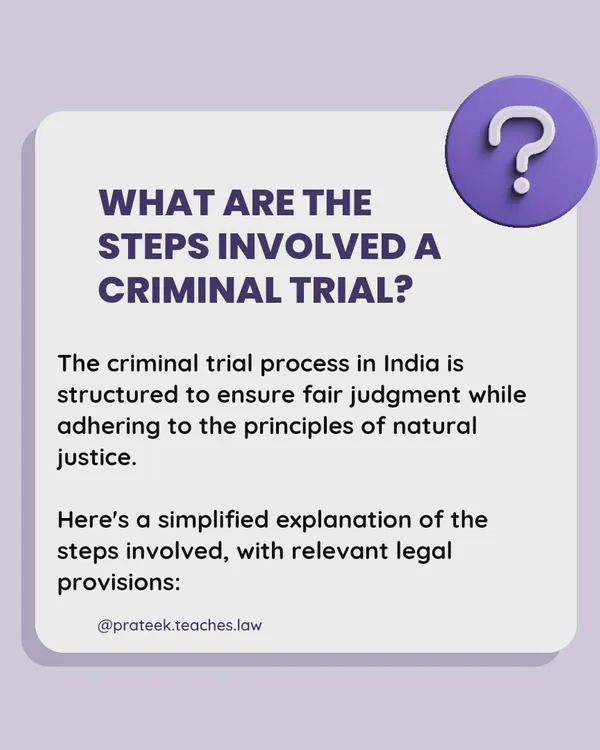
Understanding the journey of a criminal case is the first step to navigating it. This graphic provides a clear overview of the stages of criminal proceedings in India.
The pre-trial stage is critical. Here, I explain the initial steps, from filing information with the police for cognizable and non-cognizable offenses to the process of investigation and arrest.
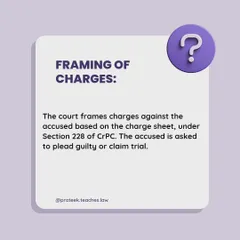
The trial stage is where the core of the legal battle happens. This section outlines the key steps, including the presentation of prosecution and defense evidence, final arguments, and the judgment.
The case doesn't always end with the trial court's decision. I explain the post-trial stage, which includes the process for filing an appeal or revision to a higher court and the final execution of the sentence.
Property disputes can be incredibly stressful, whether it's illegal occupation (kabza), family drama, or fraudulent transfers. I outline the specific legal actions you can take, from filing a suit for possession and getting an injunction to initiating criminal proceedings for forgery under IPC 420.
Abetment of suicide, covered under Section 306 of the IPC and now BNS Section 108, is a serious charge. If a person is proven to have intentionally instigated or aided in a suicide, they can be held legally accountable, but proving intent requires strong evidence.
An injunction order is a powerful legal tool to stop someone from causing you harm, especially in defamation cases. I explain how you can get an emergency ex-parte injunction to prevent the spread of false statements and protect your reputation.
Many people, including young lawyers, are often confused about legal terminology. Here, I clarify the fundamental difference between a 'petition', which is a formal request to a court, and a 'case', which is a dispute between two parties that the court resolves.
Articles 32 and 226 of the Constitution both provide remedies for enforcing your rights, but they are not the same. I explain how Article 32 is a fundamental right to approach the Supreme Court for violation of fundamental rights, while Article 226 is a broader constitutional remedy for High Courts to enforce legal rights.
A Special Leave Petition (SLP) and a Civil Appeal are two different ways to approach a higher court. I clarify that an SLP, governed by Article 136, is a discretionary power of the Supreme Court for cases of gross injustice, whereas a civil appeal is a formal process to rectify errors of law.
About Demystifying the Legal Process
Understanding the stages of a criminal case is not just about reading the text, it is about knowing your next move. I do not give you false hopes with legal jargon. I sit with you, analyze the chargesheet or the court order, and we map out exactly where the case is, where it can go, and what documents we need to assemble right now to challenge the prosecution effectively.
Strategy Over Theory
Law is not just about books. It is about what happens in the courtroom. Whether you are dealing with an FIR, trying to understand the shift from IPC to BNS, or preparing a Special Leave Petition for the Supreme Court, clarity is your first weapon. My approach is simple: I cut through the confusion to help you understand your legal standing.
Navigating Criminal Proceedings
From the moment an FIR is registered, the clock starts ticking. I guide you through each phase, including investigation, chargesheet scrutiny, and the trial itself. If you are struggling with new legal frameworks like the Bharatiya Nyaya Sanhita, I help you correlate the sections with the old IPC so you are not left guessing.
The Appellate Edge
If a lower court has erred, the battle does not end there. I specialize in explaining the distinctions between a regular appeal, an SLP, and a curative petition. These are not just procedures. They are choices that determine whether your voice is heard at the highest level.
My Philosophy
I am a first-generation lawyer. I built my practice without a godfather, and I fight every case with that same energy. If you are a law student or a client, my goal is the same: to remove the mystery behind the law. If you have been wronged, the system is designed to be tough, but it is not impenetrable. Let's build a strategy that works.
Similar work from other experts
Browse through Curated picks from other experts on mytribe
 7
7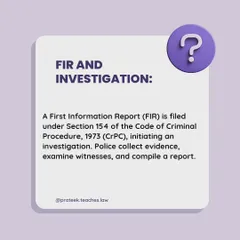
Understanding the Indian Criminal Justice Process
Know Your Rights: Police & Court Procedures
Understanding the Legal Process: Simple Guide to Court Procedures
Know Your Rights: Legal Explainers for Real-Life Situations
Understanding Criminal Law & Court Procedure
Criminal Law Explained: Understand Your Rights and Procedures
More from Criminal Law by Pooja Khandelwal
More services by Pooja Khandelwal