The Importance of a Structured Dog Walk
A daily walk is the foundation of a happy, balanced dog. If you are struggling with chewing or hyperactivity, the answer often starts with how you walk your best friend.
As a dog behaviorist, I always emphasize making a daily structured walk a habit. It's the foundation for a calm and happy dog. Here I am with a happy Shih Tzu, ready for our walk.
These two French Bulldogs are enjoying their time on the lawn, but the need for a structured walk remains. Off-leash play is great, but a leashed walk provides a different kind of mental exercise and discipline.
Walks are a dog's primary way to de-stress by sniffing and exploring the world. This collage shows a happy Golden Retriever and other dogs engaging their most powerful sense, their nose.
Chewing, excessive barking, and hyperactivity are often just signs that your dog has pent-up energy. A good, structured walk is one of the simplest and most effective solutions to these common behavioral issues.
A calm, structured walk builds a balanced dog and strengthens your bond. This collage shows me working with various breeds, reinforcing the idea that every walk is a training opportunity.
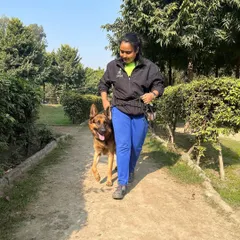
Walk time for this confident Pitbull. Notice his purposeful stride. A structured walk isn't about letting the dog pull you; it's about walking together in a calm, controlled manner.
A happy Pitbull exploring the greenery during his walk. Allowing them moments to sniff and investigate their surroundings is a crucial part of a fulfilling walk.
About The Importance of a Structured Walk
Most people think walking is just for bathroom breaks, but it is actually the primary tool for mental stimulation and bond building. If your dog is pulling on the leash or acting out, it is rarely about them being 'naughty.' Usually, they just need more structure. Try changing your pace frequently and incorporating short 'sit' or 'stay' commands during your walk—this forces them to engage their brain rather than just their legs. A walk is a two-way conversation, not a race to the next pole.
Beyond the Bathroom Break
Many pet parents in Gurgaon tell me their dogs are 'hyperactive' or 'destructive' at home. Often, the solution isn't more toys—it's a better walk. When a dog is on a structured walk, they aren't just physically burning energy; they are practicing discipline.
Why Structure Changes Everything
- Mental Engagement: When you let your dog sniff, they process information. It is exhausting for them, which is exactly what we want.
- Leash Manners: A walk is where you establish hierarchy. If your dog pulls, you are following them. I teach owners how to reclaim that lead, turning the walk into a training session.
- Desensitization: Whether it is the sound of traffic or seeing other dogs, a controlled walk helps your dog stay calm amidst distractions. This is crucial for anxious breeds.
My Approach to Walking
At Pet Lovers Hut, whether we are in our Gurgaon sector 63A facility or our Chattarpur farm, we treat walks as 'working time.' We use the environment—the grass, the sounds, the space—to reinforce commands. If you are struggling with leash pulling or separation anxiety, do not just hope it gets better. Use the walk to communicate with your dog. If you are consistent with your routine, you will see a massive shift in their behavior at home within a few weeks.
Similar work from other experts
Browse through Curated picks from other experts on mytribe
Stress-Free Walks: Teaching Your Dog to Enjoy the Journey
Calmer Walks and Dog Socialization in Bangalore
Leash Manners & Stress-Free Walks

Mastering the Walk: Calm Leash Training in NCR
Leash Walking Essentials: Transform Your Daily Walks

Leash Manners & Reactivity Training for Calm Walks
More from Dog Behavior and Training by Pet Lovers Hut
More services by Pet Lovers Hut