Stress-Free Walks: Teaching Your Dog to Enjoy the Journey
Walking your dog shouldn't feel like a high-stakes tug-of-war. I help you trade the frustration of pulling for a calm, connected stroll where your dog actually gets to be a dog.
I'm always learning how to better listen to what my dogs are telling me on walks. Here are five changes I've made, including using a long leash and letting them lead the way, that have made our walks so much more enjoyable and relaxing for everyone.
Waking up in the dark and cold for an early morning walk has been a game-changer for my reactive dogs. The quiet environment with fewer people, cars, and other dogs allows them to relax, sniff, and just be dogs without the constant stress of their triggers.
Success in reactivity training isn't about never having a reaction again. It's about seeing if your dog feels safe, how quickly they can recover from a reaction, and if they are less on-edge afterwards. It's about progress, not perfection.
Did you know that five minutes of sniffing can be more tiring for a dog than a 30-minute run? Letting this husky puppy explore the world with his nose is a powerful way to calm his mind, build his confidence, and strengthen our bond.
A gentle reminder to myself today. I caught myself rushing Maya to 'aage chal' (move forward) when she wanted to turn back and sniff something. I had to remember, the walk is for her. What's the hurry? Letting them explore is mental enrichment.
This is Panda, who has fear-based reactivity. Working with a professional helps set proper expectations and teaches you, the handler, critical skills. We are using pattern games and managing his environment to help him feel safer on walks.
Using a long leash is one of the safest ways to give your dog freedom on a walk. It allows them to sniff and explore naturally, which is essential for decompression, while still ensuring they are safe and cannot run into traffic or other situations.
One of the easiest ways to improve your dog's walk is to reward the behaviors you want to see more of. When this French Bulldog walks calmly by my side, I make sure to let him know with verbal praise and the occasional treat.
A long leash is one of the most versatile tools for force-free training. It's perfect for practicing recall from a distance, allowing safe greetings with other dogs, and giving your dog a sense of freedom while ensuring they remain safe.
Your leash is a safety belt, not a steering wheel. Constant pulling and yanking on the leash only creates tension and teaches your dog to pull back. A loose leash encourages a calm walk and shows your dog that you trust them.
About Stress-Free Walks
Most people view the leash as a steering wheel to pull their dog in the right direction, but that constant tension often creates the exact resistance you are trying to fix. I teach you to view the leash as a safety belt instead—a loose connection that gives your dog the agency to sniff, explore, and decompress without the pressure of a 'march' to the finish line.
When we treat walks as a 'task'—something to get done in 20 minutes—we miss the most important part of our dog's day: mental enrichment. A 15-minute sniffy walk can be more tiring for a dog than a 30-minute run. Allowing your dog to 'read the news' through their nose isn't just fun for them; it is vital for their mental health.
The Long-Leash Shift
Moving from a short lead to a long-line (15ft+) completely changes the dynamic. It allows for safe exploration while keeping them secure. I work with clients in Gurugram to help you use these tools effectively, turning 'aage chal' (move forward) sessions into opportunities for connection.
Managing Reactivity
If your dog lunges at cars or other dogs, it is usually fear, not 'bad' behavior. We focus on distance, threshold testing, and helping them recover from their triggers. Success in leash reactivity training isn't about never having a reaction again; it is about seeing if your dog feels safe and how quickly they can come back to center.
How We Will Work Together
Whether you are dealing with constant leash pulling or a puppy who is over-excited by the environment, my approach is rooted in science-based, force-free methods. We skip the 'quick fixes' and 'punishment' that break trust. Instead, we look at the 'why'—is your dog over-stimulated, scared, or just needing more mental fatigue? We will practice loose-leash walking, pattern games, and decompression walks that make life easier for both of you.
Similar work from other experts
Browse through Curated picks from other experts on mytribe
Stress-Free Walks: Leash Training & Reactivity
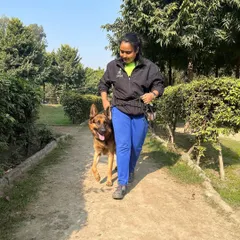
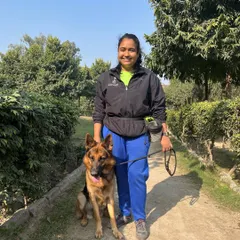
Mastering the Walk: Calm Leash Training in NCR
Leash Manners & Stress-Free Walks
Mastering the Walk: Leash Skills & Sniffaris
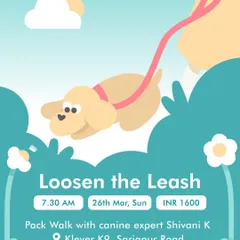
Leash Manners & Reactivity Training for Calm Walks
Leash Manners & Calm Walks for Your Dog
More from Dog Behavior Modification & Training by Aishani Mathur
More services by Aishani Mathur