Modern Institutional Design and Campus Architecture
We believe educational spaces should inspire growth. Explore our conceptual work for an institutional campus in North Karnataka, where we balance modern geometry with functional learning environments.
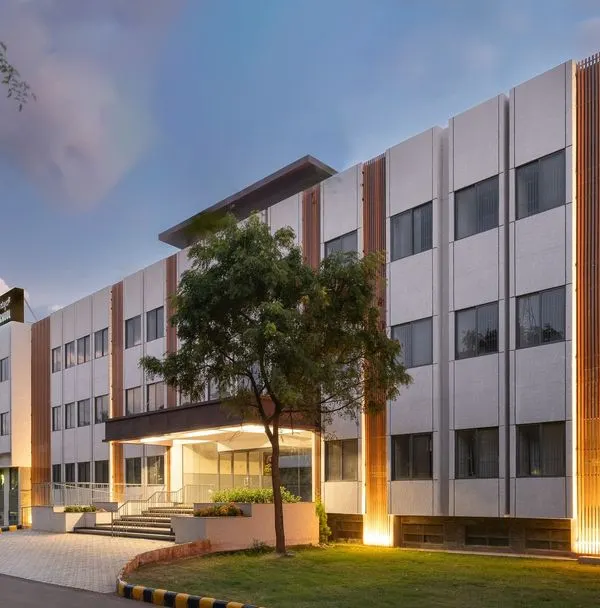
An evening render of the upcoming institute, focusing on the building's layered facade and open corner. The internal lighting transforms the building at night, revealing the activity within and highlighting the structural elegance of the open balconies and recessed spaces.
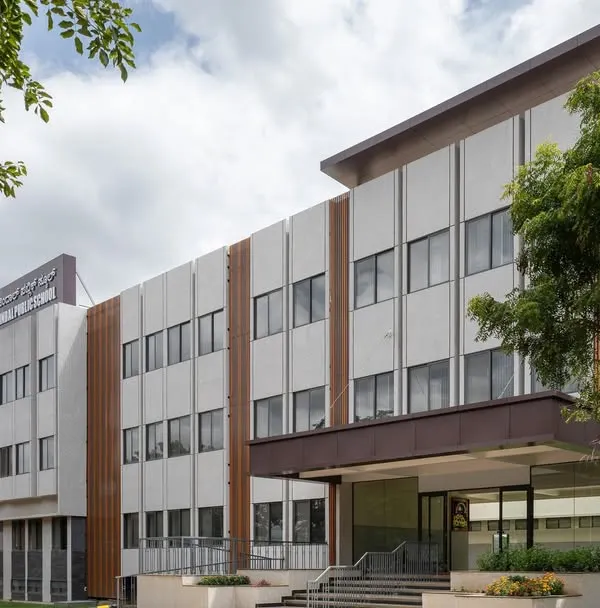
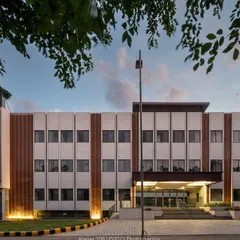
This view captures the long, rhythmic facade of the institutional building. The repetition of windows and structural bays creates a sense of order and scale, while the wood-paneled sections add warmth and texture to the otherwise modern and clean exterior.
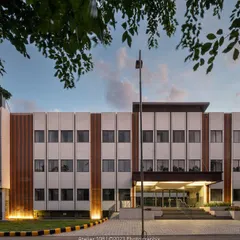
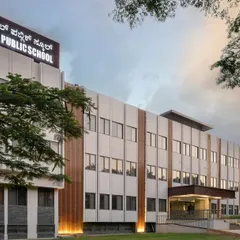
A render showing an alternative material palette and massing for the same North Karnataka institute. This exploration uses horizontal bands and a more solid, stone-like texture to give the building a grounded and monumental feel, showcasing our versatility in refining a design concept.
About Modern Institutional Design: Exploring Form & Light
Designing for institutions is different than designing a home because you are building for community, not just a single family. In this North Karnataka project, we moved away from rigid block designs to explore how recessed balconies and layered facades could pull natural light into the building core, creating spaces that feel airy rather than institutional. We prioritize sightlines and movement patterns here, ensuring students find natural gathering spots in their daily routine.
Institutional architecture demands a careful balance of aesthetic intent and long-term utility. In this campus design, our primary focus was breaking down large building masses to avoid the overwhelming, boxy look often found in educational facilities. We treated the facade as a rhythmic element, using vertical bays to control how sunlight enters classrooms throughout the day.
Materiality and Light
The renders showcase two different directions we explored. One version emphasizes transparency with large glass sections and open balconies, while the second uses stone-like textures to create a more grounded, monumental feel. In both, we used wood-paneled sections to add warmth to the exterior. This is not just about how the building looks, but how the facade depth provides passive cooling and shading, which is crucial for comfort in North Karnataka's climate.
Master Planning Approach
Beyond the exterior, our process involves rigorous master planning. We look at:
- Circulation Flow: How students move from administrative blocks to classrooms and play areas.
- FSI Optimization: Maximizing usable space without compromising on open courtyards.
- Functional Zoning: Separating high-traffic common areas from quiet learning zones.
If you are planning an institutional project, these are the early stage decisions that define the project budget and building efficiency. Whether you are building a new school or renovating an existing campus, we bring this same analytical approach to every site.
Similar work from other experts
Browse through Curated picks from other experts on mytribe
 17
17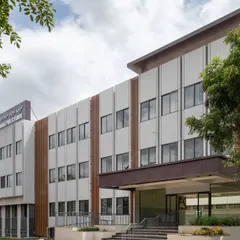
Institutional and Campus Architecture
 9
9
Institutional and Community Architecture Services
 6
6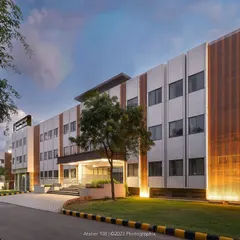
Institutional and Educational Campus Architecture
 14
14
Educational & Institutional Architecture Design in Bangalore
 43
43
Designing for Higher Learning
 21
21
Educational Institution Architecture and School Design
More from Commercial & Institutional Architecture by Design Matters Architects
More services by Design Matters Architects