Integrated Medical Ecosystems: Designing Large-Scale Campuses
We plan medical campuses where hospitals, teaching blocks, and research facilities function as a single, efficient system. From AIIMS Guwahati to institutional master planning, our design connects care, education, and community.
Our vision for an ideal medical campus, exemplified by AIIMS Guwahati, is an environment where learning, care, and daily life are interlinked. The design goes beyond clinical spaces to create a holistic and supportive ecosystem.
A well-structured master plan enables seamless movement and zoning for functionality. At our medical campuses, we integrate auditoriums and teaching facilities with clinical areas to support a comprehensive educational and healthcare experience.
An ideal medical campus is designed to support well-being through green, walkable spaces. Clear pathways and accessible amenities at our large-scale projects encourage movement and provide areas for rest and recovery for patients, staff, and students.
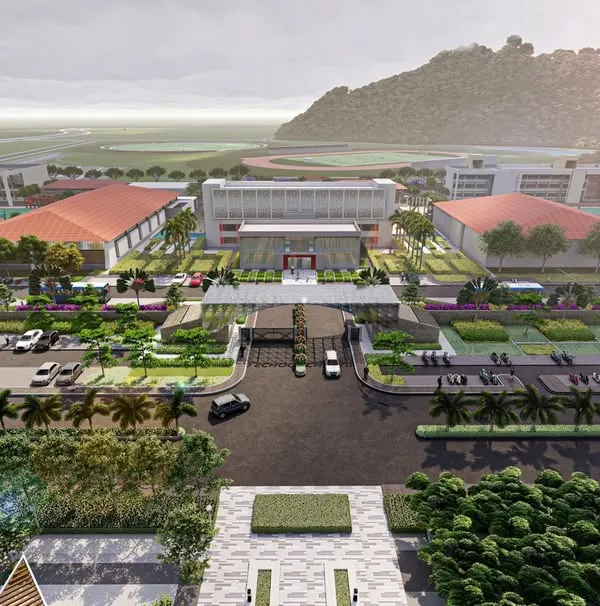
A clear master plan is the foundation of a successful medical campus, integrating care, education, and research. This aerial view showcases the organized layout of our campus projects, designed for phased growth and long-term adaptability.
This video tour of AIIMS Guwahati showcases the integrated 15 lakh sq. ft. campus. We zoned the 750-bed hospital, teaching blocks, and residential quarters for intuitive access and long-term growth, creating a campus that is both functional and future-ready.
Spread over 190 acres, AIIMS Guwahati is a teaching medical facility that brings world-class healthcare design to northeast India. The campus integrates sustainability, resilience, and human-centric design, creating a self-sufficient and adaptable master plan.
The lecture halls at AIIMS Guwahati are designed for a modern academic environment. As part of a teaching hospital, these spaces are crucial for training the next generation of medical professionals and are integrated seamlessly with clinical facilities.
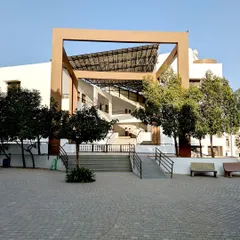
The Medical College at AIIMS Guwahati is a key component of the campus master plan. The architecture reflects a modern institutional identity, with welcoming entrances and landscaped surroundings that create a conducive learning environment.
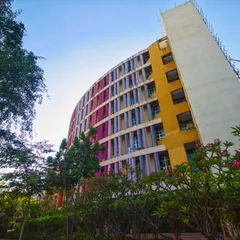
The AYUSH block at AIIMS Guwahati is an essential part of India's integrated healthcare model. The design for this facility incorporates biophilic principles and natural materials to support traditional and holistic healing practices.
AIIMS Guwahati is a self-sustained healthcare and academic campus with a 750-bed hospital and a medical college. The structured zoning ensures clear transitions between clinical, academic, and residential spaces, supporting an effective learning and healing environment.
About Large-Scale Campuses: Integrated Medical Ecosystems
Effective medical campus planning requires precise clinical zoning to balance high-traffic patient flows with the quiet requirements of academic and residential zones. We use structured master planning to ensure these facilities operate as a unified, future-ready ecosystem rather than isolated blocks, allowing for phased growth without disrupting ongoing patient care.
Building a modern medical campus goes far beyond erecting hospital wings. It demands a rigorous, research-backed master plan that anticipates the needs of patients, medical students, and staff decades into the future. Our approach to large-scale healthcare infrastructure focuses on creating self-sufficient ecosystems where clinical treatment, academic learning, and residential living are meticulously balanced.
At the heart of our methodology is evidence-based clinical zoning. We define distinct hierarchies of movement to separate high-intensity emergency traffic from the academic environment, ensuring that the critical care infrastructure remains isolated from public and educational zones. This spatial organization is essential for maintaining operational efficiency, reducing staff fatigue, and facilitating intuitive wayfinding for patients.
Sustainability is not an afterthought; it is integrated into the site's DNA. For projects like AIIMS Guwahati, we employ climate-responsive strategies—such as integrating vernacular drainage systems and natural water management—to mitigate environmental risks like flooding while preserving local biodiversity. These campuses are designed to achieve high eco-ratings, including GRIHA 5-star standards, through passive cooling and optimized building envelopes.
We also recognize that institutional capacity is dynamic. Our phased master planning strategy allows for future expansion and the integration of new technologies, such as modern medical gas systems and modular HIMS-ready layouts, without compromising the existing facility's functionality. Whether executing through Engineering, Procurement, and Construction (EPC) models or traditional project delivery, our goal remains consistent: shaping environments that serve as pillars of public health and educational excellence.
Similar work from other experts
Browse through Curated picks from other experts on mytribe
 14
14
Large-Scale Multi-Specialty Hospital Architecture and Design
 30
30
Educational & Institutional Campus Design & Master Planning
 14
14

Educational and Institutional Campus Master Planning
 14
14
Institutional & Civic Architecture Design
 21
21
Educational Institutions: Designing Functional Learning Spaces
 4
4
Institutional Architecture and Campus Design
More from Healthcare Architecture And Design by Creative Designer Architects
More services by Creative Designer Architects