Scientific Sports Training & Performance Insights
We do not guess. We assess. Explore our library of evidence-based protocols, movement breakdowns, and performance science that separates elite athletes from the rest.
What does 'functional training' actually look like? It isn’t random movements on unstable surfaces. It’s training that has a direct transfer to sport and performance. Real functional training is about strength, control, and intent.
Your performance is only as strong as the weakest link in your kinetic chain. This video breaks down a series of kinetic chain drills designed to build explosive power from the ground up, linking your feet, hips, and core into one seamless machine.
A message to cricketers in the off-season. This is not the time for fun and parties; it's the time to work on your weaker areas. Use the off-season to get stronger and more confident, so when the season comes, you are ready to perform at your peak.
Elevate your performance with Dynamic Balance Training. Mastering balance on the move is essential for every athlete. It helps you react faster, pivot with precision, and stay resilient under pressure.
Isometric exercises, where muscles contract without joint movement, are crucial for athletes. They enhance neuromuscular efficiency, reinforce joint stability, and improve strength at sport-specific angles, all while reducing injury risk.
This video explains the importance of training the back athletically. A strong back enhances pulling strength, rotational power, and core stability, which is crucial for explosive actions like sprinting, jumping, and throwing while also preventing injury.
Emphasizing posterior chain movements is critical for athletes. A strong posterior chain stabilizes the body during impact, acts as a buffer against common injuries, and is the engine for explosive power. When athletes train this, they add force to their game and build long-term resilience.
Lateral explosiveness is the ability to move powerfully side-to-side, and it's essential for agility in sports like tennis, basketball, and football. Training this quality improves reaction time, enhances balance, and helps prevent injuries.
Fundamentals build the foundation for athletic success! Mastering movement patterns, coordination, and strength early on helps athletes develop speed, power, and resilience. Skipping the basics leads to weak links and limits long-term potential. Train smart, master the fundamentals, and set yourself up for elite performance!
Dynamic stability is the secret to peak performance! It’s not just about strength but controlling movement through every twist, turn, and sprint. Athletes with strong dynamic stability reduce injury risk, enhance agility, and dominate their sport. Train your core, hips, and balance for unmatched power and control!
About Educational Insights
Functional training is often misconstrued as random exercises on unstable surfaces. We use force plates and VBT sensors to prove that real functionality means biomechanical efficiency—like mastering posterior chain mechanics and kinetic chain integration—to directly transfer strength to your specific sport.
Understanding the Kinetic Chain
Your athletic output—whether it is a cricket drive or a sprint start—is only as effective as the weakest link in your kinetic chain. We teach athletes how to link the feet, ankles, knees, hips, and core into a single machine. By training the system rather than isolated muscles, we ensure force is generated efficiently and absorbed safely.
Why We Prioritize Isometrics
We frequently advocate for isometric training because it reinforces joint stability and improves neuromuscular efficiency. By holding positions under load, you increase tendon resilience and improve force production at the specific joint angles required for your sport. It is a critical component of our injury prevention strategies.
Off-Season Periodization
For many athletes, the off-season is treated as a period for inactivity or unstructured fun. We treat it as the most critical block of the year. This is the window to fix imbalances, build foundational strength, and increase your ceiling for the next competitive season. If you are not fixing your weak links during the off-season, you are simply maintaining your limitations.
Our Data-Driven Methodology
Every protocol we share here is rooted in our assessment framework. We track:
- Force Plate Analysis: Measuring CMJ power and limb asymmetry.
- Velocity-Based Training (VBT): Auto-regulating your training intensity based on daily readiness.
- Rate of Force Development (RFD): Ensuring you are training for explosive speed, not just maximal strength.
Similar work from other experts
Browse through Curated picks from other experts on mytribe

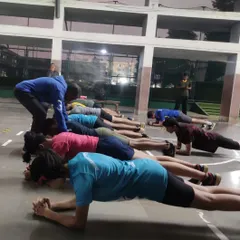
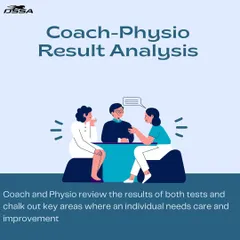
Our Scientific Approach to Athletic Training
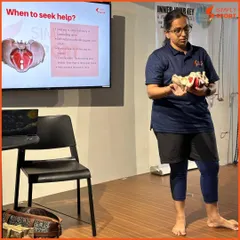
High-Performance Athlete Assessments and Elite Trial Protocols
 6
6
Science-Based Athlete Coaching and Performance Training
The Coach’s Playbook: Sports Science & Performance Insights
The Science of Sport: Elite Training Methods
 12
12
The Science of Strength & Conditioning
More from Strength and Conditioning Training by Athletes Lab
More services by Athletes Lab