Exploring Ancient Wisdom: Upanishads & Yoga Texts
Yoga is a logical process, and the ancient texts are our guide. We break down the complex wisdom of the Upanishads and Yoga Sutras, making these timeless teachings practical for your daily life.
What makes a true teacher, or 'Acharya'? In this video, Dr. Vishwanath explains the two most important characteristics as described in the Advaitaraka Upanishad: 'Veda Sampannaha' (self-awareness) and 'Vimatsaraha' (freedom from envy).
The Amrita Bindu Upanishad famously states that the mind is the cause of both bondage and liberation. Dr. Vishwanath explains the text's classification of the mind into 'shuddha' (pure) and 'ashuddha' (impure) based on the presence of desire.
The Advaya Taraka Upanishad discusses the powerful Shambhavi Mudra, a state where the yogi's gaze is external, but their focus is entirely internal. This video explains this advanced practice of deep contemplation.
Did you know the five pranas have associated colors? Dr. Vishwanath explains the colors of Prana, Apana, Vyana, Udana, and Samana as described in the Amritanada Upanishad.
Kundalini awakening is a common topic in the Yoga Upanishads. The Dhyanabindu Upanishad uniquely emphasizes 'Brahmacharya' (following yamas and niyamas) as a primary means for awakening this energy, alongside specific bandhas and pranayama.
A detailed infographic summarizing verses 9-14 of the Dhyanabindu Upanishad. It visually breaks down the components of Pranava (Om), its eight angas, four padas, and three sthanas.
An overview of my lecture on the Physiology of Pranayama, delivered at SVYASA University. This session connects the ancient practice of breathwork with modern scientific understanding.
I was glad to have my video on understanding Prakriti (your unique nature according to Ayurveda) featured as an article for Big Basket's customers, explaining why different yoga practices and diets work for different people.
About Exploring Ancient Wisdom: Texts & Scriptures
These texts are not meant to be read like novels; they are blueprints for a disciplined practice. Whether it is understanding the Shambhavi Mudra or identifying the five colors of prana described in the Amritanada Upanishad, knowing the theory behind your practice allows you to move beyond the physical and into true meditative states.
At Yogavijnana, we treat the study of scripture as a core pillar of yoga, not an optional academic pursuit. We believe that without understanding the 'why' behind the practice, yoga remains merely physical movement. Our approach to these texts is structured and systematic.
Deep Dives into Scripture
We explore foundational texts like the Amritabindu, Dhyanabindu, and Advaya Taraka Upanishads. These lectures go beyond surface-level translation, examining the historical context and the direct relevance to current yogic practice. You will find that when you understand the classification of the mind (as described in the Amritabindu Upanishad), your ability to navigate your own mental states during meditation changes significantly.
Integrating Science and Philosophy
Our study modules bridge the ancient with the contemporary. For example, when we discuss the 'Physiology of Pranayama', we connect traditional bandhas and breath regulation with modern anatomical understanding. This synthesis helps our students apply concepts like 'Vimatsaraha' (freedom from envy) or the nuances of 'Brahmacharya' not just on the mat, but in daily life.
How We Learn
We provide resources that accommodate different learning styles, including:
- E-learning modules: Pre-recorded deep dives into specific Upanishads with transcripts available in six languages.
- Lecture Series: Academic-style talks that encourage questions and critical thinking.
- Chanting Albums: Rhythm and repetition help internalize the Sanskrit verses of the Yoga Sutras, making the scriptures part of your own consciousness.
Whether you are a teacher looking to deepen your subject matter expertise or a dedicated student seeking to understand the root of yogic science, our materials provide a clear, step-by-step path.
Similar work from other experts
Browse through Curated picks from other experts on mytribe
 29
29
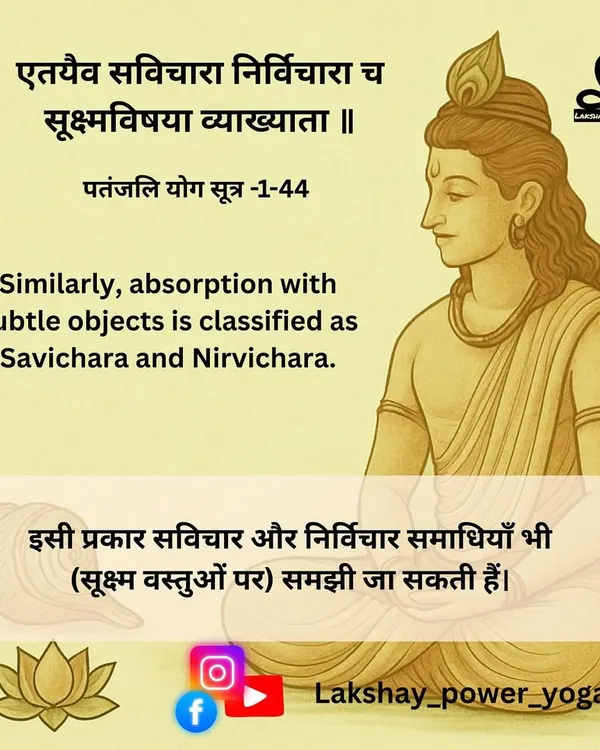
The Philosophy of Yoga: Decoding Patanjali's Yoga Sutras
Wisdom for Modern Life
Ancient Yogic Wisdom and Philosophy
Exploring the Wisdom of Sacred Texts and Chants
 8
8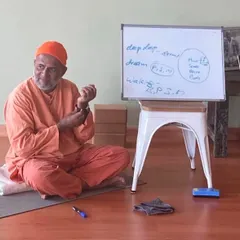
Vedanta Philosophy & Jnana Yoga Courses
The Philosophy of Yoga: Ancient Wisdom for Modern Life
More from Yogic Studies & Philosophy by Yogavijnana
More services by Yogavijnana