Arctic Wildlife Photography in Svalbard
The Arctic is not just about the polar bear, it is about the vast, fragile silence of the ice. I document the lives, struggles, and quiet moments of this ecosystem through wide-angle environmental portraits and careful observation.
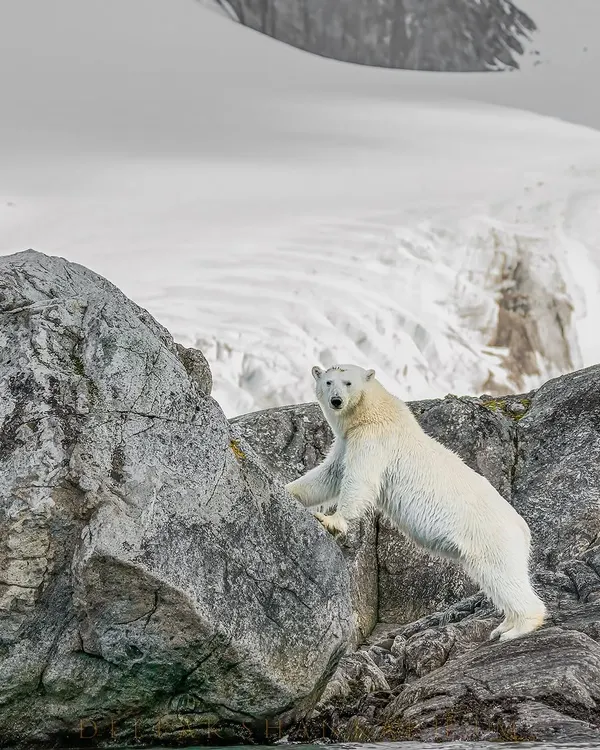
A polar bear in its vast environment. I chose a wide-angle lens here to show the scale of the Arctic landscape, with the storm building over the mountains, to emphasize the pristine but fragile nature of this ecosystem.
My first sighting on a Svalbard expedition: a subadult polar bear cub sleeping on an iceberg, looking like a teddy bear. We watched from a safe distance for two hours as it rested, a truly adorable and peaceful moment.
A polar bear mother and her cub cuddling together in the snow to conserve energy. This is a tender moment that showcases the strong maternal bonds in the animal kingdom.
A high-key image of a lone polar bear trekking across a vast, white expanse of snow. This minimalist style emphasizes the solitude and scale of the Arctic wilderness.
A large male walrus resting on the beach. By approaching the colony slowly and cautiously, we were able to get very close and capture detailed portraits against a dramatic sky.
The beloved Puffin, swimming in the icy waters of the Arctic. Their colorful beaks provide a vibrant splash of color against the cold blue sea.
A Puffin in action, taking off from the water's surface with powerful wing beats.
A pair of curious Harbour Seals resting on a rock. One seems to be waving "Hi!" Seals are a primary food source for polar bears and a key part of the Arctic food web.
A pair of Black-legged Kittiwakes perched on an iceberg, with the deep blue of a glacier in the background. Thousands of these birds breed on steep cliffs during the Arctic summer.
A Bearded Seal relaxing on a floating piece of ice, perfectly embodying the chill lifestyle of the Arctic.
About Arctic Kingdom: Life on the Ice
It is tempting to simply use a telephoto lens to capture a tight portrait, but I often prefer a wide-angle lens. Showing the polar bear within the context of the vast, shifting Arctic landscape tells the real story of this ecosystem. It requires hours of waiting in a Zodiac, often in freezing conditions, just to find the right composition where the bear looks like a small, precious part of the ice.
The Arctic is not for the faint of heart. When I plan an expedition to Svalbard, the goal is not just to snap a photo, but to document life on the edge. You are dealing with 24 hours of light, temperatures that drain batteries in minutes, and weather that shifts from calm to a storm in an hour.
My approach here is simple: respect the animal's space. We use Zodiacs to navigate the ice floes, allowing us to approach colonies of walruses or resting seals without causing panic. Whether it is a subadult polar bear cub or a mother cuddling her young to conserve energy, I want the final image to convey the stillness and the cold.
I rely on high-key techniques to highlight the isolation of the Arctic. By balancing the stark whites of the snow with the deep blues of the glacier, I create frames that emphasize the fragility of this habitat. Photography here is as much about logistics as it is about artistic vision. Being on a ship allows us to track wildlife across vast distances, ensuring we are in the right spot when a moment unfolds. If you join me on these trips, you will learn to spot behavior before it happens, use your gear in sub-zero conditions, and look for the story rather than just the trophy shot.
Similar work from other experts
Browse through Curated picks from other experts on mytribe
 25
25
Arctic Polar Bear Photography Expeditions
Photographing Giants: Elephants, Bears & Whales
 5
5
African Wildlife Photography: From Savannas to Pelagic Birding
 10
10
Featured Wildlife Photography and Best Action Shots
 8
8
My Wildlife Photography Portfolio: Light, Motion, and the Wild
 8
8
Wildlife Photography Highlights and Rare Encounters
More from Commercial & Fine Art Wildlife Photography by Yashpal Rathore
More services by Yashpal Rathore