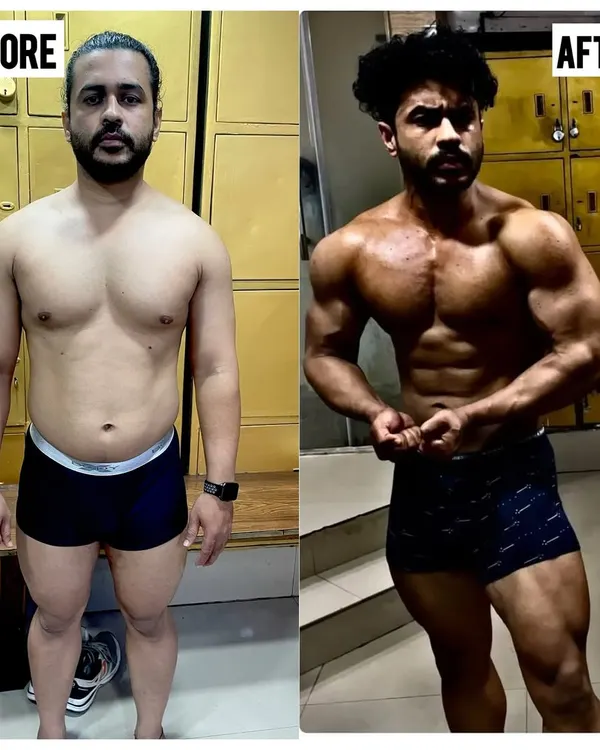
My Personal Transformation Journey
Getting back to the gym after a break isn't just about showing up. It’s about patience and rebuilding. Jab aap shakti (strength) maangte hain, you have to earn it. Here is how I got my foundation back.
This was the first week of my own transformation. The 130kg deadlift felt good, showing that a solid foundation of strength remains even after a break. Every journey starts with that first step back.
The second week back in the gym, and it felt great to press heavy dumbbells again. Rebuilding strength is a process, and I focus on enjoying each step of the journey back to peak condition.
My first leg day after a lockdown, and 100kg on the squat felt easy. This is a testament to muscle memory and the importance of getting back to a structured routine to reclaim your strength.
About My Personal Transformation
When you return after a break, your ego will tell you to lift what you used to. Don't listen. My first week back wasn't about the 130kg deadlift; it was about checking if my joints could handle the load again. Start with a movement assessment—it saves you from re-injury. You need to be stronger than yesterday, but you have to be smart about it.
Transformation isn't linear. It is messy. After a forced break, I didn't just throw plates on a bar. I started with a movement screen. I had to see where my hips were tight and how my ankles were holding up.
Most people rush this phase. They want to hit PRs in week one. That is how you get sidelined again. I focused on form first—squat depth, spine neutrality, and bar path. Even with the 100kg squats, the goal wasn't just hitting the weight; it was executing the movement without pain.
Whether you are in Delhi and coming back to the gym, or trying to rebuild after an injury, the strategy remains the same:
- Assess, Don't Guess: Get your movement patterns screened before you start heavy loading.
- Regression is Progress: If a back squat hurts, do rack pulls. Use variations to keep training without wrecking your recovery.
- Trust the Science: Deload weeks aren't time off. They are calculated phases to manage central nervous system fatigue.
Strength is a long game. It doesn't care about your excuses or your impatience. You either do the work, or you don't. If you are ready to stop guessing and start building, I am here to coach.
Similar work from other experts
Browse through Curated picks from other experts on mytribe


Real Fitness Transformations for Lasting Strength
 4
4


My Personal Fitness Transformation Journey
Fitness Transformation and Injury Recovery Coaching
 33
33My Fitness Journey: Building Strength Through Discipline
 9
9

My Fat Loss Transformation: From Feeling Stuck to Strong
Strength and Mobility Training Logs
More from Injury Prevention & Corrective Exercise by Ranit Roy
More services by Ranit Roy