Mammals of the Indian Subcontinent
From the elusive Sloth Bear to the rare Red Panda, these creatures are the heartbeat of India's forests. This collection captures the wild, unscripted moments we have encountered on our journeys across the country.
A pack of Dholes, or Asiatic Wild Dogs, pauses on a road in Tadoba. The lead dog looks towards the camera, offering a rare, clear view of this endangered and highly social predator.
A pack of Dholes on the move during their morning activities. These efficient hunters work together as a team, and witnessing their pack dynamics is a forest highlight.
Another perspective of the Dhole pack, showing their social structure as they gather by the roadside. Capturing the entire group required quick thinking and a steady hand.
Two Dholes from the pack cross the road, sniffing the ground as they go. Their reddish coats and bushy black tails are distinctive features.
A mother Sloth Bear and her cub walk along a dusty track in Tadoba, with our safari jeep visible in the background. This provides a sense of scale and the nature of a wildlife safari encounter.
A powerful Wild Water Buffalo stares intently, its massive horns making for an imposing sight. This shot was taken in the grasslands of an Indian national park, highlighting the raw power of this large bovine.
An adorable Red Panda, with its characteristic reddish-brown fur and long, shaggy tail, peeks through the branches. Finding this shy arboreal mammal is a special moment in the Eastern Himalayas.
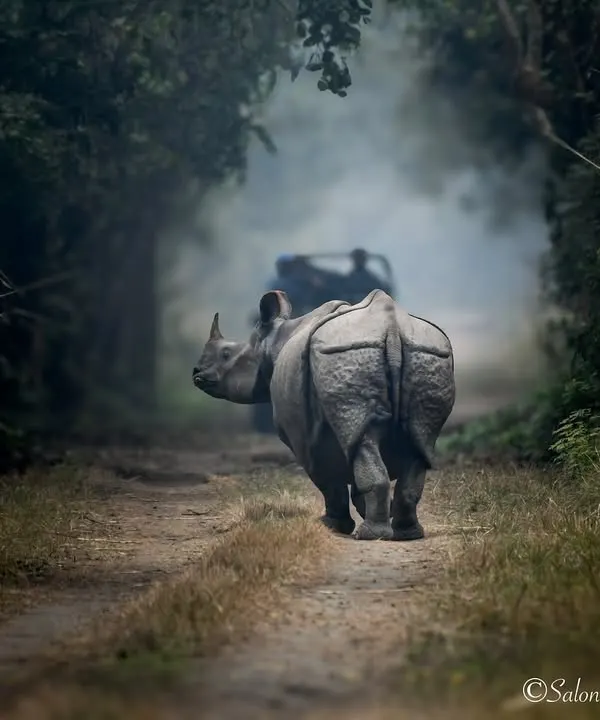
A close-up portrait of a Greater One-Horned Rhinoceros. The detail of its thick, folded skin and powerful horn showcases the unique features of this magnificent and vulnerable species.
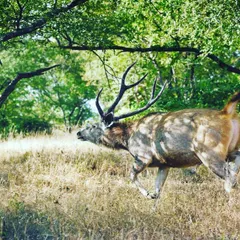
A Sambar Deer stands in a lush green meadow at sunset. The warm light catches its antlers, creating a serene and beautiful wildlife portrait.
About Mammals of the Indian Subcontinent
Getting these shots isn't about luck, it is about reading the forest. Whether we are sitting silently in a jeep in Tadoba waiting for a Dhole pack to cross or tracking a Sambar deer at sunset, it is all about predicting behavior. I rely on my 200-500mm lens to keep my distance, letting the animals go about their business without us turning into a disturbance.
Wildlife photography demands patience above all else. You do not hunt for the perfect shot; you position yourself and wait for the forest to reveal its secrets. For subjects like the Indian One-Horned Rhino or the shy Red Panda, I prioritize fieldcraft over hardware. Using a 200-500mm lens allows me to maintain a respectful distance, which is critical.
Animals behave differently when they feel watched. When you step back, you get authentic behavior—the mother sloth bear with her cub, the Dhole pack socializing on the road, or the water buffalo in the grasslands.
It is not just about having a long lens. It is about understanding habits. I study alarm calls and predator movement—like those used in tiger country—to know where to point the camera before the action starts. If you are heading out for a safari, do not focus only on the big cats. The smaller mammals and the ungulates often offer the most serene, beautiful interactions if you give them the time and space to exist on their own terms.
Similar work from other experts
Browse through Curated picks from other experts on mytribe
 18
18
Rare Encounters: Sloth Bear, Dhole & Gaur Prints
 15
15
Giants of the Land
 18
18
Mammals of the Indian Wilds
Tracking Mammals Across the Indian Subcontinent
 12
12
Jungle Encounters: Mammals of the Forest Photography
 5
5
Mammals of the Indian Wilderness: Fine Art Photography
More from Wildlife & Bird Photography by Sunny Nair
More services by Sunny Nair