Architectural and Adaptive Reuse Projects
Architecture is rarely about starting from zero. We take existing buildings, dormant warehouses, or fragmented campuses and reimagine them into functional, vibrant spaces while keeping their original character intact.
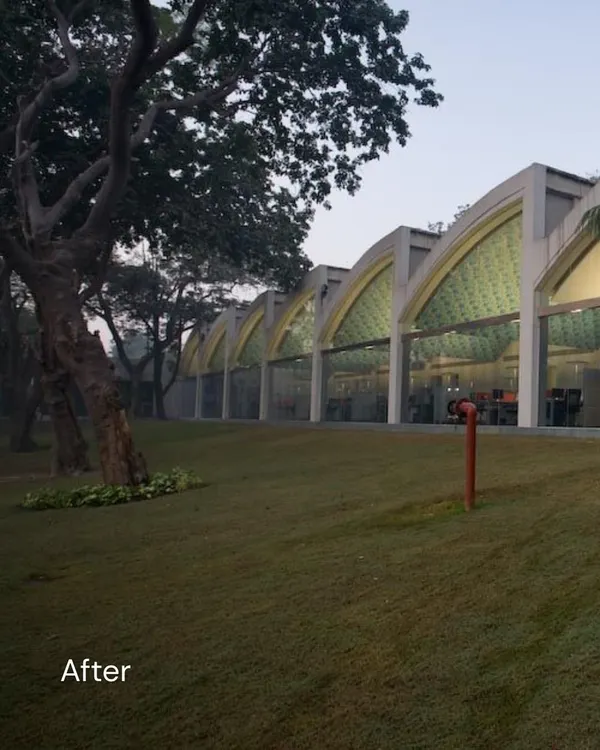
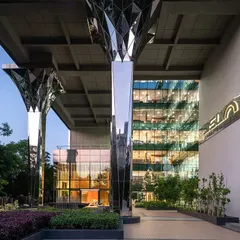
The exterior of the Media Monks campus in Noida, a 100,000 sq. ft. project we completed in 12 months. Our design refreshed the existing buildings and emphasized a seamless connection to the central lawn and surrounding landscape.
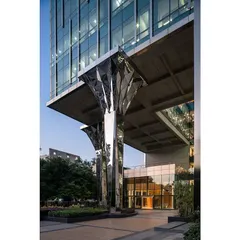
This shot showcases the new glass and steel structure we added to the main office building at Media Monks. The transparent facade was designed to maximize natural light and offer expansive views of the campus greenery.
Another angle of the architectural intervention at the Media Monks campus, highlighting the contrast between the original dark brick building and the modern, light-filled glass extension we designed.
The design of the Media Monks campus revolves around a central green lawn, ensuring every part of the office enjoys a connection to nature. This approach promotes a sense of wellbeing and community.
A view from a balcony at the Media Monks campus, looking out over the lawn. We designed multiple points of visual and physical access to the outdoors, integrating the landscape into the daily life of the workplace.
The double-height atrium at Media Monks creates a breathtaking sense of volume and light. This space serves as a bright, welcoming lounge area that connects different levels of the office while maintaining a strong link to the outdoors.
The exterior of the WhiteBalance Office, our first project and a landmark in adaptive reuse. We transformed a dormant warehouse in an industrial area into a bold and bright creative studio, showcasing the potential hidden in such structures.
Inside the WhiteBalance Office, we preserved the industrial character with exposed brick and large arched windows. The long, custom-built pallet wood table sits in a double-height space, perfect for team meetings and collaborative work.
We inserted a glass-enclosed meeting room and a mezzanine level into the warehouse, adding functional space without sacrificing the open, airy feel. This "box within a box" concept maintains visual connectivity across the office.
A playful and functional element in the WhiteBalance office is this editing suite designed to look like a giant film clapperboard. It provides a semi-private workspace on two levels, adding a touch of cinematic flair.
About Architectural & Adaptive Reuse Projects
The hardest part of adaptive reuse isn't the demolition, it is knowing what to keep. When we approach an older shell, we look for the physical anchors—a brick wall, a steel truss, or a specific window height—and build our new intervention around that. Whether it is carving out mezzanines or creating glass boxes inside industrial sheds, our goal is to highlight the history of the building while bringing in the modern utility your team needs.
At Studio Bipolar, we treat architecture as a narrative. Every building has a history, and our job is to layer a new, functional reality on top of it without erasing the past. In projects like the WhiteBalance office, we turned a dormant warehouse into a bright, collaborative studio by stripping away layers of clutter to expose the raw brick and original trusses. We aren't just renovating; we are reinterpreting.
Adaptive reuse requires a delicate balance of engineering and creativity. We often employ a 'box within a box' concept, inserting standalone meeting rooms or editing suites into large, open volumes. This allows us to keep the floor plan flexible and airy without needing to build permanent, obstructive walls. For larger sites like the Media Monks campus, our approach shifts to landscape integration and connectivity. We connected three distinct buildings around a central green space, ensuring that every desk, office, and production zone maintains a visual link to the outdoors.
Our design process focuses on:
- Structural Audits: Assessing the health of original steel or concrete work before deciding on modifications.
- Light Strategy: Utilizing high-CRI lighting to enhance industrial textures and ensuring natural light reaches deep into renovated floor plates.
- MEP Integration: Hiding modern tech infrastructure behind original architectural features, so your workspace functions like a new build without losing its soul.
If you have a challenging property in Delhi NCR that feels dated or disjointed, we would love to see its potential. We specialize in turning forgotten structures into high-performance environments.
Similar work from other experts
Browse through Curated picks from other experts on mytribe
 5
5
Adaptive Reuse Architecture: Breathing New Life into Old Spaces
Adaptive Reuse: Transforming Industrial Structures
 11
11
Adaptive Reuse Architecture and Heritage Retrofitting
 6
6
Institutional & Adaptive Reuse Architectural Design
 8
8
Corporate & Industrial Architecture: Design for Business
 46
46
Corporate and Commercial Architecture Transformations
More from Commercial & Hospitality Design by Studio Bipolar
More services by Studio Bipolar