The Complete Serve & Return Game: Tennis Technique Mastery
Your serve is the only shot you fully control. Whether you are learning to place your slice or mastering the split step to neutralize a fast return, we break these mechanics down into repeatable drills. Let’s get your rhythm right.
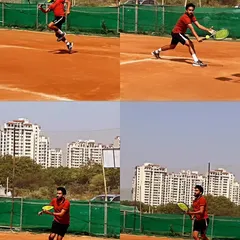
This is what a game-changing serve looks like. Here, we are mastering the slice serve, a crucial weapon that adds spin and placement to keep opponents off balance. We focus on building a complete game, and that starts with turning your serve into a major advantage on the court.
"Racket hamesha aage rahega. Step, split." I repeat this constantly because a good return of serve starts before the ball even crosses the net. Here, I am teaching a junior player the essential footwork and ready position needed to neutralize a serve and take control of the point.
Even on the first day, we work on the full motion of the serve. This player is learning the rhythm of the toss and the swing, understanding that even the misses are part of the process. Building a smooth, repeatable service motion is a journey that starts with the very first swing.
About The Complete Serve & Return Game
Before you even make contact, the point is often lost because of poor footwork. In our sessions, I drill the split step relentlessly. You need to time your jump exactly when the opponent makes contact. If your racket is not forward and your split is not timed, you are already behind. We fix these habits through high-repetition feeding until they become second nature.
The serve and return are the bookends of every tennis point. Most players rush to hit winners without understanding that a high-percentage serve, or a steady return, dictates the rally’s flow.
Refining Your Service Motion
Whether it is a flat bomb or a kick serve, the toss consistency is everything. We start with the basics: keeping the toss high and steady. If you are struggling with your slice serve, we work on your wrist pronation and the swing path. It is not about raw power. It is about placement and spin. I use basket-feeding drills so you can hit 50 to 100 serves in a single session, building the muscle memory that holds up when the score is at deuce.
Mastering the Return
Returning a serve is reactive, not proactive. Your readiness is measured by your split step. I teach players to watch the server's toss, not the ball itself. By reading the ball toss, you can anticipate the direction of the serve before it is even hit. Against fast serves, we focus on a short, compact backswing and simply blocking the ball back into play. It is about neutralizing their biggest weapon and forcing them into a neutral rally.
Training Locations and Surface Variations
Technique changes slightly depending on the court. Our hard courts in Delhi NCR encourage a faster, more aggressive return. On the clay courts in Agra, the ball sits up longer, giving you time to set up for a more controlled serve. We train for both, ensuring your game remains consistent regardless of the surface.
The Mental Game
I do not want you thinking about your grip during a match. We train until the movements are subconscious. When the pressure is on, I want you to focus on the target, not the mechanics. That is the difference between a player who plays well in practice and one who wins matches.
Similar work from other experts
Browse through Curated picks from other experts on mytribe
Mastering the Tennis Serve in Noida
Tennis Technique Masterclass: Drills for Every Shot
Master Your Serve with Expert Biomechanical Analysis
Professional Tennis Coaching Drills for Competitive Players
Tennis Technique and Match Play Coaching in Noida
Tennis Technique and Fitness Drills
More from Tennis Camps by School of Tennis
More services by School of Tennis