Traditional Indian Arts: Tanjore, Madhubani & More
Rediscover India’s artistic roots. We guide you through the intricate techniques of Tanjore, Madhubani, and Kerala mural painting in a relaxed, step-by-step studio environment.
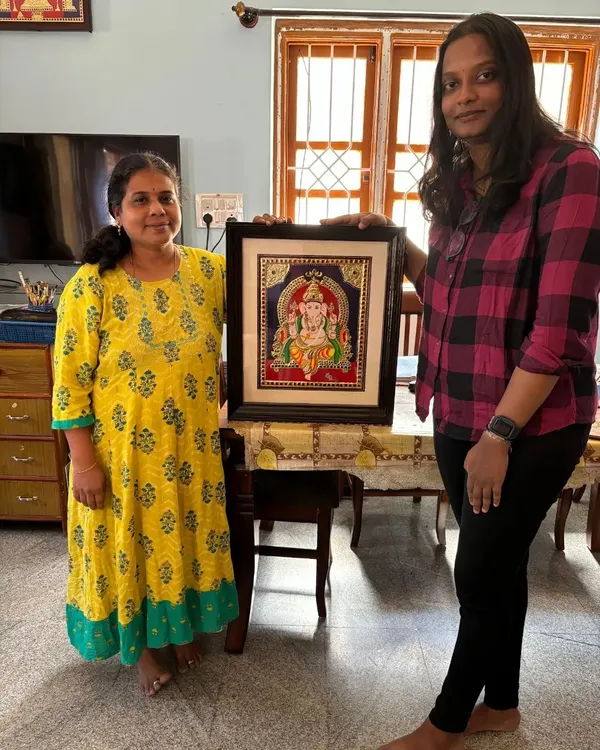
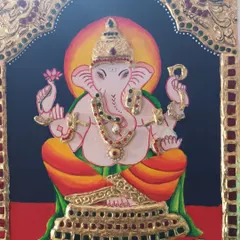
A student proudly holds her completed Tanjore painting of Lord Ganesha. I teach the full process, from creating the 3D relief work with muck paste to applying the delicate gold foil that gives this art its divine shimmer.
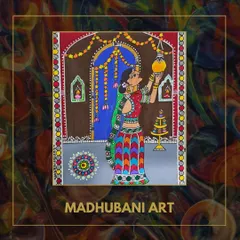
This is a completed Madhubani painting depicting Ram and Sita, created by my student Prathima. This folk art style is known for its intricate line work, flat patterns, and use of natural colors, which we explore in detail.
A student, Kalyani, stands proudly with her pair of completed Tanjore paintings. Creating a series or a pair of artworks is a great way to develop a deeper understanding of the composition and techniques involved in this traditional art form.
Here, a student is in the initial drawing phase of a Kerala Mural. This traditional art form is characterized by its depiction of Hindu deities and mythological scenes, and it all begins with a precise and detailed pencil sketch.
This large 4x4 feet Pattachitra painting is a wonderful example of the scale and narrative depth we can achieve. Pattachitra is a traditional cloth-based scroll painting from Odisha, known for its rich colors and mythological storytelling.
A close-up of a beautiful Madhubani painting of Radha and Krishna. Students learn to master the fine lines, double borders, and symbolic imagery that are hallmarks of this ancient art from the Mithila region.
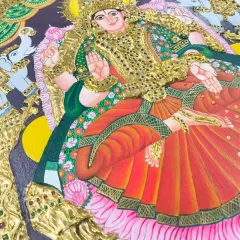
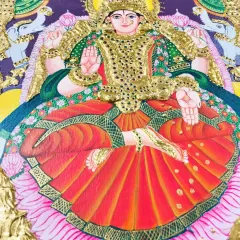
A student, Deepa, with her completed Tanjore painting of Goddess Lakshmi. The process involves careful layering of colors to bring the deity's features to life against the glittering gold foil background.
Two participants stand with a completed Madhubani painting. My classes often foster a collaborative spirit, where students can learn and be inspired by each other's progress in traditional Indian art forms.
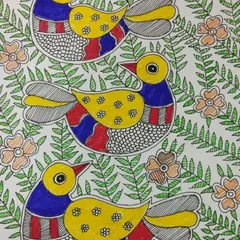
Sowmya with her finished Madhubani peacock painting. This piece showcases the vibrant colors and dense patterns, including flowers and foliage, that are characteristic of the Bharni style of Madhubani art.
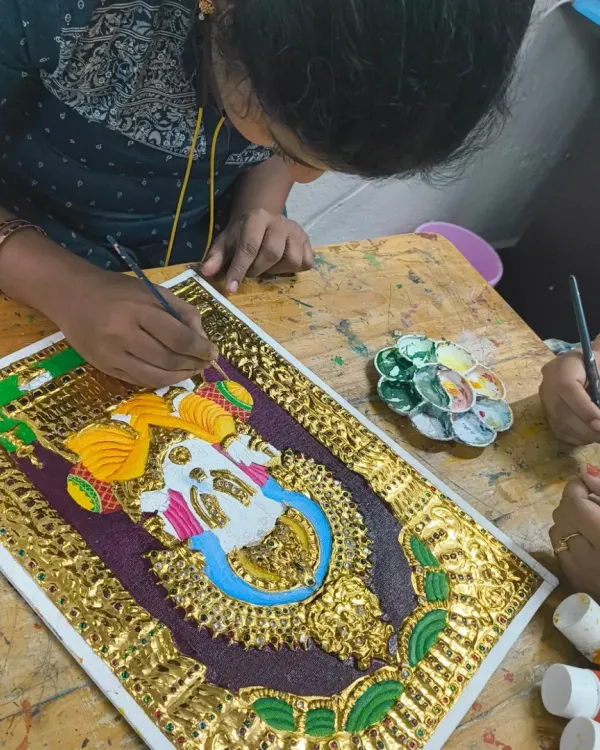
A close look at a Tanjore painting of Meenakshi Amman nearing completion. The final stages involve adding fine details and highlights to the deity's expression and attire, bringing the entire piece to life.
About Traditional Indian Arts: Tanjore, Madhubani & More
If you are starting a Tanjore painting, the most critical part isn't the painting itself—it's the 'muck work.' We spend time teaching you how to shape that clay paste to create the relief effect, because that 3D texture is exactly what gives Tanjore its royal, divine finish. It takes patience, but we’re right there with you to ensure the proportions are perfect before we even touch the gold foil.
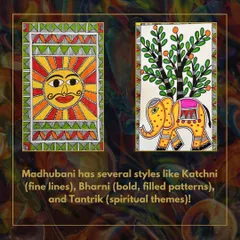
Traditional Indian arts require a different kind of focus. Whether you are aiming for the rigid precision of a Kerala mural or the rhythmic, storytelling patterns of Madhubani, these aren't styles you rush. In our studio, we break these complex traditions down into manageable steps.
Why Learn Traditional Forms?
Beyond the aesthetic, there is a meditative quality to these arts. When you sit down to master the double borders of a Mithila piece or the fine, steady line work of a Pattachitra scroll, the day's stress tends to fade. It is about understanding the logic behind the motifs—why certain symbols appear, how natural colors balance out, and how to maintain consistency across a large canvas.
Our Approach to Tradition
We keep our classes small and hands-on. You aren't just copying a reference; you are learning the methodology. For Tanjore, that means mastering the relief work first. For Madhubani, it is about building confidence in your line work, which is the backbone of the style.
We provide a space that is stripped of the pressure of 'perfection' often found in art schools. If you are in the Bengaluru area, you can visit our Chandapura studio to work on your projects under our guidance. We also support our online students with the same level of detail, ensuring that even from a distance, you grasp the nuances of these classical forms.
Similar work from other experts
Browse through Curated picks from other experts on mytribe
 12
12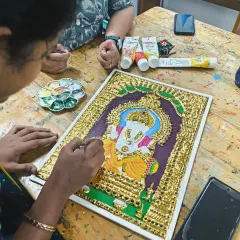
Master Traditional Indian Art Forms in Bengaluru
 4
4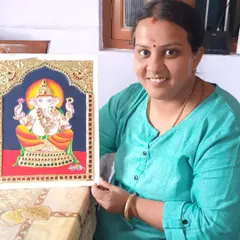
Traditional Indian Art Classes in Bangalore
Traditional Indian Art Workshops in Bangalore
Master Traditional Indian Folk Art
Online Indian Folk and Traditional Art Classes
Learn Traditional Indian Folk Art With Step-by-Step Guidance
More from Professional Art Training by RangSangam Art School
More services by RangSangam Art School