Legal Education and Expert Legal Commentary
Knowledge is the only real shield against legal misuse. I share insights on new criminal codes, digital safety, and constitutional rights to help you understand the system, not just fear it.
I am often asked how to read a court judgment effectively. My advice is to first identify the material facts, then isolate the legal principle applied by the court, known as the ratio decidendi. Creating a repository of key judgments categorized by topic is also a great practice for any law student or lawyer.
A police officer cannot refuse to register an FIR for a cognizable offense. The Supreme Court recently upheld a penalty against an inspector for this very reason, stating that every citizen has a right to be treated with dignity at a police station under Article 21. This is a crucial reminder of police accountability.
This graphic illustrates a landmark Supreme Court ruling that reinforces a citizen's right to file an FIR. The court imposed a penalty on a police inspector for refusing to register a complaint and using abusive language, affirming that dignity is a fundamental right.
An illustration depicting the Supreme Court's stance on the duty of the police. The court has made it clear that every citizen reporting an offense must be treated with dignity, as it is their fundamental right under the Constitution.
This image breaks down the facts of a case where a police inspector refused to register an FIR. The Supreme Court's decision to penalize the officer sends a strong message about accountability and the non-negotiable right of citizens to access justice.
The safety of judges and lawyers is a serious concern. Attacks on the judiciary, whether in the US or India, are not just threats to individuals but to the entire justice system. Upholding the law often comes with risks, and it is society's duty to protect those who do this work.
It is an honor to be invited as a speaker for TEDxNITSrinagar. I am passionate about spreading legal awareness and championing gender equity, and platforms like TEDx provide a powerful way to reach a wider audience.
In a talk for Girl Up, I discussed how women in many professions tend to undersell themselves. I have learned to reclaim my ideas in meetings and not let anyone undermine my confidence. It is important to own your contributions and not let them be co-opted.
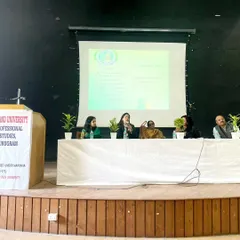
At a UDC Law Review Symposium, I attended an insightful talk on the "School to Prison pipeline." It highlighted how at-risk youth are pushed out of classrooms and into the juvenile justice system, a topic that deeply connects with my work in criminal law and reform.
About Legal Education & Media Commentary
When you read a court judgment, do not just glance through the text. You have to isolate the ratio decidendi, which is the specific legal principle the court applied to the material facts. Whether you are a law student or someone navigating a case, learning to dissect judgments in this way turns complex legal documents into clear, actionable data. It stops you from relying on hearsay and lets you see the logic behind the law, which is often the difference between a panicked decision and a sound legal strategy.
Bridging the Gap in Legal Literacy
I believe legal knowledge should not be locked behind jargon. After years of practice, I realized that the biggest barrier to justice is often a lack of understanding. People are scared of the law because they do not know how it works. My work in legal education is focused on breaking that fear.
Practical Training for Real-World Scenarios
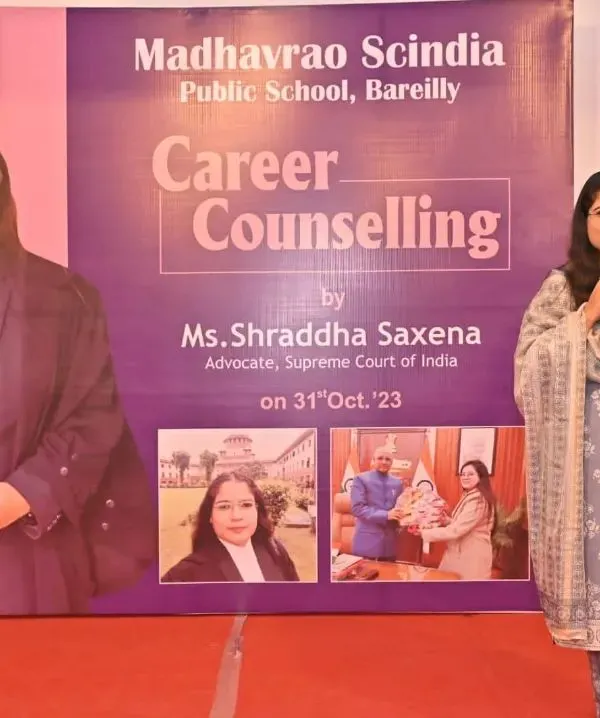
I regularly train police officers and government officials on India's new criminal codes, such as the Bhartiya Nyaya Sanhita (BNS). My teaching philosophy is based on court craft rather than dry theory. Whether I am speaking at a TEDx event or conducting a workshop for corporates, I focus on:
- Constitutional Rights: How Article 21 and other safeguards actually apply in a police station.
- Digital Safety: Understanding the legal implications of what you post, share, and store online.
- Criminal Procedure: Demystifying the bail process, FIR registration, and the difference between cognizable and non-cognizable offences.
Media Commentary and Advocacy
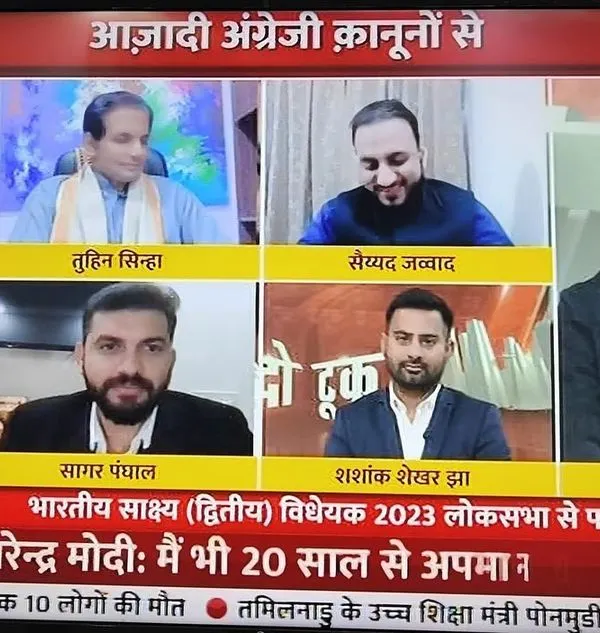
I use my platform to comment on systemic issues, from the safety of the judiciary to the school-to-prison pipeline. I believe that lawyers have a duty to not just represent clients, but to contribute to the broader conversation about fairness. My media commentary focuses on bringing reality into the discourse, calling out where the system fails, and highlighting where citizens have the power to demand accountability.
If you are an institution looking for training, a media outlet requiring an expert perspective on criminal law, or a group seeking to understand your rights, reach out. We will skip the filler and get straight to the facts.
Similar work from other experts
Browse through Curated picks from other experts on mytribe
 25
25
Legal Awareness Workshops & Community Speaking


Legal Awareness Sessions for Students & Faculty
 12
12

Legal Awareness & Public Commentary
 10
10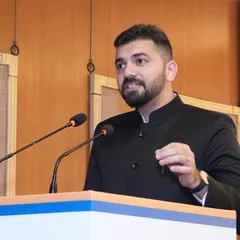

Legal Insights & Media Appearances


Legal Analysis and Expert Commentary by Advocate Abha Singh
Essential Legal Knowledge for Everyday Life
More from Criminal Law by Prachi Pratap
More services by Prachi Pratap