Behind the Scenes of Varmala Preservation
Ever wondered how your wedding flowers become art? Come see how I turn delicate petals into permanent memories, one careful layer at a time.
Sometimes I receive flowers that have developed fungus, which can be a challenge. This video shows how I carefully inspect and save the usable petals, because I believe every memory is worth preserving. With patience, I can still create something beautiful.
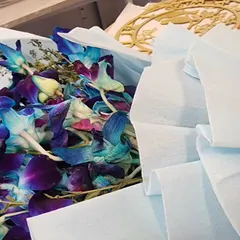
The preservation journey begins here. I am carefully unboxing and sorting a client's varmala, preparing the flowers for the drying process. This is the first and most crucial step to ensure the colors and shapes are perfectly maintained.
Here, I am starting the preservation process for a client's wedding frame. After sorting the flowers, they are placed in a special medium to dry them out completely before they are set in resin.
A simple hack for a perfect, bubble-free finish is to pour the resin slowly and in layers. Here you can see me carefully pouring resin into monogram molds filled with varmala flowers during a workshop. Patience is key to beautiful results.
This is the base layer for a 12-inch handmade wall clock. Creating a perfect, shimmery base with a glossy shine is the first step before I begin arranging the preserved varmala flowers in the next stage.
I loved creating these beautiful shades of green for a varmala preservation clock. This piece is currently in process, and the cool, shimmery tones will provide a lovely backdrop for the client's flowers.
Here I am working on a clock as part of my varmala preservation workshop. Using a torch to remove bubbles is an important technique for achieving a perfectly smooth and clear surface.
During my workshops, I explain every detail, including how to arrange the flowers and properly cover them with resin. This ensures that every part of the keepsake is perfectly preserved and protected.
In this session of my online workshop, I taught students how to arrange the varmala flowers, add the bride and groom's names, and adorn the piece with embellishments. These details make each frame a personalized work of art.
About The Art of Preservation: Behind the Scenes
The first step is not art, it is surgery. When I receive your varmala, I often find moisture or even fungus from the wedding day. I spend days dehydrating every petal individually in silica sand before any resin touches it. If I rushed this, your flowers would rot inside the frame. It takes time, but it ensures your keepsake stays beautiful for a lifetime.
When you send your wedding flowers, the real work starts long before the resin pour. First, I carefully inspect every bloom. If I find moisture, I act fast, separating the healthy petals to save what I can. I use a silica sand dehydration process that lasts 7 to 10 days. This is the secret to keeping the natural colours and shapes alive, rather than letting them turn brown.
Once the flowers are bone dry, we move to the casting. I work with UV resistant epoxy resin, pouring in thin, controlled layers. This prevents the yellowing and overheating that ruins many DIY attempts. For heavy items like kaleere or chura, I use deep-pour resin that can handle the weight and volume of your 3D memorabilia.
Whether you choose a classic 10 to 14-inch frame for your varmala or a custom LED monogram lamp for your bedside table, the process remains the same: patience. I polish, refine, and add your personal details—names, dates, or gold foil—by hand. It is not just about pouring plastic; it is about protecting a piece of your wedding day.
If you are in Delhi NCR, you can drop off your items at my studio. If you are further away, I accept secure courier shipments from across India. Every package is bubble-wrapped with the same care I give the flowers themselves.
Similar work from other experts
Browse through Curated picks from other experts on mytribe
Behind the Scenes of Resin Flower Preservation in Delhi
How I Preserve Your Wedding Memories in Resin
The Art of Floral & Memory Preservation
My Preservation Process: Turning Flowers Into Timeless Art
Behind the Scenes: How I Preserve Your Wedding Memories
My Resin Art Creation Process
More from Wedding Keepsake Preservation by Manju Art Creations
More services by Manju Art Creations