STEM & Construction Play for Early Learners
At Knowledge Origin, we don't just teach science from textbooks. We let children build, measure, and experiment with blocks to understand the world around them. Discover how we turn daily playtime into foundational STEM skills.
I build, I learn! Our toddlers work together to build their own castle from cardboard boxes, learning about collaboration, creativity, and basic construction.
Our learning environment is set up to introduce foundational concepts. Here, floor labels for Science, Technology, Engineering, and Mathematics (STEM) define different play zones.
Can toddlers stack pebbles? This simple outdoor challenge encourages our Independent Toddlers to explore balance, texture, and problem-solving skills using natural materials.
This month, our K1 students are exploring the solar system. This video shows them painting planets and learning about space through hands-on art and open-ended questions.
How tall am I? Our pre-kindergarteners use wooden blocks as a non-standard measuring tool to measure their friends, learning about length and counting in a tangible way.
A child carefully places blocks alongside her friend, learning about measurement and spatial awareness through a fun, collaborative activity.
This student is focused on lining up the blocks perfectly to measure his friend's height. This play-based math activity makes learning concepts like length intuitive.
Two children work together to measure one another with blocks, demonstrating teamwork and peer learning.
Another pair of students engaged in the "How tall am I?" activity, using blocks to understand the concept of height in a hands-on, memorable way.
A child explores shapes and colors with a set of building blocks and a toy clock, learning about time and geometry through play.
About Building Blocks of Learning: STEM & Construction
You’ll notice our block play zone is always busy—it’s not just for stacking towers. We use this space to teach measuring, spatial awareness, and problem-solving. Whether it’s a toddler balancing pebbles or a K1 student measuring a friend’s height with wooden blocks, this is where math becomes a tangible, real-life experience.
Why STEM Starts with Blocks
STEM often sounds like a heavy academic term, but at Knowledge Origin, we keep it purely hands-on. Our philosophy—'I build, I learn'—means we treat construction play as a foundational science lab. When children stack blocks or arrange shapes, they are naturally engaging in geometry, physics, and critical thinking.
How We Integrate STEM
- Spatial Awareness: By building castles, bridges, or rocket launchers, children visualize structures before they create them, learning about balance and perspective.
- Tangible Math: We move math off the page. Our students use wooden blocks to measure each other's height, turning abstract numbers into something they can hold, touch, and see.
- Scientific Method: When a tower falls, they don’t just walk away. They figure out why—is the base too narrow? Do they need more support? This builds resilience and analytical thinking.
Creating a 'Yes' Environment
We foster a space where materials like pebbles, toy cars, and geometric blocks are always accessible. Whether your child is sorting colors or creating a complex marble run, our teachers guide them by asking open-ended questions like, 'What happens if we make this base wider?' or 'How can we make this tower taller without it falling?' This is how we cultivate a lifelong love for exploration and scientific curiosity in Yelahanka.
Similar work from other experts
Browse through Curated picks from other experts on mytribe
 20
20
Learning Through Play: Beyond ABCs
The Science of Play: Hands-On STEAM Learning
 4
4
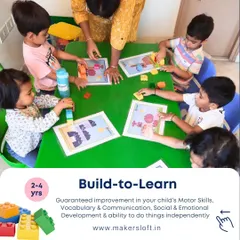
Building Blocks for Early Learners: Hands-on Play in Bangalore & Kolkata
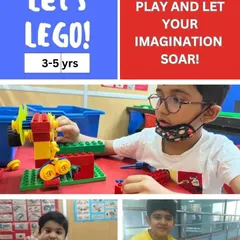
LEGO Robotics and STEM Play for Ages 3-6
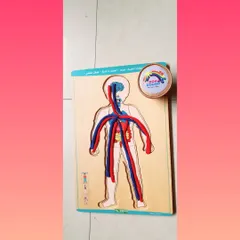
Early STEM and Science Fun for Kids
 7
7
STEM & Robotics Workshops for Kids in Bengaluru
More from Preschool & Kindergarten Programs by Knowledge Origin
More services by Knowledge Origin