Early STEM and Science Fun for Kids
Science isn't about textbooks here. We explore physics, biology, and logic through messy experiments, DIY projects, and everyday curiosity.
Who knew you could make music with just a few bottles of Rooh Afza? Here, my son explains the science of sound and pitch. This simple home experiment is a perfect example of how we introduce early STEM concepts in a fun and engaging way.
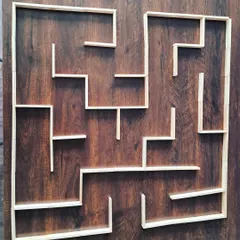
We use tools like this wooden puzzle to introduce complex topics like the circulatory system in a simple, hands-on way. For a four-year-old, this isn't about memorization but about building vocabulary and sparking curiosity about how their body works.
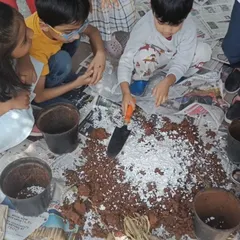
For World Environment Day, we got our hands dirty with a planting activity. My son learned how to mix soil with compost, plant seeds for dhaniya and tulsi, and the importance of caring for our planet.
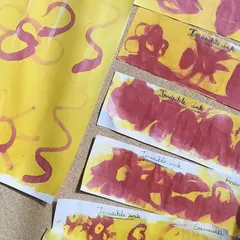
While teaching my son about how plants drink water through capillary action, he made a discovery. He realized the colored paper we were using could be used to make homemade watercolors, turning one science lesson into another.
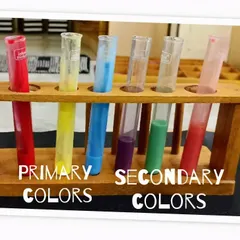
A moment from our science experiment on capillary action. It’s in these moments of play and discovery that children's observation and communication skills truly blossom.
About Early STEM & Science Fun
We don't use worksheets to teach science. Instead, we use what's lying around the house—empty bottles to learn about sound pitch, scraps from mango boxes to understand capillary action, or simple clay to build human anatomy. This is about process, not perfection. My goal is to help your child ask questions and find answers by making a mess and getting their hands dirty, whether we are exploring botany with seeds or physics with water.
How We Approach Science
Science is often taught as a series of facts to memorize, but that is not how it works at our center. I believe that if you want a child to understand the world, you have to let them interact with it.
- Physics through Play: We use items like Rooh Afza bottles filled with different water levels to teach children about sound and pitch. It turns a science lesson into a musical experiment.
- Biology & Nature: We get our hands into the soil to learn about botany, composting, and why plants need sunlight and water. It is not just about planting seeds; it is about observing the lifecycle over weeks.
- Hands-on Logic: Whether we are using puzzles to understand the circulatory system or sorting games to grasp early math concepts, the goal is to make abstract ideas tangible.
Why Choose Our Science Classes?
- Small Batches: We cap our groups at 6 to 8 children to ensure every child gets the chance to touch, feel, and ask questions.
- Process over Result: If an experiment fails, that is a learning opportunity. We celebrate the 'why' and the 'how' more than getting the right answer on the first try.
- Home-Friendly Ideas: I always ensure parents know how to recreate these activities at home. You do not need expensive kits to teach science; you just need curiosity and a few household items.
Located in Chamrajpet, our sessions are designed to be stress-free for both kids and parents. If your child is constantly asking 'why' about everything they see, they will fit right in.
Similar work from other experts
Browse through Curated picks from other experts on mytribe
Hands-on Science Workshops & DIY Camps
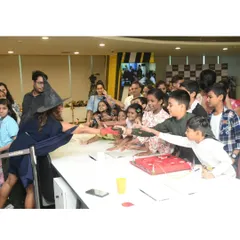
Hands-On Science Experiments for Young Explorers
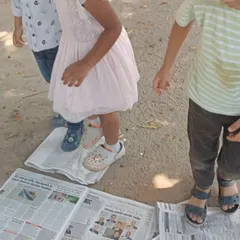
Hands-On Science & Nature Activities for Kids
Developing STEAM skills through hands-on play
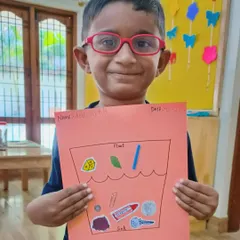
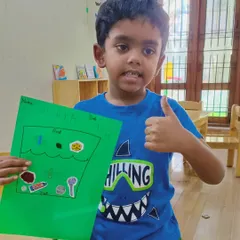
Hands-On Science and Sensory Discovery for Kids
 30
30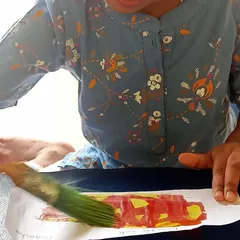
Hands-on Science and Discovery Activities for Kids
More from Toddler & Preschool Playgroups by Milk Teeth Activity Center
More services by Milk Teeth Activity Center