Fostering Independence: Practical Life and Role Play Activities
Watch children navigate a miniature city, pour their own lemonade, or shop for vegetables. Here, we believe that performing real-life tasks is the most powerful lesson for a growing child.
A look at our "All About Me" theme, where children create displays with their photos and handprints, fostering a strong sense of self.
In our Independent Toddler Program, children explore concepts like weight and balance using a wooden scale and colorful blocks.
Toddlers and teachers sit in a circle for a group activity, learning social skills like taking turns and listening to others.
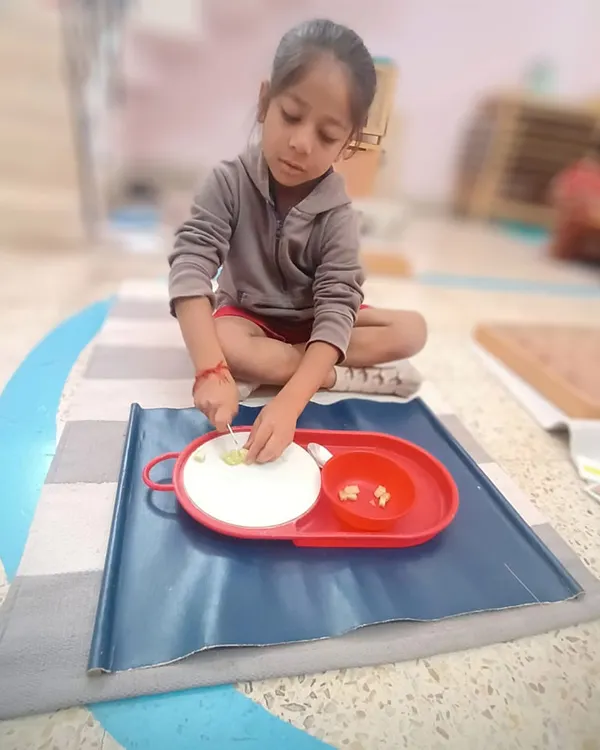
I eat, I learn! Children explore mangoes with all their senses, learning about the "king of fruits" in a delicious, experiential way.
This video shows our kindergarten students helping their younger friends at lunchtime, a powerful lesson in empathy, responsibility, and emotional development.
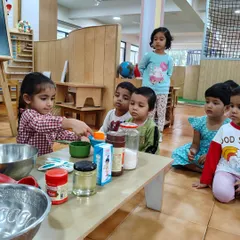
I mix, I learn! Our toddlers practice their pouring and mixing skills by making their own lemonade, a fun and rewarding practical life activity.
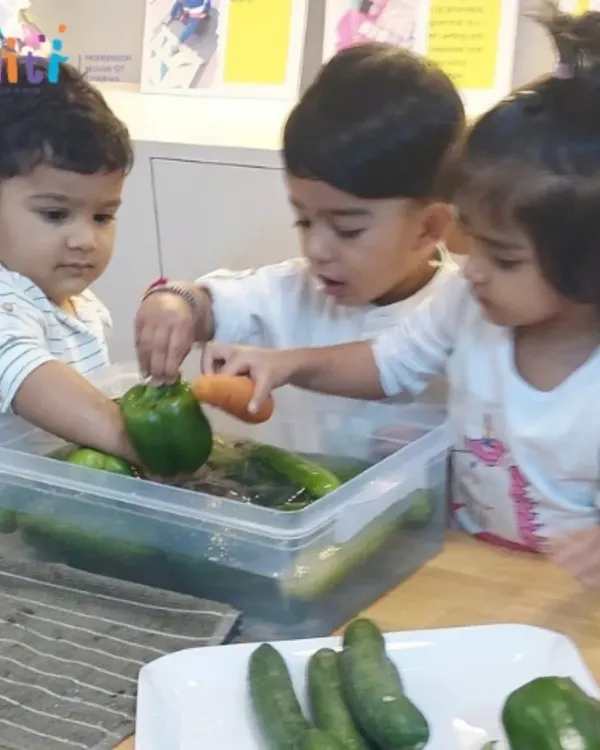
A toddler explores a basket of fresh vegetables, learning their names, colors, and textures in a hands-on way.
A child carries a wooden basket to do her "shopping" at our pretend vegetable market, engaging in imaginative role-play.
A happy shopper! This child walks with his basket of play vegetables, practicing real-life scenarios through role-play.
I wash, I learn! Handwashing is an important life skill we practice every day to promote hygiene and independence.
About Fostering Independence: Practical Life & Role Play
Our practical life curriculum is about building genuine autonomy. When a child carefully pours a glass of lemonade or handles a basket at our pretend vegetable market, they are developing fine motor control, spatial awareness, and the confidence to manage daily tasks independently.
Building Capability Through Daily Tasks
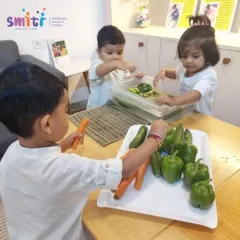
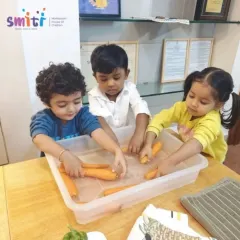
At Knowledge Origin, we treat independence as a core academic subject. In our classrooms, you will find children pouring their own juice, setting snack tables, and cleaning up spills without being asked. These daily chores are central to our play-based philosophy because they give children a sense of agency and competence. We set up a 'yes environment' where toddlers and preschoolers can experiment safely. This means using real child-sized tools for tasks like washing vegetables, mixing lemonade, or carrying a basket during pretend shopping trips.
Learning Through Imaginative Play
Through these activities, children practice social skills like turn-taking, learn vocabulary related to daily items, and understand the flow of community life. Our role-play stations—modeled after real-world settings like hospitals, schools, and shops—allow children to process their experiences in the city. When they act out these roles, they are building empathy, understanding community norms, and developing the critical thinking skills needed for the future. By giving them the freedom to engage with these real-life scenarios, we support the transition from passive listeners to active, capable learners.
Similar work from other experts
Browse through Curated picks from other experts on mytribe
Practical Life Skills: Building Independence
Life Skills and Community Fun for Toddlers
Role-Playing Activities That Build Real-World Skills
Practical Life Skills for Toddler Independence
 31
31
Practical Life Skills and Child Independence
 37
37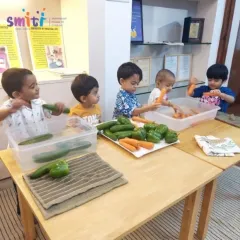
Building Independence Through Montessori Practical Life Skills
More from Preschool & Kindergarten Programs by Knowledge Origin
More services by Knowledge Origin