Strength and Agility Conditioning for Taekwondo
I use agility ladders, plyometrics, and intense bodyweight drills to build the foundation of a fighter. Before you strike, you must learn to move.
An agility circuit for my youngest students. They run through ladders, navigate cones, and practice rolls to develop coordination, speed, and body awareness from a young age.
An adult student performs box jumps as part of our fitness conditioning program. This plyometric exercise builds explosive power in the legs, which is essential for strong, fast kicks.
A black belt student demonstrates pull-ups, a fundamental exercise for building the back and arm strength needed for powerful blocks and grappling. I push every student to increase their strength.
A group of students lines up to begin their agility ladder drills. This exercise is crucial for developing fast footwork, which is the foundation of our movement in both sparring and forms.
Kids building stamina and discipline with jump and push-up drills. I demand they count loudly and push themselves, building mental toughness alongside physical fitness.
Students practice moving through a cone drill circuit. This improves their ability to change direction quickly while maintaining a strong stance, a vital skill for kyorugi (sparring).
A young yellow belt student focuses as he navigates the agility ladder. Even the simplest drills are performed with concentration and purpose.
About Strength and Agility Conditioning
We do not rely on machines here. You start with agility ladders and cone drills to sharpen your footwork, then move to bodyweight exercises like frog jumps and knuckle pushups to build raw power. This is the foundation for every kick you will eventually master.
My method of training focuses on the anatomy of movement. We use agility ladders to develop fast feet, which are essential for both sparring and forms. You will navigate cone circuits and handle plyometric drills because a fighter who cannot control their own weight cannot control an opponent. We use ceiling-mounted monkey bars for grip strength and partner-assisted stretching to ensure your range of motion is sufficient for high kicks. Every student follows the same protocol, from the warm-up to the final hold. We do not skip steps, and we do not take shortcuts. Whether you are here for self-defense or competitive kyorugi, your body is the first weapon you must sharpen. When I say Sijak, you start.
Similar work from other experts
Browse through Curated picks from other experts on mytribe
Taekwondo Conditioning and Agility Training in Bengaluru
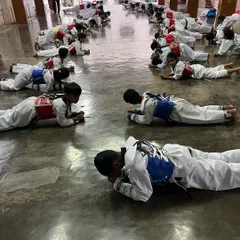
Taekwondo Fitness and Agility Training in Bengaluru
Strength & Conditioning for Martial Arts in Bangalore
Strength, Speed & Agility Conditioning
Agility, Drills & Functional Fitness Training in Jayanagar
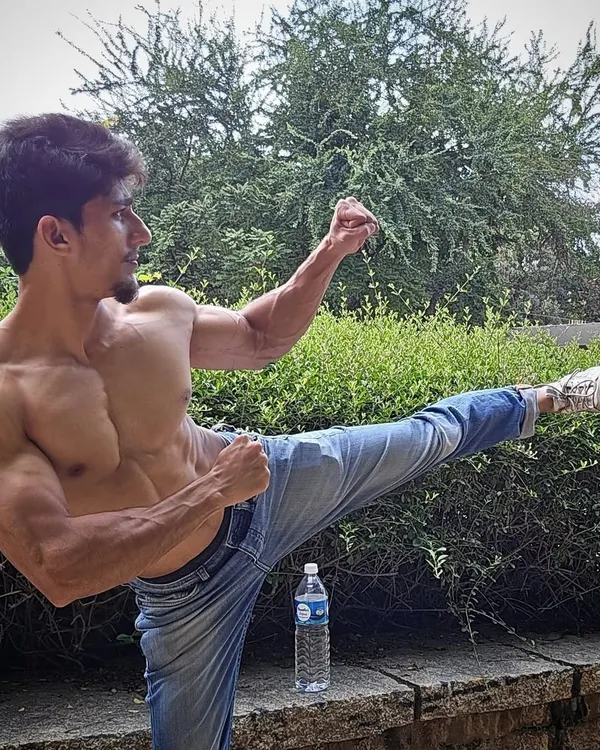 12
12
Martial Arts Fitness and Conditioning for Real Results
More from Self-Defense & Martial Arts Fitness by Kim's Taekwondo Academy
More services by Kim's Taekwondo Academy