Inspirations: Temples, Texts & Travels
My choreography does not emerge in a vacuum. It begins at ancient temple ruins, in the quiet verses of sacred texts, and during my travels across India. These images map the geography of my research—the raw material that eventually becomes the dance you see on stage.
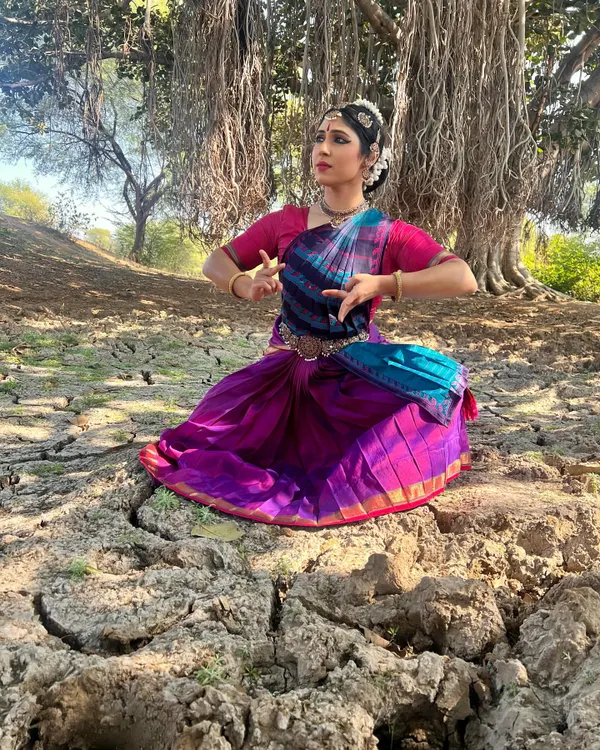
A favorite Sri Bhadrachala Ramadasu keerthanam. My Guru Smt. Kamalini Dutt pushed me to explore the sringara (romantic) moments of Lord Rama, and this composition is an eternal gift from her.
The flickering flame of a lamp, fragile yet the center of faith for millions. This provokes me to think about how the lamp became an emblem of worship, a symbol of hope that must be answered before it ceases to exist.
The lamp, or diya, is seen in Tantra as the vertical, divine self that burns above all mortal desires. Its dying is not an end but a completion, a merging with the sublime.
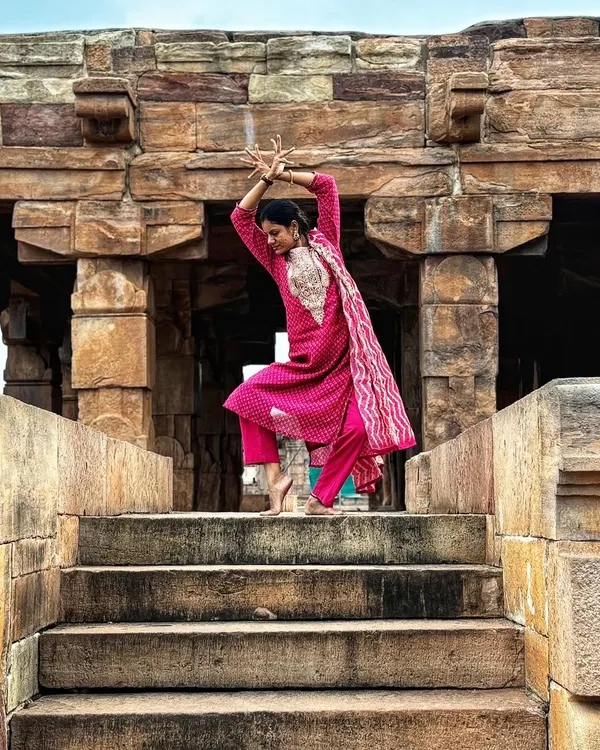
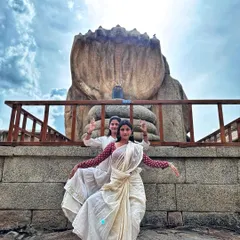
The spirit in wild dances to the inner divine. A fleeting moment of dance at the Pataleshwar temple in Pune, just before being chucked out of the premises. The architecture and energy of temples are a constant source of inspiration.
A fantastic World Heritage Day spent at the Elephanta Caves. The sculptures here are a part of my extended research on Bharatiya Tantra Vidhaan and Vigyaan (Indian Tantric Systems and Sciences).
The Shiva Lingam at Elephanta Caves, shrouded in shadow and light. These ancient sites hold profound energy and unlock new dimensions of understanding our cultural heritage.
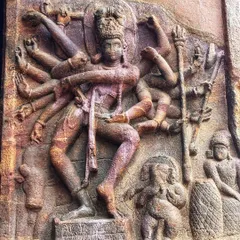
A sculpture of Shiva at Elephanta. The powerful forms and postures carved in stone are a direct inspiration for my dance, connecting me to a lineage of artists from centuries ago.
The entrance to the main cave at Elephanta. Spending time at these world heritage sites with fellow researchers is an invaluable part of my artistic journey.
About Inspirations: Temples, Texts & Travels
When I stand within the pillars of the Pataleshwar Temple or study the Shiva Lingam at Elephanta, I am not merely a tourist. I am deciphering the sthanaka (postures) and bhangas (body bends) that have stood in stone for centuries. My dance is an attempt to animate these frozen shapes, bridging the gap between the sculpture’s silent energy and the dancer's living form.
From Stone to Stage
My creative process is an academic inquiry. When I travel, I look for the geometry of the past—the way light falls on a temple lamp, or the specific curvature of a Chola bronze. For me, dance is not just movement; it is a manifestation of the shastras (treatises) I study.
The Research Behind the Movement
Each performance, whether it is a traditional Margam or a thematic production like Shikhandi, is preceded by months of travel and field research. I often find that the most profound cues for abhinaya (expression) come from non-dance sources: the philosophy of Tantra, the architecture of caves, or the rituals of daily prayer.
Why This Matters
My Ph.D. work in dance and sculpture taught me that classical dance is a living museum. When I perform, I bring this knowledge to the audience so that they see more than a dancer on stage—they see a lineage. If you are interested in a performance or a lecture-demonstration that goes beyond the surface to explore the roots of Indian aesthetics, let us connect.
Similar work from other experts
Browse through Curated picks from other experts on mytribe
The Creative Process Behind My Choreography
 8
8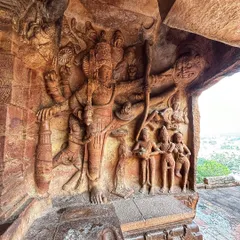
Artistic & Spiritual Dance Journeys
 9
9
The Scholarly Dancer: Research in Motion
 4
4
Bharatanatyam Dance and Artistic Traditions
 9
9
Bharatanatyam Temple Performances and Classical Rituals
 11
11
Bringing Bharatanatyam Stories to Life on Stage
More from Bharatanatyam Dance Performances by Himanshu Srivastava
More services by Himanshu Srivastava