Money Recovery and Cheque Bounce Legal Services in Delhi
When a cheque bounces, time is not just money—it is your legal standing. Don't let delays kill your chances of recovery; know the mandatory 30-day timeline to act.
A bounced cheque is not just a financial setback; it's a legal issue. This video demonstrates a real-life client scenario, showing my process for handling cheque bounce cases, from the initial consultation to outlining the legal steps for recovery under Section 138 of the Negotiable Instruments Act.
The timeline for a cheque bounce case is strict and must be followed precisely. I explain the process: you have 30 days to send a legal notice, give the other party 15 days to pay, and if they fail, you have another 30 days to file a criminal case under Section 138.
When someone owes you money and refuses to pay, you have legal options. I outline the two primary routes for money recovery: filing a civil suit for recovery or, if you have a bounced cheque, initiating a criminal case. I also explain why a summary suit is often the faster option.
About Money Recovery & Cheque Bounce Cases
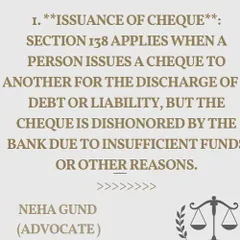
If you are holding a bounced cheque, you have a strict 30-day window from the date of the return memo to issue a legal notice. If you miss this deadline, you lose your right to file a criminal complaint under Section 138 of the Negotiable Instruments Act. Do not wait for the debtor to 'arrange' the money; send the demand notice immediately to initiate the mandatory 15-day payment countdown.
The 138 NI Act Process
Understanding the timeline is your biggest defense. The law provides a specific roadmap:
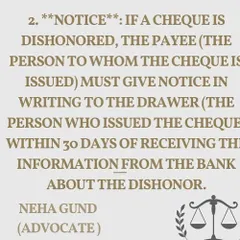
- The 30-Day Notice: Upon receiving the cheque return memo from your bank, you have 30 days to issue a formal Demand Notice.
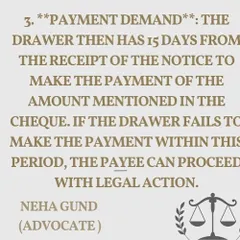
- The 15-Day Wait: The debtor gets 15 days from the receipt of this notice to make the payment.
- The Filing Window: If the money isn't paid within those 15 days, you have a final 30-day window to file the criminal complaint in court.
Civil vs. Criminal Recovery
Many clients ask whether to go Civil or Criminal. If you have a bounced cheque, the Criminal route (Section 138) creates pressure. However, if there is no cheque involved, or if you are looking to recover debt from business agreements, we evaluate a Summary Suit. This allows for a faster trial process under Order 37 of the Code of Civil Procedure, which is often more effective than a lengthy standard recovery suit.
Why Documentation Matters
Whether it is a cheque bounce or a debt dispute, your paper trail is your strongest evidence. We help you organize your agreements, previous correspondence, and bank memos. We also ensure that all electronic evidence, like emails or WhatsApp chats proving the debt, is certified under Section 65B of the Indian Evidence Act to be admissible in court.
Our Approach in Delhi NCR
We handle cases right from our Rajouri Garden chambers. We do not believe in keeping you in the dark. From the initial drafting of the notice to the final arguments in the Magistrate's court, we maintain transparency about the costs, the court fees, and the realistic outcomes of your case.
Similar work from other experts
Browse through Curated picks from other experts on mytribe
 5
5
Legal Support for Cheque Bounce and Money Recovery
Cheque Bounce Recovery: Legal Steps & Defense
Cheque Bounce: A Practical Legal Guide
Legal Strategy for Cheque Bounce & Financial Disputes
Legal Solutions for Financial Disputes & Money Recovery
 4
4


Financial Dispute Resolution Services in Delhi NCR
More from Criminal Defense & Civil Law by G.S. Bagga
More services by G.S. Bagga