Legal Support for Cheque Bounce and Money Recovery
Unpaid dues and dishonoured cheques are stressful. I provide clear, practical legal steps to recover your money and protect your financial interests across Delhi NCR.
As a lawyer specializing in cheque bounce cases, I provide the expertise needed to navigate the legal process. I am your trusted partner in seeking justice and recovering your dues.
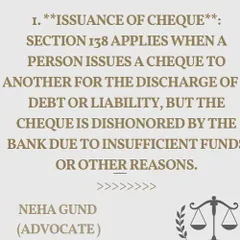
When a cheque is dishonored, it is crucial to take swift legal action. I assist clients in filing cases for bounced cheques, ensuring all procedural requirements are met for a strong claim.
The scales of justice and a bounced cheque symbolize the legal recourse available to you. I leverage my expertise as a cheque bounce case lawyer in Delhi to balance the scales in your favor.
This visual represents the core of my service for cheque bounce cases. I handle the legal complexities so you can focus on your business, ensuring a defined path toward recovering your money.
For cheque bounce matters, the first step is often a formal legal notice. I provide services to instantly send the required notice, initiating the legal process for recovery efficiently.
About Money Recovery & Cheque Bounce Cases
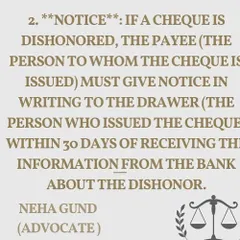
You have a strict 30-day window from the date of cheque return to issue a legal notice. Missing this deadline often means you lose your right to initiate a case under Section 138 of the Negotiable Instruments Act. I focus on drafting these notices immediately upon contact to protect your legal standing and kickstart the recovery process effectively.
Understanding Your Legal Position
Dealing with a cheque bounce is not just about the money lost; it is about following the specific legal procedure defined under the Negotiable Instruments Act. Many clients reach out after the 30-day notice window has already closed, which severely weakens the case. My priority is to prevent that.
The Recovery Process
- Legal Notice: This is your first official step. A well-drafted notice, sent on an official letterhead, puts the necessary legal pressure on the defaulter.
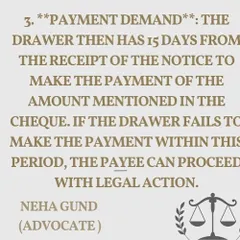
- The Wait: Once the notice is served, the law grants the debtor 15 days to make the payment before you are legally permitted to file a complaint.
- Filing the Complaint: If the payment is not made, we proceed to file a criminal complaint in the relevant District Court in Delhi NCR.
Why Strategic Filing Matters
Jurisdiction is often a point of confusion. We must file in the specific district where your bank account is located. I handle the jurisdictional analysis, drafting of affidavits, and the court registry filings to ensure your case is not delayed by procedural objections.
Can We Recover Money Without Litigation?
Not every dispute needs to go to trial. Often, a strong legal notice is enough to trigger a settlement. I assess the merits of your case during our initial consultation to see if a recovery suit or a summary suit under Order 37 CPC is a faster route for your specific situation. My goal is to get you paid, not just keep you in court.
Similar work from other experts
Browse through Curated picks from other experts on mytribe
Legal Strategy for Cheque Bounce & Financial Disputes
Legal Solutions for Financial Disputes & Money Recovery
Cheque Bounce: A Practical Legal Guide
 4
4


Financial Dispute Resolution Services in Delhi NCR
Cheque Bounce Recovery: Legal Steps & Defense
Cheque Bounce and Banking Dispute Legal Solutions
More from Civil Litigation & Property Law by Manish Jha