Navigating Marital & 498A Disputes
Legal issues in marriage are overwhelming. Whether you are facing a 498A dowry harassment case or navigating divorce proceedings, I provide clear legal strategies based on the latest Supreme Court guidelines to help you protect your rights.
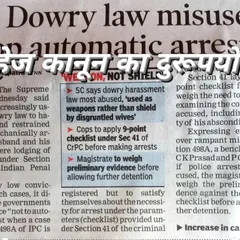
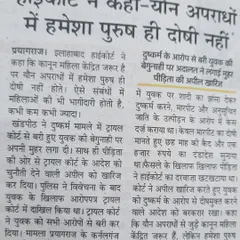
A significant Supreme Court ruling has changed the procedure for 498A dowry cases, preventing immediate arrest for up to two months after a complaint. I break down what this historic judgment means for you and how this period can be used for negotiation and resolution, offering protection against false accusations.
This infographic in Hindi summarizes the Supreme Court's landmark decision on Section 498A. Key takeaways include no immediate arrest, no jail without investigation, and the case first being sent to a Family Welfare Committee for mediation.
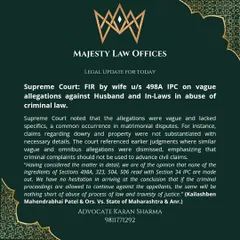
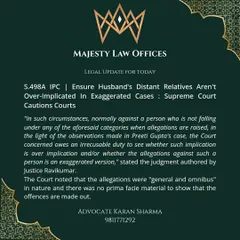
An English summary of the Supreme Court's protective measures in 498A cases. This ruling provides a 60 day cooling off period, preventing immediate arrest and ensuring that an investigation must precede any jailing, which helps curb the misuse of the law.
Not every argument or taunt constitutes mental cruelty under Section 498A of the IPC. The Bombay High Court has clarified this, and it is important to understand the legal threshold for what is considered a criminal offense versus what is a non-criminal family issue.
In marital disputes, it is important to know that men also have specific legal rights. I explain the four key legal remedies available, including filing for divorce, seeking child custody, and how to counter false allegations like 498A and domestic violence to protect yourself and your family.
There is a clear legal line between a "gift" given voluntarily during a marriage and "dowry" which is a demand. In this video, I explain this crucial difference, as giving or taking dowry is a criminal offense, while exchanging gifts is perfectly legal.
The Supreme Court has ruled that a husband's passport cannot be impounded simply because his wife has filed multiple cases against him. This is a significant judgment that protects the right to travel and upholds the principles of natural justice during marital disputes.
A recent Supreme Court judgment held that a husband can be held liable for his wife's trading losses if an oral agreement or mutual understanding existed between them. This ruling highlights how financial responsibilities can be shared within a marriage.
This image reflects on a tragic case where a young man ended his life due to relentless pressure for alimony. It serves as a powerful reminder of the human cost of delayed justice and the misuse of legal provisions, highlighting the need for a more balanced and compassionate legal system.
This image represents a tragic suicide case where justice was questioned. It underscores the severe mental and emotional toll that protracted legal battles, particularly those involving allegations of cruelty or demands for alimony, can take on individuals.
About Navigating Marital & 498A Disputes
If you have received a 498A notice, remember that recent Supreme Court guidelines provide a 60-day window during which immediate arrest is not mandatory. Use this time to gather documentation and consult a lawyer to prepare your defense, rather than panicking. We focus on structured representation to ensure you are not caught off guard by aggressive legal procedures.
Marital disputes often involve complex intersections of civil and criminal law. When the emotional toll is high, it is easy to make mistakes that cost you later. My approach focuses on stripping away the confusion surrounding these cases.
Handling 498A and Dowry Allegations
The most critical aspect of a 498A case is understanding that it is a criminal provision often misused. The law does not mandate immediate arrest. We work to ensure that investigations are conducted fairly, emphasizing mediation through Family Welfare Committees where applicable. My goal is to help you present the truth, distinguishing between legal gifts and illegal dowry demands.
Divorce and Custody Strategy
Every marriage is unique, so every divorce requires a different strategy. Whether you are opting for mutual consent or a contested divorce, we calculate your limitation periods and map out a litigation roadmap. If children are involved, we handle guardianship petitions with a focus on child welfare, ensuring your parental rights are secured.
Why Strategic Legal Action Matters
Legal battles like these are won with preparation. Whether it is reviewing 50 pages of documents or filing an anticipatory bail application in the Sessions Court, the process requires attention to detail. We operate from our Rajouri Garden chambers in Delhi, serving clients across the NCR region. We do not judge your situation. We listen to your facts and guide you on whether a settlement or a court battle is the more practical path for your specific circumstances. Remember, kanoon ki jaankari (knowing the law) is your real power in any marital dispute.
Similar work from other experts
Browse through Curated picks from other experts on mytribe
Matrimonial Legal Defense and 498A Support
Defending Against False Matrimonial Cases
Legal Support for Family & Matrimonial Disputes in NCR
Defending Against False Matrimonial & 498A Allegations
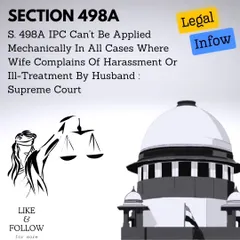
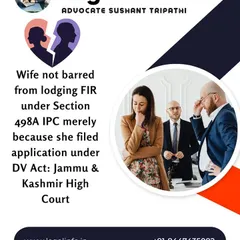
Navigating 498A and Domestic Violence Cases
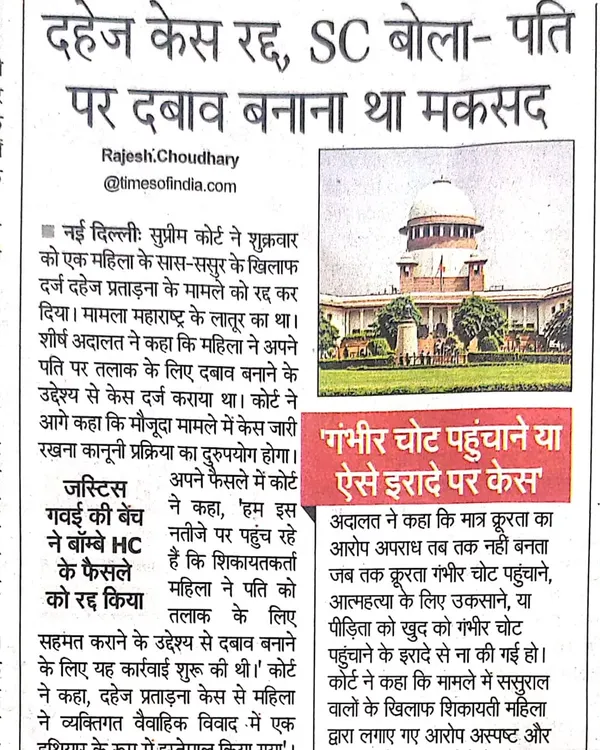 9
9Defending Men Against False 498A and DV Cases
More from Criminal Defense & Civil Law by G.S. Bagga
More services by G.S. Bagga