Art Fundamentals & Tips: Simple Guides to Start Painting
I believe anyone can learn to paint if you have the right guidance. Whether you are picking up a brush for the first time or looking to refine your technique, here are some simple tips and foundational guides to help you start your creative journey. 😊
Are you a beginner confused between oil and acrylic paints? This simple guide breaks down the key differences in technique, drying time, cost, and cleaning to help you choose the right medium for your first painting.
Here are a few helpful acrylic painting tips to get you started. Learning to work with mid-tones, dark tones, and highlights can make a big difference in your artwork. Remember, the most important thing is to enjoy the process.
Let's talk about how to hold a pencil. This is the tripod grip, which most of us use for writing. It is great for small details, but it limits your range of motion. Understanding this is the first step to improving your drawing skills.
This guide explains the overhand or drumstick grip. This technique uses your shoulder instead of your wrist, making it easier to draw larger shapes and create fluid lines. It might feel strange at first, but practice makes it intuitive.
These are the first four elements of art: line, shape, form, and color. Understanding these basic building blocks is essential for any artist. I break them down in a simple, visual way to make them easy to remember.
Here are the next three elements of art: value, space, and texture. Learning about these concepts will help you create depth, realism, and interest in your paintings and drawings.
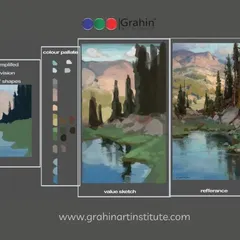
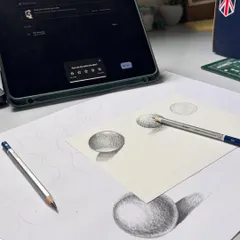
What is 'value' in art and why is it so important? This guide explains how value, or the lightness and darkness of a color, is the key to creating the illusion of light and three dimensional form in a painting.
Highlights are the small, bright spots that bring a painting to life. This guide explains why getting highlights right is so powerful and how they can be used to draw the viewer's attention to the most important parts of your artwork.
Edges are seen wherever there is a change in object, plane, or color. Understanding where and why edges appear is a fundamental skill for creating realistic and convincing paintings.
This guide explains the different nature of edges in painting, from hard and soft edges to lost edges. Learning to control your edges helps you create a sense of distance, focus, and atmosphere in your work.
About Art Fundamentals & Tips
Whether you are deciding between oils and acrylics or struggling to control your charcoal strokes, the trick is to experiment without the pressure of perfection. I always tell my students in Powai that art is less about the final outcome and more about understanding the tools you have in your hand. Let's look at the basic techniques that can change how you approach your canvas.
Understanding the fundamentals does not mean memorizing textbooks. It is about knowing how to make a mark that feels like you.
The Building Blocks
Everything you paint is built on the same elements: line, shape, form, color, value, space, and texture. When you understand how these interact—like how 'value' (the lightness or darkness of a color) creates depth—you stop guessing and start creating with intent. Getting highlights right, for instance, is often what separates a flat image from one that feels alive.
Choosing Your Materials
Whether you are choosing between acrylics (fast-drying, budget-friendly) or oils (rich, blendable), or learning to use a kneaded eraser to pull light from a charcoal drawing, your tools are your best friends. Don't be afraid to try different grips—like the overhand 'drumstick' grip for broader, more fluid sketches compared to the standard tripod writing grip.
Learn With Me in Powai
I host small-batch art classes at my home studio in Powai where we practice these fundamentals together. If you are not nearby, I also conduct online sessions on Zoom where I offer real-time feedback on your brush strokes. Whether you want to master charcoal sketching or get comfortable with acrylics, you don't need experience. Just bring your curiosity, and we will figure out the rest.
Similar work from other experts
Browse through Curated picks from other experts on mytribe
Art Tutorials and Beginner Painting Inspiration
 7
7

Art Basics & Creative Tips for Beginners
 13
13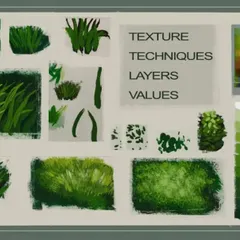
Art Fundamentals: Learn Sketching, Painting, and Color Theory
 5
5
Traditional Painting Tutorials and Creative Techniques
The Art of Sketching
Drawing Foundation: Practice & Basics
More from Art Classes by Ayushi Kabra
More services by Ayushi Kabra