Creative Electronics & Digital Displays
Why just read code off a screen when you can build displays that move, light up, and think? Our young innovators design everything from mechanical digit displays to smart voting machines, bringing logic to life through real circuits, sensors, and C++ code.
Why just see numbers on a screen when you can make them move? I built this Digital Digit display using servo motors and an Arduino to show numbers in motion.
What if numbers didn't just appear on a screen? This is Digit Dynamics, our servo-powered mechanical display that brings numbers to life without any screens.
I built a fully functional Voting Machine using Arduino and push buttons. It's a secure, simple, and smart way to understand how digital democracy works.
When school elections go high-tech. I built this Electronic Voting Machine for my school, using an Arduino, push buttons, and LEDs to count votes.
We built an Automatic Water Level Indicator using an Arduino, ultrasonic sensor, and LEDs. It shows the water level at different stages to prevent overflow and wastage.
STEM meets Hogwarts. We built our own Electronic Voting Machine to vote for our favorite Hogwarts houses, learning about circuits and logic in a magical way.
My Smart Bridge uses an Arduino and a soil moisture sensor to automatically lift or lower based on ground conditions, just like how technology should respond to nature.
I built and coded my own Traffic Signal using an Arduino and LEDs. This project helped me explore how coding and electronics control the traffic lights we see every day.
This is my Color Sorting Bot, designed, built, and coded by me. It uses a color sensor to make smart decisions and sort objects automatically.
My Electronic Voting Machine uses push buttons, LEDs, and an Arduino to simulate a real-world voting system. Every button press lights up an LED and captures the vote.
About Creative Electronics & Digital Displays
Every display you see here started as a messy breadboard and a string of logic on an Arduino. We don't use pre-made kits that snap together. Whether it's a servo-driven digit display or an electronic voting machine, our students wire every resistor, write every line of code, and debug their own circuits when things don't light up the first time. It is about learning the pulse of electricity, not just soldering parts.
Building a display is the ultimate test of hardware and logic. It forces kids to move beyond theory and understand the physical reality of electricity. In this cluster, we skip the boring textbooks. We focus on projects that force young engineers to sync mechanical motion with code.
When a student builds a traffic light controller or a smart voting machine, they aren't just making a project. They are learning:
- Circuit Literacy: How to route power across a breadboard without short-circuiting.
- Logical Sequencing: Writing the timing loops (the void loop in C++) that make lights blink or servos rotate in sync.
- Hardware Interfacing: The patience to wire 7-segment displays and debug when a connection is loose.
For a student in Pitampura, getting that LED matrix to display a pattern isn't just homework; it is a massive confidence booster. We see kids come in with no experience and leave having built a fully functional voting machine for their school election. We keep the class sizes small (4-6 students) specifically so we can get into the grit of the hardware. If a project fails to turn on, we don't fix it for them. We sit with them, grab the multimeter, and find the break in the loop. Because once they solve the hardware issue themselves, they never forget the logic behind it. That is how we build thinkers, not just coders.
Similar work from other experts
Browse through Curated picks from other experts on mytribe
Student Robotics & Automation Projects
Hands-on 3D Art and Electronics Workshops
Hands-On Robotics and Coding Projects
 14
14
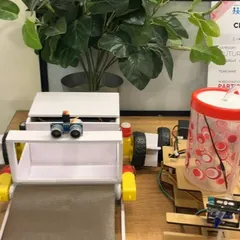
Student Robotics Projects: From Idea to Working Robot
Student Robotics and Coding Projects
Robotics Projects & STEM Student Creations
More from Coding & Programming by Be A Robonaut
More services by Be A Robonaut