Build Your Own Interactive Games
Why just play video games when you can build them? At our lab, young makers turn code into action—crafting everything from retro arcade games to precision archery bots from scratch.
This is my Archery Bot, a project that combines logic and fun. Every shot is a lesson, and every launch is progress in learning about precision engineering.
Meet my Ball Shooter Bot, where creativity meets precision. This bot can aim, shoot, and score like a pro, turning a fun idea into a working invention.
I built this Brain Game using an Arduino, LEDs, and touch sensors. Match the question to the correct answer, and the LED lights up. It's a fun way to learn about logic and circuits.
My Archery Bot has fearless aim. With one perfect shot, I can bring down a pyramid of cups, showing how focus and creativity make anything possible.
Bots, wheels, and wonders. This video showcases some of our fun projects, including a Ball Shooter Bot, pulley systems, and creative trikes and dumpers.
Robots and art make magic. I created a Paper Robot that draws stunning patterns, proving that even paper can become powerful with the right engineering.
Snake Game reloaded. I brought this retro game back to life, building it from scratch using a Maker Board and an LED Matrix. It's pure DIY tech and gaming magic.
Why walk when you can hop into the future? We created the "Bounce Genius," a hopping bot that doesn't just move, it leaps with innovation.
Blast Beyond. We built this powerful Rocket Launcher project, fueled by curiosity and launched with innovation. It's a great way to learn about mechanics and tension.
This is my working rocket launcher, built from motors, metal scraps, and rubber bands. From assembly to launch, we engineered every detail with pure maker spirit.
About Code, Build, Play: Interactive Games
You'll notice our projects aren’t just snap-together plastic kits. Whether it’s an archery bot or a retro snake game, kids start with breadboards, jumpers, and raw Arduino code. It’s messy, and sometimes the game doesn’t load on the first attempt—that’s the best part. We don't hand them the answers; we teach them to debug the hardware themselves, because the moment a kid realizes 'I built this' is the only lesson that truly sticks.
The Logic of Play
We move past simple screen-based tasks to bridge the gap between digital code and physical reality. Kids don't just watch characters jump on a screen; they build the machines that control that movement. Using MIT Scratch for foundational logic and shifting to C++ with Arduino for advanced projects, students learn how conditional statements (If/Else), loops, and variables actually control motors and sensors in the real world.
How We Build
- Hardware: We use actual tools—breadboards, jumper wires, resistors, and controllers. No black-box kits.
- Debugging: We embrace the wobble and the failed launch. When an archery bot misses or a sensor glitches, we troubleshoot the voltage drops and logic errors together. This persistence is the core of our robotics curriculum.
- Real-World Application: From touch-sensitive digital pianos to keypad-operated games, these projects demonstrate how engineering principles apply to everyday problems.
Why Build from Scratch?
Many coding classes focus on theory, but our lab in Pitampura is built for 'hand-dirtying' experimentation. By building their own controllers and games, kids gain ownership of the technology they use. They stop seeing devices as magic and start seeing them as systems they can build, break, and rebuild better. It is about fostering the confidence to face a blank page, a pile of wires, and the belief that they can make something that works.
Similar work from other experts
Browse through Curated picks from other experts on mytribe
Coding & Game Development Workshops for Kids in Noida
Featured Robotics & AI Coding Projects
 7
7
Robotics Competitions and Coding Games for Kids
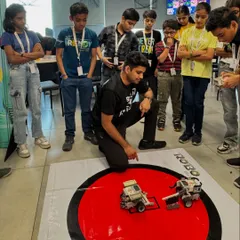
Hands-on Robotics and Coding Programs for All Ages
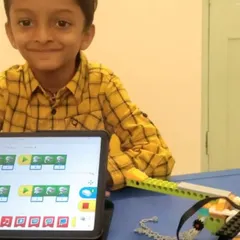
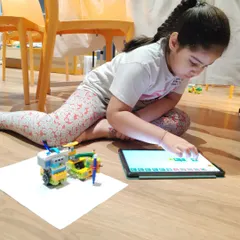
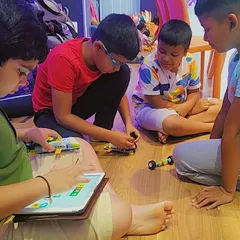
Robotics and Coding Classes for Kids
 4
4

STEM, Robotics, and Coding Classes for Kids
More from Coding & Programming by Be A Robonaut
More services by Be A Robonaut