Robotics & Electronics
Be a Robonaut
Pricing Guide
Junior Mechanical Robotics
Core Learning & Projects
- Curriculum Focus: Pure Mechanical Engineering concepts (Physics in action) without coding.
- Project Volume: Completion of 3-4 functional mechanical models per month (e.g., Heavy Lifting Crane, Rope Car, Manual Robotic Arm, Walking Bot).
- Engineering Principles: Practical application of Torque vs. Speed, Gear Ratios (Spur, Rack & Pinion), Pulley systems, and Center of Gravity.
- Methodology: Implementation of the "Fail, Fix, Fly" philosophy requiring students to disassemble and reassemble builds to fix alignment issues.
Hardware & Tools (In-Class Usage)
- Metal Construction Kits: Access to industrial-style perforated metal plates, channels, and brackets (requires fastening, not snap-fit).
- Real Tool Training: Training on using Allen keys, spanners, and screwdrivers to improve fine motor skills.
- Actuators & Power: Usage of high-torque DC Motors, battery packs (AA/9V), and wired remote control boxes (DPDT switches).
Classroom Experience
- Batch Size: Small group learning (4-6 students per table) ensuring individual attention.
- Duration: 8 Sessions per month (2 classes per week, 60 minutes each).
- Environment: Residential studio setup with domestic air-conditioning and dedicated worktables.
Advanced Electronics & Automation
Curriculum: The Brains of Robotics
- Core Subject: Introduction to Embedded Systems and C++ Programming (or Block-based for absolute beginners).
- Project Scope: Building autonomous intelligent systems like Electronic Voting Machines (EVM), Radar Systems, and Smart Home Automation.
- Logic Development: Writing algorithms for Conditional Statements (If/Else), Loops, and Variable management.
- Debugging: Guided sessions on troubleshooting code syntax and circuit connections.
Electronics & Component Library (In-Class Usage)
- Microcontrollers: Hands-on work with Arduino Uno / Nano or proprietary Maker Boards.
- Sensor Suite: Access to input devices including Ultrasonic (distance), IR (obstacle/line), Soil Moisture, Rain, Gas/Smoke, and Touch sensors.
- Output Devices: Usage of Servo Motors (for precise angles), Buzzers, LCD Displays (16x2), and LED matrices.
- Circuit Building: Prototyping on Solderless Breadboards using jumper wires.
Professional Guidance & Tools
- Instructor Credential: Direct mentorship under an M.Tech (BITS Pilani) expert, ensuring concepts are taught with engineering rigour.
- Class Specs: 8 Sessions per month (2 classes per week, 60-75 minutes each). Includes usage of center's laptops if student does not bring one.
Intensive STEM Camp
Course Structure & Intensity
- Format: Accelerated learning schedule with 4-5 classes per week (Summer/Winter camps) or specialized weekend marathons.
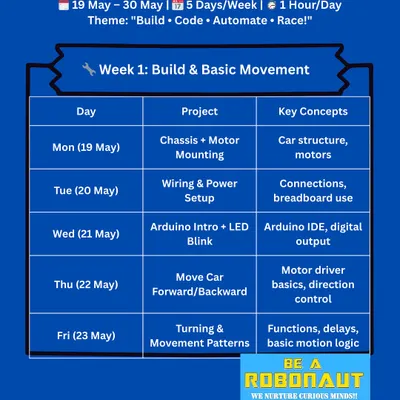
- Module Focus: Thematic curriculum such as Vehicle Builders Week (Mechanical focus) or Arduino Automation Camp (Coding focus).
- Outcome: Completion of a specific project portfolio concluding with a Student Showcase/Demo Day.
Kit & Material Strategy
- Project Materials: Full access to the center's inventory of motors, sensors, and metal kits during workshop hours.
- Take-Home Aspect: Includes a small takeaway project (e.g., simple LED craft or basic DC motor fan) or a Certificate of Completion (Major metal kits remain property of the center).
Skill Development
- Soft Skills: Emphasis on Collaboration and Presentation; students work in pairs and present to parents at the end.
- Cross-Disciplinary: Blends mechanical building with basic electronics logic in a compressed timeframe.
About Robotics & Electronics
Where Imagination Meets Hardware
At Be A Robonaut, I don't just stick to teaching robotics. I create a space where kids can try, mess up, fix, and finally get things working - sab kuch seekh ke, khud ke dum pe (learning everything, by their own effort). Chasing perfection? Not my jam. I believe real learning comes from building, coding, and creating, even if it means things break along the way.
How We Get Our Hands Dirty
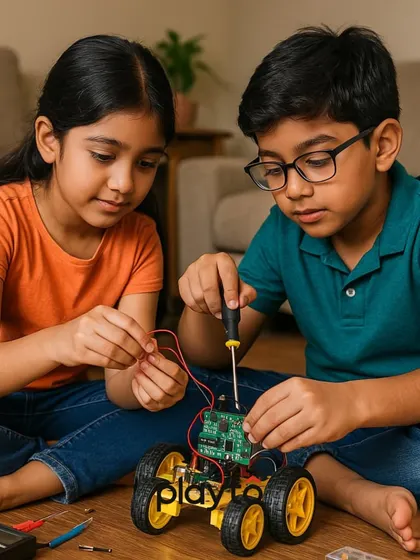
No boring lectures here. I toss out the pre-made kits and hand over the real stuff - motors, wires, metal parts, sensors. Kids learn by doing, right from day one. The mantra? Fail, Fix, Fly. Mistakes are normal, even welcome. That’s how kids get street-smart with problem solving, creativity, and teamwork. Confidence follows - and that’s gold.
What We Build
My curriculum is project-first. The kids make actual robots and smart devices. Sometimes it’s fun stuff, sometimes it solves a real problem. We start with basics through DIY electronics for kids, like writing code to blink an LED or building a touch-powered light. Then, we shift to gear-driven cranes, robotic arms, and wheeled bots. Need a mopping robot or a dumper bot? We build those too.
Making It Smart
Robonauts step up with sensors: smart dustbins, gas-detecting fire alarms, bots that avoid obstacles or follow lines. This is where STEM learning with sensors gets real and kids see their ideas come to life.
Yeh Maine Khud Banaya Hai
That proud moment - when kids say, “Yeh maine khud banaya hai” (I made this myself) - makes it all worth it. Once you’re a Robonaut, you never forget that feeling.
Meet your Expert
Be A Robonaut
14 connects in last 3 months
My Story
Kids are wild creators, and honestly, they teach me more than any textbook ever did. My computer science background is cool, but nothing beats seeing a 4-year-old build her own car or a kid inventing a mopping bot just for fun. Some come all the way from the US just to join in and return to dream bigger next year. This isn’t just a robotics class – it’s a tribe of young makers, asking crazy questions and building stuff that matters. Once a Robonaut, always a Robonaut!
My Work
Robotics & Coding Classes for Kids - We run hands-on robotics, Arduino robotics for kids, and coding workshops for ages 4-18. No boring theory.
DIY Projects, Not Just Watching - Kids use real tools - motors, sensors, gears. Ye maine khud banaya hai (I made this myself) is our motto.
Solve Real Problems - Projects like smart cloth lines and gas detectors. Real-world coding projects for children, not just play.
Mistakes Welcome Here - We let kids fail, fix, and fly. Debugging is part of the fun. No shortcuts, just pure DIY kids robotics workshop.