Student Robotics and Coding Projects
Our students do not just study technology, they invent with it. Explore functional devices, sensors, and games created by young innovators using code and hardware.
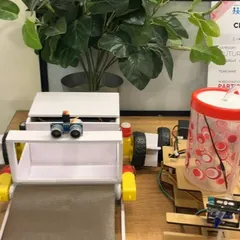
This is a student-built smart stick for the visually impaired. The device uses ultrasonic sensors and wiring to detect obstacles, demonstrating a practical application of robotics.
A student demonstrates their contactless thermometer project. The device uses an Arduino board and sensors to measure temperature, showcasing skills in electronics and programming.
A student from CS Academy demonstrates their fire-fighting robot car. This project uses a water pump and sensor system to detect and extinguish a small flame automatically.
A student from CS Academy presents his innovative solar tracking panel. The project uses LDRs to follow light and an anemometer to protect the panel during high winds, increasing energy efficiency.
Two students from APS Hisar present their "Smart Water Tank Filler." Their project automates the process of filling a water tank, saving water and removing a daily chore.
This video showcases two practical student projects: an automatic hand sanitizer dispenser and a rain protector, both designed using simple circuits and sensors.
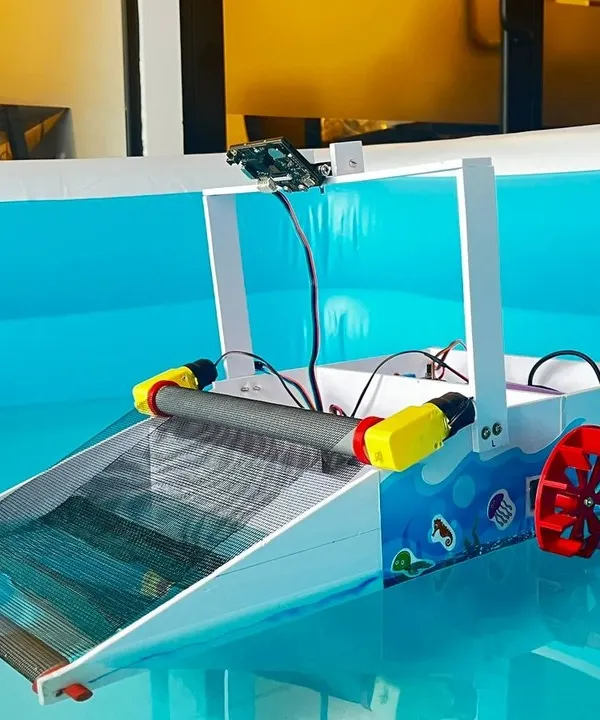
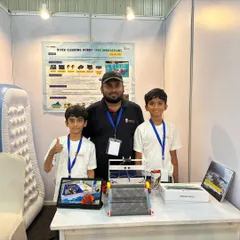
Team Aqua Warriors presents their concept for a river cleaning robot, a project that combines environmental awareness with engineering and design principles.
A student-built Ping Pong game running on a small LCD screen, powered by an Arduino Nano. This project is a fun introduction to game development and electronics.
A young student demonstrates an accelerometer he has wired and coded. The screen shows real-time data tracking the device's movement across X, Y, and Z axes.
About From Idea to Invention: Student Projects
These are not pre-built models. Every project you see here starts as a concept before students wire the circuits, solder components, and write the logic. Whether it is an Arduino-based water management system or a sensor-driven assistive stick, we guide students through the messy, real-world process of debugging hardware, testing code, and refining their prototypes until they actually function.
From Concept to Working Prototype
We believe the gap between theory and application is bridged only by building. When a student builds an automatic water tank filler or a line-following robot, they are learning electronics, mechanical engineering, and programming simultaneously.
The Learning Methodology
Our approach is simple: we provide the tools, and the students provide the curiosity. During our project-based sessions, students tackle:
- Hardware Integration: Understanding microcontrollers like Arduino, sensors (IR, Ultrasonic, LDR), and motor drivers.
- Code Logic: Writing scripts in Python, C, or Block-based environments to control the hardware.
- Troubleshooting: Real-world engineering rarely goes right the first time. We teach students how to fix circuit faults and logic errors, which is where the real learning happens.
Why Build Projects?
Beyond just learning skills, these projects are the foundation of a technical portfolio. Students who master these builds are better prepared for national-level innovation championships and are often the ones setting the pace in our competitive batches held at centers across Delhi NCR and online. By the end of our programs, a student should have a working prototype they built themselves, not just a certificate.
Similar work from other experts
Browse through Curated picks from other experts on mytribe
 5
5
Student Robotics Projects and Coding Innovations
 14
14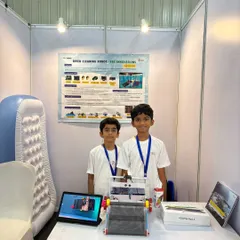
Student Robotics Projects: From Idea to Working Robot
Our Young Innovators in Action
Robotics & Coding Projects Made by Kids
Student Inventions: From Code to Creation
Our Young Innovators in Action
More from STEM & Tech Courses for Students by Techradiance
More services by Techradiance