Understanding the New Criminal Laws (BNS, BNSS, BSA)
India's criminal laws have changed, and I’m breaking down the BNS, BNSS, and BSA in simple Hindi-English. Stop guessing and get clear on your rights.
With the new criminal laws (BNS, BNSS, BSA) now in force, I explain the five biggest changes. This includes the ability to file a Zero FIR from any police station and mandatory timelines for police investigation and court judgments.
In this video, I cover 20 key introductions in the new laws, part one. Learn about online FIRs, digital summons, mandatory videography of crime scenes, and stricter punishments for crimes against women and children.
Continuing my breakdown of the 20 biggest changes in the new laws, part two. I discuss new provisions for transgenders, seizure of property for absconding criminals, and the mandatory use of forensic investigation for serious crimes.
Here are 5 more important facts about the new laws. I explain how terrorism and cyber fraud are now defined, how digital evidence like WhatsApp chats is now admissible, and how justice is expected to be delivered within a three-year timeframe.
This flowchart illustrates the new stages of a criminal trial under the Bharatiya Nagarik Suraksha Sanhita (BNSS). Understanding this process is the first step to navigating your case effectively.
What happens after you file a complaint? I explain the new inquiry process under Section 173(3) of the BNSS, which sets a 14-day deadline for preliminary investigation in many cases, including those handled by the CAW cell and EOW.
The new laws give more protection to the police, which can be a double-edged sword. I discuss how victim statements can now be recorded at the police station and the potential for misuse of power, explaining the new legal landscape you need to be aware of.
Want to file a case against a police officer under the new laws? I explain the updated procedure under Section 175(4) of the BNSS, where a magistrate must conduct a preliminary inquiry before a case can be registered against a public servant.
Under the new BNSS, you can get a false case discharged within 60 days. I explain how to file a discharge application under Section 250 or 262, whether in a Magistrate or Sessions court, to get your name removed from a baseless case quickly.
What if you miss the 60-day window to file for discharge? A recent Kerala High Court judgment offers a solution. I explain how you can still file a discharge application even after 60 days, giving you another chance to fight a false case.
About Understanding the New Criminal Laws (BNS, BNSS, BSA)
The biggest shift under the BNSS isn't just the section numbers; it's the mandatory digitization of evidence and strict investigation timelines. Whether you are dealing with a pending complaint or wondering how your previous FIR status changes, these procedural updates can determine your next move. Don't let a confusion over old vs. new sections become a hurdle in your case.
What Changed with BNS, BNSS, and BSA?
The legal landscape has shifted from the old IPC and CrPC to the Bharatiya Nyaya Sanhita (BNS), Bharatiya Nagarik Suraksha Sanhita (BNSS), and Bharatiya Sakshya Adhiniyam (BSA). For someone fighting a case, this isn't just theory—it changes how your lawyer builds your defense.
Here is what you need to keep in mind:
- Digital Evidence: Courts now explicitly accept digital footprints like WhatsApp chats, emails, and call logs as valid evidence under the BSA. If you are dealing with a case involving harassment or fraud, your digital records are now your primary defense.
- Timelines: The BNSS introduces stricter deadlines for police investigations and charge sheet filings. This is meant to curb the 'tareekh-pe-tareekh' (endless hearing) culture, but it also means you need to be much faster in filing your discharge applications.
- Zero FIR: You can now register an FIR from any police station, regardless of where the crime occurred. If you were avoiding filing a complaint due to jurisdiction issues, that excuse is gone.
How This Impacts Your Current Case
Many of my clients ask, 'Arvind, does this apply to my old case?' The answer is usually complex—it depends on the stage of your trial and the specific charges. I analyze your FIR or charge sheet against these new sections to see if we can use the new provisions to your advantage, especially when it comes to discharge applications (Section 250/262 BNSS) or challenging a false case.
Why You Need Clarity
The goal of these changes is transparency, but in practice, they can be confusing for those without legal training. If you are stuck in a cycle of court dates or facing a new accusation, you cannot afford to rely on outdated advice. I simplify the law so you know exactly where you stand.
Similar work from other experts
Browse through Curated picks from other experts on mytribe
Decoding the New Criminal Laws: Practical BNS and BNSS Guidance
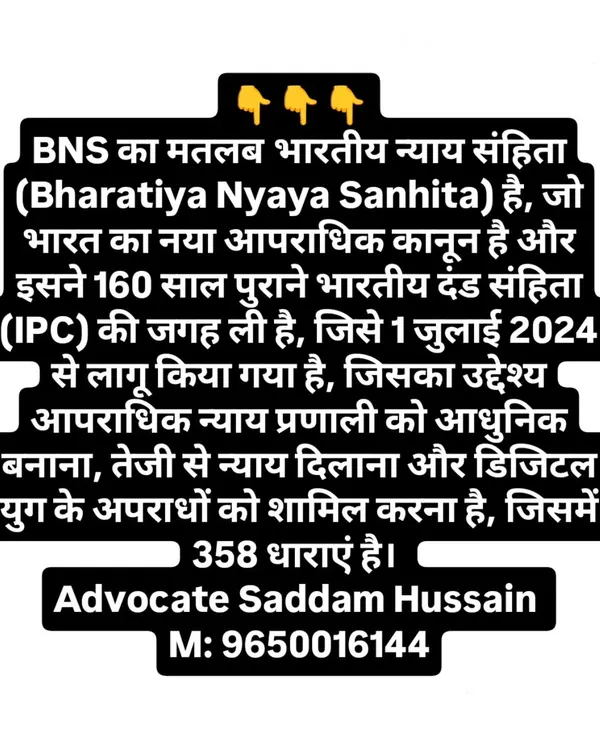
Understanding Bharatiya Nyaya Sanhita (BNS) Laws
 9
9
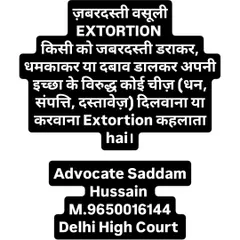

Know Your Rights: Simplifying Legal Procedures


Legal Updates and Practical Commentary
Navigating Court Procedures & New Laws
Know Your Rights: Essential Legal Explainers
More from Criminal Defense Law by Arvind Maniam K
More services by Arvind Maniam K