Navigating Court Procedures & New Laws
Courtroom procedures can feel overwhelming, but knowing the rules—especially with the new BNSS—is your biggest weapon. Don't let fear or confusion hold you back. Here is how you can use the law to protect your rights.
Many believe a bailable offense means no arrest, but that's not entirely true. I explain the discretionary power of a Magistrate, who can order your arrest even in a bailable offense to verify the details of your guarantor, a crucial fact to know.
If the High Court issues a warrant for your arrest, where do you get bail? I clarify this confusing procedure under the new Section 431 of the BNSS, explaining that you can get bail from the local magistrate or sessions court, not necessarily the High Court.
Submitting audio or video recordings as evidence requires a proper certificate. I explain how to prepare this certificate under the new Sections 61 and 63 of the BNS, detailing the necessary information like device model and IMEI number to make your digital evidence legally valid.
Filing written arguments is your legal right in a criminal case, not just a formality. I explain how Section 352 of the BNSS empowers you to submit your arguments in writing, ensuring your points are officially on record even if the judge or opposing counsel objects.
The new law, under Section 349 of the BNSS, gives you the right to request expert verification of evidence. I explain how you can file an application before a magistrate to get orders for examining handwriting, voice samples, signatures, or finger impressions.
About Navigating Court Procedures & New Laws
Most people walk into court hoping for the best without preparing the right paperwork. Whether you are dealing with digital evidence under the new BNS or filing for bail, the difference between winning and losing is often in the details. Having the correct Section 61 or 63 certificate for your chats is vital. I help you spot these technical requirements early so your case does not get dismissed on a formality.
Understanding the New Legal Landscape
The law is not just about what happened; it is about how you present your truth. With the implementation of the Bharatiya Nagarik Suraksha Sanhita (BNSS), procedures have changed, and you must update your strategy accordingly.
Digital Evidence: The New Game Changer
Many clients try to submit screenshots or recordings without following the correct protocol. Under the new BNS sections 61 and 63, your digital evidence needs a specific certificate. If you do not include the device model, IMEI number, and a declaration of authenticity, the court will likely reject your evidence entirely. Do not give the opposition a free pass by ignoring these technicalities.
Your Rights in the Courtroom
- Bail Procedures: Do not panic if a warrant is issued. Under Section 431 of the BNSS, you can often approach the local magistrate or sessions court for bail, saving time compared to waiting for a High Court date.
- Written Arguments: Many people think they have to speak their way out of a case. Under Section 352, you have the right to file written arguments in criminal cases. This ensures your points are on record, preventing them from being overlooked by the judge or twisted by opposing counsel.
- Expert Verification: If you are disputing a signature, handwriting, or voice sample, use Section 349. You can request the magistrate to order a forensic examination. Stop guessing and start using the evidence the law provides for.
Legal battles are won through preparation, not just passion. Whether you are in Delhi or traveling for a case, having a clear roadmap is non-negotiable.
Similar work from other experts
Browse through Curated picks from other experts on mytribe
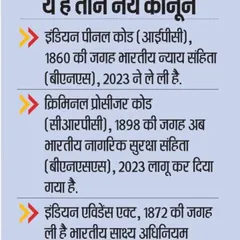
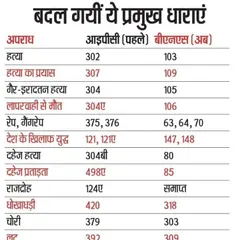
Understanding the New Criminal Laws (BNS, BNSS, BSA)
Understanding Criminal Law & Court Procedure
 9
9

Know Your Rights: Simplifying Legal Procedures
Navigating Criminal Law in India
 17
17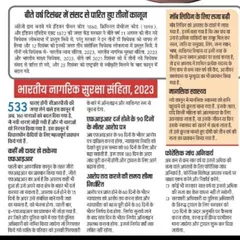
Know the Law: Legal Procedures & Rights in India
Know Your Rights: Legal Explainers for Real-Life Situations
More from Legal Consultation by Dheeraj Kumar
More services by Dheeraj Kumar