Portraits of the Wild: Mastering Eye Contact
A portrait is about connection, not just documentation. Learn how low-angle perspectives and precise eye-tracking turn a wild encounter into an intimate, powerful story.
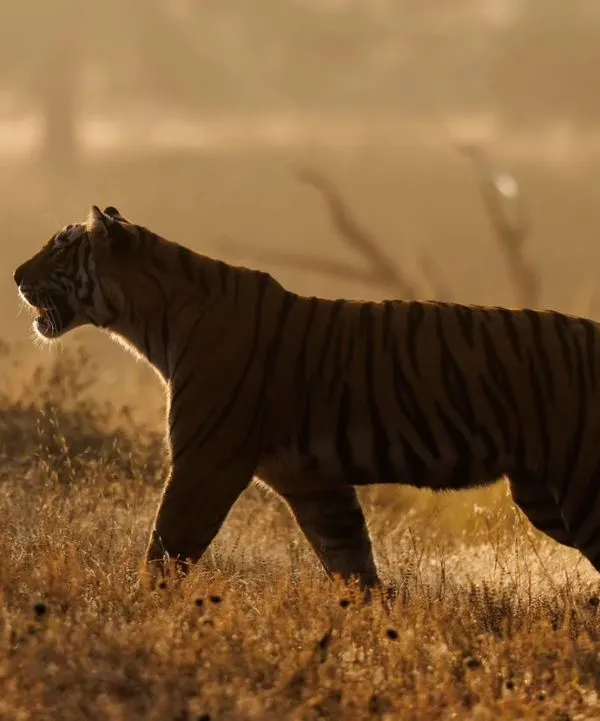
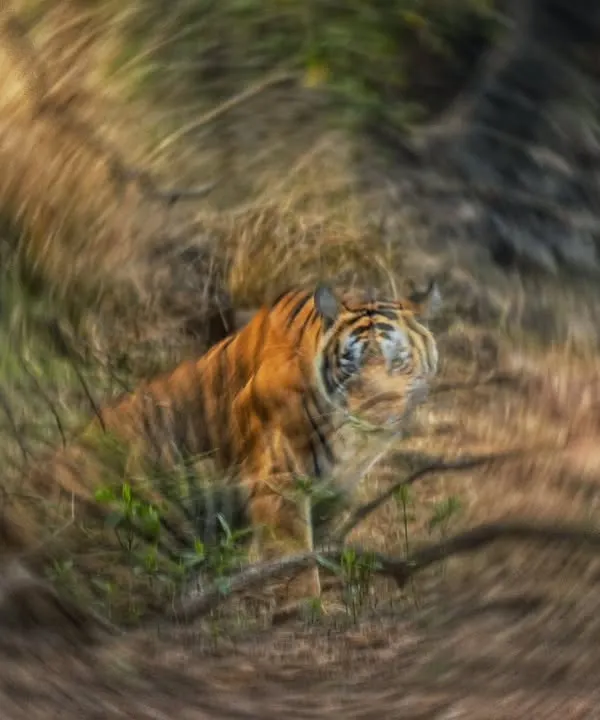
Eye contact is one of the strongest tools in wildlife photography. For this tigress portrait, I chose a low angle and used the soft golden rim light to highlight her form. My Sony Alpha 1's precise eye autofocus ensured her gaze was perfectly sharp, creating a powerful connection.
To capture a tiger's essence, you need vision. I dropped to a low angle to let this tigress dominate the frame, creating an eye-level connection. Shooting wide open at f/2.8 with my 400mm lens created a dreamy, shallow depth of field that isolates her beautifully.
When a subject walks towards you, get low. Our modified vehicles in Masai Mara allow for this unique perspective. I composed this shot of a majestic lion vertically to enhance its impact, and my Sony Alpha 1 delivered flawless eye contact.
Composition first, shutter second. I waited for this lion to lift his head and make intense eye contact while feasting. That was the key moment. My trusted Sony Alpha 1 and 400mm lens delivered a frame that is both a portrait and a story.
A tiger's gaze from behind tall grass. Despite the visual obstruction, my Sony Alpha 1's real-time eye autofocus locked on with flawless accuracy. This is where advanced technology helps you capture a challenging but incredibly rewarding shot.
A strong subject, exceptional light, and thoughtful composition make an outstanding frame. By getting low and letting the tigress feel comfortable, I was able to capture this direct, regal portrait. The shallow depth of field from my 400mm f/2.8 lens makes her the undeniable focus.
Capturing eye contact is about timing and technique. I used a vertical frame and a low angle to match this tiger's line of sight, enhancing its presence. The rule of thirds places the eyes right where the story is, creating a powerful storytelling frame.
The frame comes alive the moment the subject looks into the lens. As this tigress peeked from behind a tree, her direct gaze created an unforgettable connection. This is the kind of moment where my gear's unmatched eye-tracking is indispensable.
This vertical frame of a walking tigress demonstrates the power of shallow depth of field. Shooting wide open at f/2.8 isolates the face in sharp focus while the background melts away, directing the viewer's attention straight to her eyes.
The intensity of a head-on shot is unmatched. It's about stillness and trust in your gear. I let this tiger approach naturally, framing not just its face but the raw emotion in its eyes.
About Portraits of the Wild: The Power of Eye Contact
To nail these shots, I do not just sit in the gypsy; I get low. By dropping to eye-level with the animal, we transform a standard record shot into an intimate portrait. Whether it is a tiger in Ranthambore or a lion in the Mara, the magic happens when you anticipate their path, wait for that split-second head lift, and let your gear do the heavy lifting with eye-tracking. It is about patience, understanding behavior, and knowing when to press the shutter.
Photography is often about what you leave out of the frame. In wildlife portraiture, the goal is to isolate the subject so completely that the viewer feels the intensity of the animal's gaze. This is rarely achieved from a standard seated position inside a vehicle.
The Art of the Low Angle
On my photography tours in the Masai Mara and Indian reserves like Panna or Corbett, I prioritize modified vehicles that allow us to shoot from a low angle. When you are eye-level with a lion or a tigress, the power dynamic shifts. The animal becomes a character with a personality rather than just a subject in the distance.
Technical Mastery
While the eye makes the connection, the gear enables it. I rely on the Sony Alpha 1 for its AI-powered real-time eye autofocus. When an animal is moving through tall grass or dense habitat, the camera needs to lock onto the eye, not the obstacle. Shooting wide open at f/2.8 with a 400mm lens is a deliberate choice to melt the background into a soft, creamy blur. This separation is what creates the portrait quality.
Anticipating the Moment
I teach my workshop participants that you cannot force eye contact. You observe. You wait. You read the animal's behavior to guess its line of travel. When the tiger lifts its head to scan the trail, that is your window. If you are already at the right angle with your settings dialed in, you capture the story.
Join my on-field workshops to learn these techniques. We move beyond theory, focusing on real-world conditions where the light changes fast and the animals move faster. Whether we are discussing composition, aperture, or how to handle high-speed shutter usage, the goal is for you to walk away with frames that stand on their own.
Similar work from other experts
Browse through Curated picks from other experts on mytribe
 4
4
The Art of the Wild: Wildlife Photography Composition
 7
7
Wildlife Photography: Mastering Light and Composition
 19
19
Creative Wildlife Photography: Mastering Light and Mood
 8
8
Animal Kingdom Portraits
 52
52
Creative Wildlife Photography Techniques
 5
5
Fine Art Pet Portraits in Delhi NCR
More from Wildlife Photography Workshops & Tours by Yogesh Bhatia