Wildlife Photography: Mastering Composition & Habitat
Wildlife photography is not just about the subject. Learn to use the environment, lighting, and negative space to build a narrative that puts the animal in context.
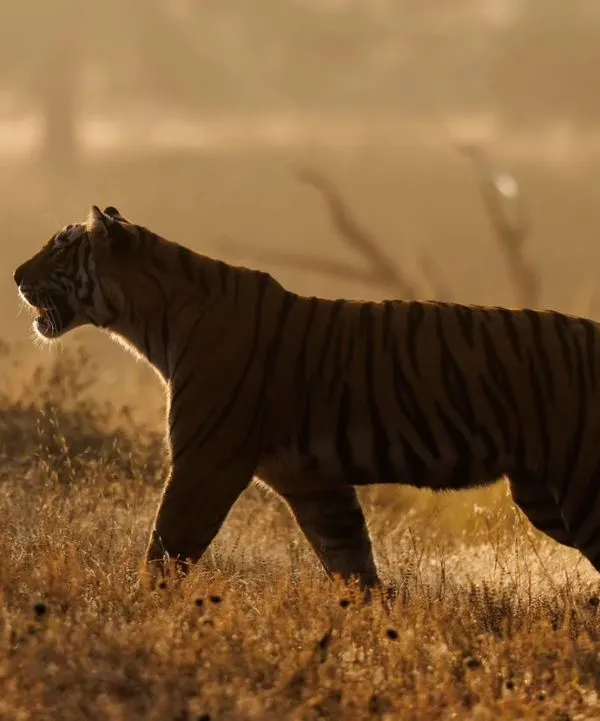
This is more than a portrait; it's history in motion. The iconic Tiger P243 walking across the Panna plateau. I composed this wide to include the vast landscape, telling a story of a king in his kingdom.
Here, I used the rule of thirds to compose this walking tiger in Dhikala. By placing the tiger off-center, I gave it space to move into the frame, creating a sense of journey and narrative flow. The grid overlay shows exactly how the composition was planned.
The same shot without the grid. The storytelling lies in the space ahead of the tiger, the flow of its body, and the rhythm of the rocky habitat. It's a perfect blend of motion, habitat, and structure.
In this wide shot from Ranthambore, the tiger is deliberately placed in the lower third of the frame. This lets the scene breathe, showing the vastness of its habitat by the lake and under the ancient banyan trees. Sometimes, the environment tells half the story.
Ranthambore is full of iconic locations. Here, a majestic tiger stands near the historic Bargad (banyan) tree. Pre-visualizing this shot and using the environment to frame the subject is a key technique I teach.
Capturing a tiger framed by a historic Darwaza (gateway) in Ranthambore is an iconic shot I always aim for. It combines wildlife with history and culture, creating a unique and powerful narrative.
This is a wildlife portrait with an environmental composition. While the tiger is the star, the lush green backdrop adds depth and harmony, elevating the mood of the image. The subject matters, but so does the background.
An entire elephant herd walking as one. I composed this horizontally to include the whole family and their forest habitat. This wide perspective tells a story of unity, protection, and the rhythm of the wild.
An elephant herd grazing in the vast grasslands of Dhikala. The wide composition shows the scale of the herd and their peaceful coexistence within their environment.
An elephant herd shares its habitat with a peacock. Including multiple species in a single frame adds layers to the story and shows the interconnectedness of the ecosystem.
About The Art of Storytelling: Composition & Habitat
When you are out in the wild, avoid the instinct to always zoom in tight on the animal. If you place a tiger perfectly in the center, you often lose the story of where it is. Try placing it in the lower third or off-center to give it space to move into the frame. It tells the viewer where the animal is going and makes the habitat—the rocky bed of Dhikala or the ancient ruins of Ranthambore—a living, breathing part of your shot.
Great wildlife photography happens before you even touch the shutter button. It starts with pre-visualisation. You have to read the forest, anticipate the animal's movement, and decide how much of the environment you want to include.
Why Habitat Matters
Your subject is only half the picture. By incorporating elements like historic ruins, water bodies, or dense forest layers, you add depth and scale. For example, capturing a tiger crossing the Ramganga river at Dhikala isn't just about the cat; it's about the predator's relationship with its terrain.
Technical Composition Tips
- Rule of Thirds: This isn't just a basic setting. It is the foundation of balance. By placing the subject's eye near the intersections of your grid, you create an immediate connection. But remember, rules are guides. Sometimes, leaving 'negative space'—empty space in the direction the animal is moving—is more powerful than following a grid strictly.
- Perspective and Angles: Change your height. A low angle can make an elephant feel monumental, while a wide shot from a distance can establish the scale of a herd against the mountains. I often use the Sony Alpha 1 with a 400mm lens to maintain that separation between the subject and the background, ensuring the 'bokeh' doesn't distract from the environment.
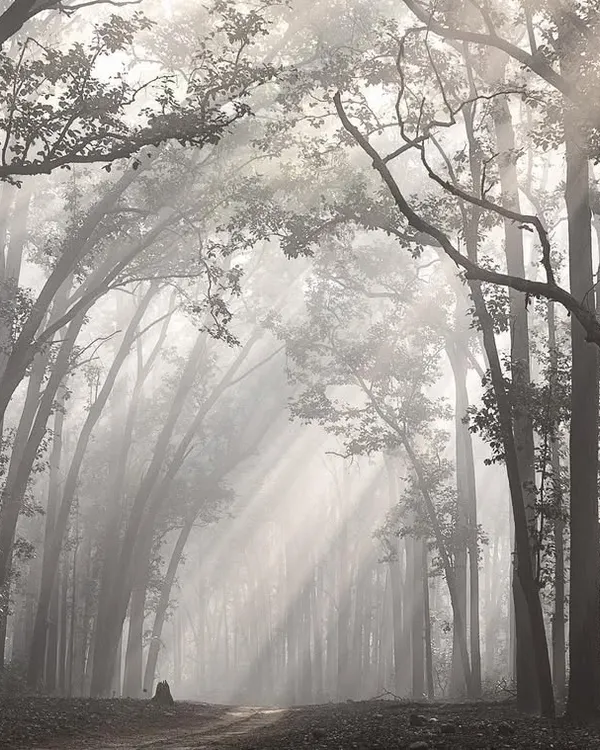
- Layering: Look for opportunities to shoot through elements—grass, leaves, or mist. This creates a sense of depth, drawing the viewer's eye through the frame to the subject.
Learn on the Field
Reading the light and animal behavior is something you cannot learn from a book. In my on-field workshops across Panna, Jim Corbett, and Masai Mara, we don't just talk about composition. We practice it while the light is changing. Whether it is shooting through a gateway at Ranthambore or tracking a rhino at Kaziranga, the goal is to make these technical decisions muscle memory. You will learn to stop reacting to the scene and start composing the story.
Similar work from other experts
Browse through Curated picks from other experts on mytribe
 4
4
The Art of the Wild: Wildlife Photography Composition
 19
19
Creative Wildlife Photography: Mastering Light and Mood
 7
7
Wildlife Photography: Mastering Light and Composition
 28
28
Creative Wildlife Photography & Composition Techniques
 14
14
The Art of Wildlife Photography in Delhi NCR
 8
8
Featured Wildlife Photography & Rare Behavioral Captures
More from Wildlife Photography Workshops & Tours by Yogesh Bhatia