Kids in Action: The Learning Process
See what happens when kids swap screen time for real tools. These photos capture the focus, the struggle, and the genuine pride of building something from scratch.
This is what momentum looks like. From a small group of kids learning about circuits to a young boy testing his water rocket, our community of makers is growing every day.
Through our in-person classes and DIY kits, we help kids explore real tools and build real skills. Here you can see me guiding a class and the exciting result: battling robots built by the students themselves.
It's not just about having fun, though there's plenty of that. When kids are building with our kits, they're learning, problem-solving, and getting curious in the best possible way.
A gift from Tinkernauts is one they'll remember because they made it themselves. This video shows kids assembling our kits, from an art bot to a wind-up car, and the pride that comes with it.
Our kits aren't just something to open; they're something to build. You can see the focus and engagement as kids assemble a catapult and a disc launcher.
The same spirit of invention that drove Leonardo da Vinci is what we try to spark in kids today. Here, a child carefully works on the wiring of a small robot, learning how ideas come to life.
The most common feedback we get after a session: "I wish I had more time to tinker!" This video montage shows the engaging projects that leave kids wanting more, from building a PC to launching a water gun.
"Making is more fun." This young creator, Sahil, proudly shows off the grabber claw he 3D-printed and assembled himself. He understands not just what it does, but how it works.
From parts to a moving masterpiece. A child assembles an insect bot, learning how gears, motors, and screws combine in an engineering adventure.
Engineering fun that moves. See the thrill of designing and building an insect robot, a project that teaches the fundamentals of mechanics.
About Kids in Action: The Learning Process
You might notice that no two projects in these photos look identical. That is by design. When your child hits a snag—a gear does not turn, a circuit does not close—we do not step in to fix it. We wait. We let them experience the frustration, test a theory, and try again. The learning does not happen when the robot moves; it happens in those minutes of trial and error.
Beyond the Finished Project
Many parents assume the goal of our kits is the final product—a working catapult or an insect bot. While that is fun, the real work happens in the messy middle. Our workshops in Bengaluru and our DIY kits are designed to introduce children to the physical reality of mechanics and electronics. We avoid cheap, fragile plastics in favor of 3D-printed parts that can withstand the rigors of a real build.
Why We Use Real Tools
When a child uses a proper screwdriver or wire stripper, they feel a shift in responsibility. They stop seeing themselves as a passive consumer of a toy and start seeing themselves as a builder. This is how we teach resilience. If a child builds a hydraulic maze and the fluid leaks, they have to troubleshoot the seal. They learn that failure is not a dead end but a data point.
What to Expect
Whether you are joining us for a weekend workshop in Langford Town or ordering a kit for home, the philosophy remains the same. Your child will get dirty, they might get frustrated, and they will absolutely build something they are proud of. We provide the structure and the guidance, but they provide the curiosity.
Frequently Asked Questions
- Is it too hard for my child? We design projects for kids aged 7-13. The complexity scales, but the core mechanics are intuitive once they get hands-on.
- What if they break something? That is encouraged. We treat broken parts as opportunities to discuss material science and how things are assembled.
- Are these screen-free? Yes, entirely. Every step of our process requires eyes on the project and hands on the components.
Similar work from other experts
Browse through Curated picks from other experts on mytribe
 42
42
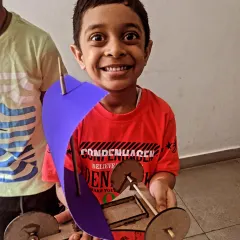
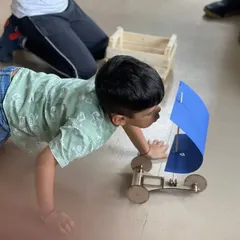
STEM Projects Built by Little Innovators in Bangalore
See Robotics and STEM Learning in Action
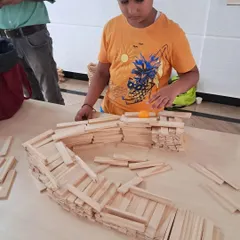
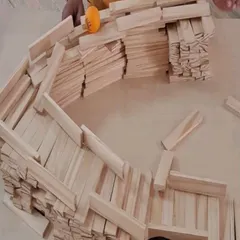
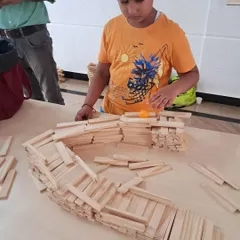
Hands-on STEAM Workshops in Bengaluru
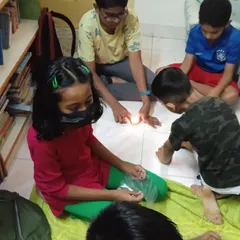
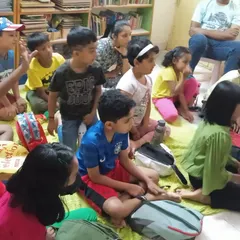
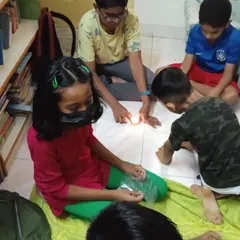
Happy Young Scientists: Learning Through Doing
A Peek Behind the Scenes at Just Robotics

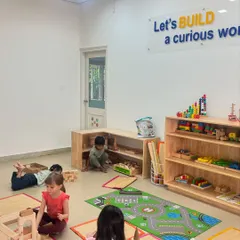
STEM & Building Adventures for Kids
More from DIY STEM & Tinkering Kits by Tinkernauts
More services by Tinkernauts