Yoga Anatomy & Therapeutic Applications
Understand the mechanics behind every pose. We blend ancient philosophy with 3D anatomical science to make your practice safe, sustainable, and truly therapeutic.
This anatomical animation shows the complexity of the posterior neck muscles. Understanding this structure is crucial for yoga teachers to guide students safely and to appreciate why injuries like whiplash require careful rehabilitation.
A detailed look at the ligaments of the upper cervical spine, such as the alar ligament. This level of anatomical knowledge is what sets my teacher training apart, ensuring our graduates can teach with precision and safety.
This visualization shows the distribution of superficial fat in the body. In my workshops, we discuss how yoga and pranayama influence metabolism and body composition on a scientific level.
An animation highlighting the suboccipital muscles. These small muscles play a huge role in head movement and posture, and understanding their function is key to relieving tension headaches through yoga.
A focus on the rotator cuff muscles, including the teres minor, supraspinatus, and infraspinatus. Proper knowledge of this area is essential for preventing shoulder injuries in asanas like Chaturanga Dandasana and Downward-Facing Dog.
An overview of the major muscles of the upper back. My anatomy sessions for yoga teachers label and explain these muscles so they can provide clear, effective cues for postures that strengthen and open the back.
This video peels back the layers of the back muscles, revealing the deep intrinsic muscles along the spine. A strong, flexible spine is the foundation of a healthy yoga practice, and we study it in depth.
About Yoga Anatomy & Therapeutic Applications
Most injuries in class happen because cues are generic, not structural. When you understand why a muscle like the teres minor or a ligament in the cervical spine behaves the way it does, you stop forcing your body into shapes and start moving with awareness. My workshops strip away the guesswork, giving you 3D visualization and clear biomechanical logic so you can rehabilitate past injuries or teach with actual authority.
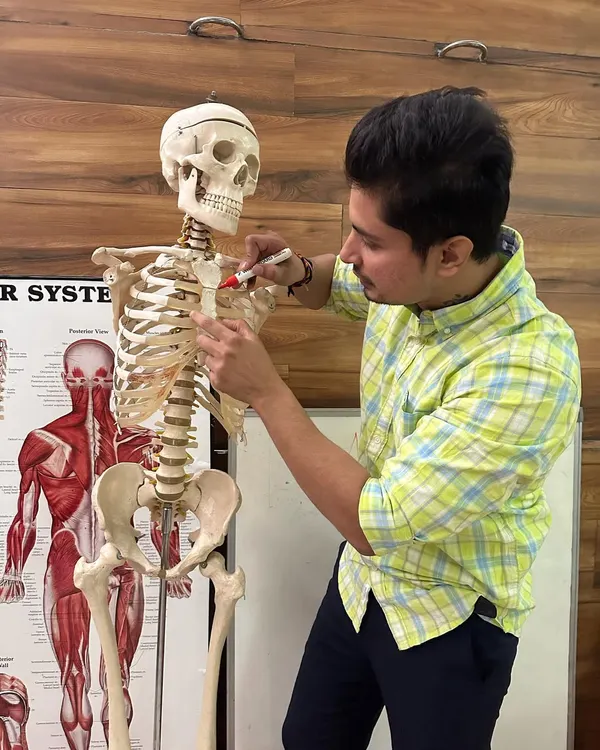
Yoga is not a static picture; it is a dynamic physiological process. In my workshops, we move past 'follow the leader' instruction. We use 3D anatomy models to break down common pain points—like tension in the suboccipital muscles or shoulder impingement during Chaturanga—so you understand exactly what is happening under the skin.
Whether you are dealing with chronic back pain or training as a professional instructor, the principles remain the same: alignment must serve the anatomy, not the other way around. My sessions focus on the 'why' behind the 'how', covering:
- Spinal Integrity: Deep dives into the intrinsic muscles of the back to support posture and prevent injury.
- Therapeutic Cues: Why standard advice often fails for students with specific anatomy, and how to adapt poses for different body types.
- Injury Prevention: Understanding the mechanics of whiplash and rotator cuff health to build a practice that sustains you for decades.
This is not about memorizing Latin names; it is about functional literacy. You will learn to identify compensation patterns, understand the load on your ligaments, and apply breathing techniques that actually support metabolic function. If you are a teacher, this knowledge is your differentiator. If you are a practitioner, this is how you take ownership of your health and stop relying on someone else to tell you what feels right.
Similar work from other experts
Browse through Curated picks from other experts on mytribe
 5
5The Science of Yoga: Anatomy & Biomechanics
Master Advanced Yoga Through Anatomy and Proper Technique
 18
18Functional Asana: Anatomy and Biomechanics
Therapeutic Yoga for Pain and Injury Recovery
Master Yoga Alignment: Pose Guides for Safe Practice
Clinical Yoga: A Personalized Practice That Fits Your Body
More from Advanced Yoga Workshops & Seminars by SKM Yoga