Drills & Prop Work: Building Your Practice
Advanced poses aren't just about raw strength. I use blocks, wheels, and wall drills to break down complex movements, helping you build the necessary foundation to progress safely.
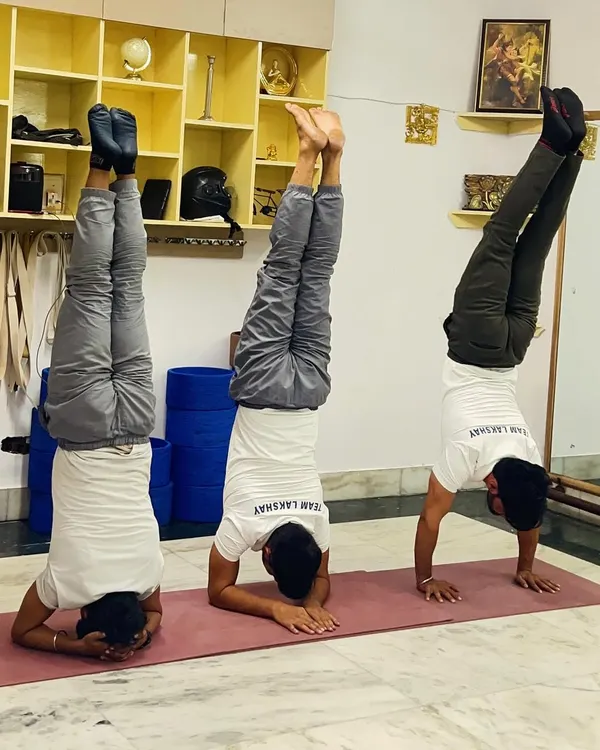
Using a yoga wheel for a supported chinstand. Props are excellent for exploring advanced poses with more stability.
A drill for chinstand, moving from an EPK-like shape into the full inversion.
From beginner to advanced: 11 playful ways into Chinstand. This video shows a variety of entries and drills.
A yoga block-supported chinstand. This is a great way for beginners to get the feel of the pose without putting too much pressure on the neck.
Let's build our Jump Through step by step. This is Level 2: the hop and slide, using blocks for support.
Practice with blocks and socks. This is a great drill to learn the feeling of sliding your legs through for a jump-through.
Level 1 for jump-throughs: the step and cross. Using blocks gives you the height needed to clear your feet.
Level 3 for jump-throughs: the hop and hold. This drill builds the core strength to float for a moment.
Let's break it down: Jump Through Drills. This video compiles several exercises to help you master this challenging Ashtanga transition.
Practice the tuck hold. Pushing the ground away and pulling the knees into the chest is fundamental for jump-throughs and arm balances.
About Drills & Prop Work: Building Your Practice
Let’s talk about the jump-through. Many practitioners struggle here because they lack the lift needed to clear their feet. Using yoga blocks doesn't mean you're a beginner; it provides the height you need to engage your core and shoulders properly. This is how you build the float, not by forcing it, but by training your body to understand the mechanics of the transition.
Advanced asana work is often about bridging the gap between 'I can't' and 'I can.' We do this by breaking large, intimidating poses into small, manageable drills.
Why Props Are Not A Crutch
People often see props like blocks or wheels as an admission of weakness. In my practice, they are tools for education. A block changes the leverage of a pose. Using a wheel for a chinstand allows you to find the balance point without putting excessive pressure on your neck. When you understand how to use these tools, you stop guessing where your body should be and start feeling the alignment.
Breaking Down The Transitions
Whether it's a jump-through or an entry into a forearm stand, the key is consistency. We look at:
- Biomechanical Alignment: Using walls to understand shoulder engagement.
- Core Activation: Drills that teach you how to 'push the ground away' before you ever leave the floor.
- Safe Falling: We practice falling as much as we practice rising. If you don't know how to bail safely, you'll never have the confidence to try a new inversion.
My Approach
My classes are not for show. We focus on the drills because that is where the real work happens. If you are comfortable with basic flows and want to move toward inversions and arm balances, we will start by ensuring your foundation is stable. You will wobble, and you will have days where nothing clicks. That is part of the work. If you show up, we will find the variation that works for your unique anatomy.
Similar work from other experts
Browse through Curated picks from other experts on mytribe
Step-by-Step Yoga Progressions & Drills
Advanced Yoga Poses & Strength Drills
Advanced Asana and Strength Building
Essential Yoga Strength & Conditioning Drills
Master Your Asana: Yoga Workshops & Tutorials
 6
6Master Advanced Asanas and Inversions Safely
More from Advanced Vinyasa: Strength, Flexibility & Inversions by Seema Prabhakar