Understanding the Indian Criminal Justice Process
The legal system shouldn't be a mystery. I break down the criminal trial process into clear, manageable steps so you know exactly how to protect your rights and navigate police and court procedures.
Introduction to the Criminal Trial Process. A criminal trial in India is structured to ensure a fair judgment. This series provides a simplified explanation of the key steps involved, from the initial complaint to the final verdict, with relevant legal provisions.
Step 1: FIR and Investigation. The process begins when a First Information Report (FIR) is filed under Section 154 of the CrPC. This triggers a police investigation, where they collect evidence and examine witnesses.
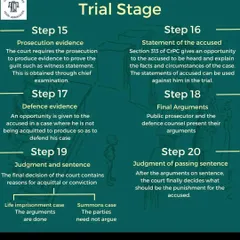
Step 3: Framing of Charges. After reviewing the police charge sheet, the court formally frames charges against the accused under Section 228 of the CrPC. At this point, the accused is asked to plead guilty or not guilty.
What is a Private Criminal Complaint (PCR)? A PCR under Section 200 of the CrPC allows an individual to initiate criminal proceedings directly before a Magistrate, bypassing the police. This is an alternative to filing an FIR.
When to File a PCR Instead of an FIR. A private complaint is a useful tool if you believe the police will not take action on your complaint or if they have refused to register an FIR. It allows you to present your evidence directly to the court.
Understanding the Writ of Habeas Corpus. Literally meaning "to have the body," Habeas Corpus is a powerful writ used to challenge unlawful detention. It is a fundamental safeguard that protects an individual's personal liberty against arbitrary arrest.
The Importance of a Legal Notice in Litigation. A legal notice is a formal communication that is a critical first step in many legal proceedings. It ensures due process, preserves your rights, and establishes a clear record of your claims before approaching the court.
About Understanding the Criminal Justice Process
Don't walk into a police station or court unprepared. People often hurt their own cases at the very first stage by not knowing how to draft a statement or what section of the law applies to their situation. I walk you through the procedural steps—like how to file a valid FIR or when to bypass the police with a Private Criminal Complaint (PCR)—so you can make decisions that actually stand up in court.
Navigating the Legal System
Many clients come to me after a procedure has already gone wrong. The Indian criminal justice system is procedural, and minor errors in documentation often lead to long-term complications. Whether you are dealing with the police under the Code of Criminal Procedure (CrPC) or appearing before a Magistrate, understanding your rights is your primary defense.
FIR vs. Private Criminal Complaint (PCR)
Most people assume the only way to seek justice is to file an FIR at a police station. However, the police may sometimes refuse to register a complaint or fail to take action. In such instances, a Private Criminal Complaint under Section 200 of the CrPC allows you to bring evidence directly before a Magistrate. I help you evaluate which route is appropriate for your specific case and ensure your complaint is drafted with the correct IPC sections to demand action.
Key Procedural Stages
- Investigation: This begins with an FIR. It is critical to ensure that facts are recorded accurately. I review these initial documents to check for gaps that could be exploited later.
- Charge Sheet: Once the police complete their investigation, the court frames charges. Understanding the difference between a weak charge sheet and a strong one is vital at this stage.
- Trial: Whether it involves bail applications or arguing against remand, each step requires clear, evidence-based communication.
My goal is to bridge the gap between complex legal statutes and your practical needs. From the moment you receive a legal notice to the final verdict, I provide the strategic roadmap you need to handle the system with confidence.
Similar work from other experts
Browse through Curated picks from other experts on mytribe
Understanding Criminal Law & Court Procedure
Know Your Rights: Police & Court Procedures
 15
15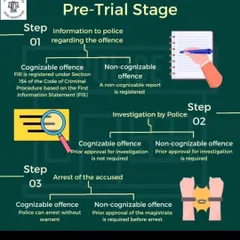
Demystifying the Legal Process
Know Your Legal Rights: A Guide to Police, Crime & Daily Issues
Know Your Rights: Legal Explainers for Real-Life Situations
Key Concepts in Indian Criminal Law
More from Criminal & Traffic Law by Prateek Chandramouli
More services by Prateek Chandramouli