Decompression Walks & Outdoor Adventures
Walks are more than exercise; they are a sensory journey. I focus on sniffing, safety, and letting dogs explore nature at their own pace to relieve stress and build confidence.
After a stressful event, the best thing we can do is avoid adding more stressors. I opt for quiet decompression walks in nature instead of busy neighborhood streets to help the dog's nervous system recover.
This is what a real dog walk often looks like. It's not a straight line, but a journey of untangling the leash, stopping for important sniffs, and moving at the dog's pace.
To spice up our daily walks, I like to use objects in the environment for fun exercises. Here, we're using a pole to practice weaving, which adds a bit of mental challenge and fun to our outing.
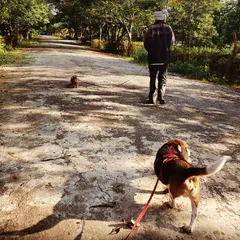
A long leash gives your dog freedom, but it's important to handle it safely. I use my less dominant hand to anchor and gather the leash, and my other hand to give out or reel in slack as needed.
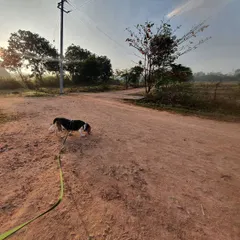
When you have a reactive dog, neighborhood walks can be stressful. Finding less stressful options, like a quiet park during off-hours, is key to making outdoor time enjoyable for both of you.
Long leash safety is paramount. I always attach the line to a well-fitted harness, never a collar, to prevent injury if the dog suddenly runs to the end of the leash.
A long leash is one of my favorite tools. It provides safety while giving the dog the freedom to sniff and explore, which is essential for their mental well-being. It's also great for practicing recall in a controlled way.
A decompression walk allows a dog to explore at their own pace on a long leash. It's a powerful tool for relieving stress, building confidence, and letting a dog just be a dog.
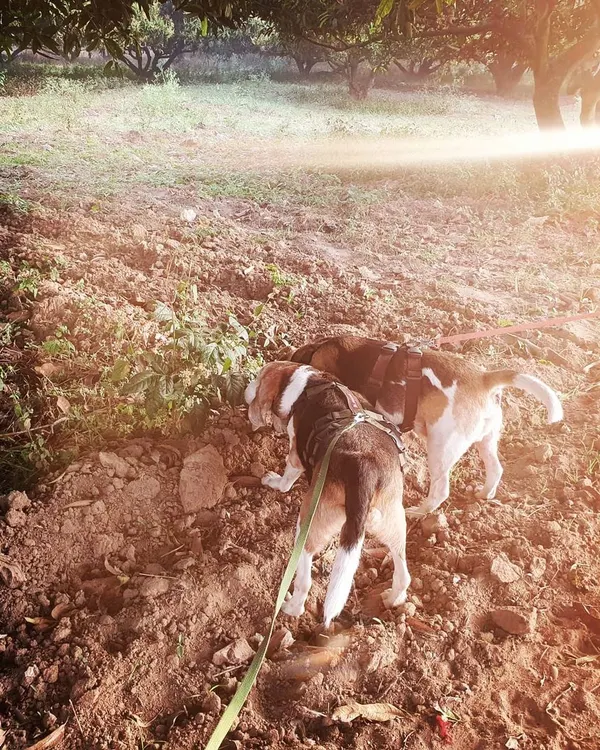
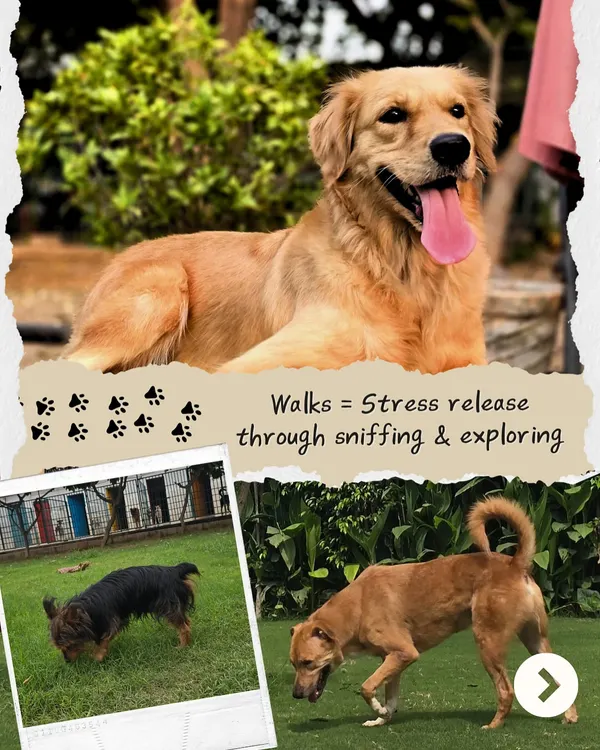
The simplest, cheapest way to make your dog happy on a walk is to let them sniff. Sniffing is their primary way of gathering information about the world, and it provides crucial mental stimulation.
To make walks more fun and enriching, I like to change up the route. Exploring a new area, like this construction site, provides novel smells and surfaces for the dog to investigate.
About Outdoor Adventures & Decompression Walks
In the city, walks often become a rushed, stressful chore. My decompression walks are different. I use 15ft+ long lines to let your dog lead the way, stop for as many sniffs as they want, and engage with the environment. It is not about covering distance; it is about giving them the agency to process their world, which is the most effective way to lower stress levels for anxious or high-energy dogs.
Most people think a 'good walk' means walking in a straight line at a brisk pace. For a dog, that is often just a physical task. My approach to decompression walks is about mental enrichment. When I take a dog out, we focus on 'sniffari' time. Sniffing allows a dog to gather information, process their emotions, and release dopamine, which naturally calms them down.
I handle each dog with safety as the priority. We strictly use well-fitted harnesses instead of collars to prevent injury. If your dog is reactive, I plan routes to keep us in quiet areas, ensuring they don't hit their trigger threshold. Whether it is an senior dog who needs a slow stroll or a high-energy pup that needs to explore a new surface, I adjust the pace to what your dog needs that day.
These sessions are perfect if you are managing a dog with separation anxiety, reactivity, or just a pup who struggles to settle at home. We aren't training for performance; we are training for peace of mind. By the time we head back, your dog isn't just physically tired; they are mentally satisfied.
Similar work from other experts
Browse through Curated picks from other experts on mytribe
 4
4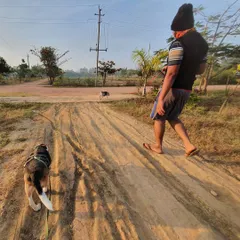
Wellness Walks and Mental Enrichment for Dogs
 5
5
Dog Walking: More Than Just a Bathroom Break
Stress-Free Walks: Teaching Your Dog to Enjoy the Journey
Mastering the Walk: Leash Skills & Sniffaris
Daily Walks & Playtime for Dogs in Noida
Off-Leash Dog Park & Group Play Sessions in Delhi NCR
More from In-Home Dog Boarding by Kirti Tripathi
More services by Kirti Tripathi