Birds of Prey Photography: Capturing Raptors in the Wild
There is a distinct intensity in the eyes of a raptor. I spend my mornings waiting in the wetlands and forests around Mumbai to capture these hunters of the sky in their element.
The intense stare of a female Amur Falcon. This close-up portrait reveals the incredible detail in its feathers and its sharp, piercing eyes, which are perfectly adapted for spotting prey from a distance.
A Great Hornbill at its nest cavity. The soft, blue-toned light of the early morning gives this portrait a serene and magical quality, highlighting the bird's massive yellow casque.
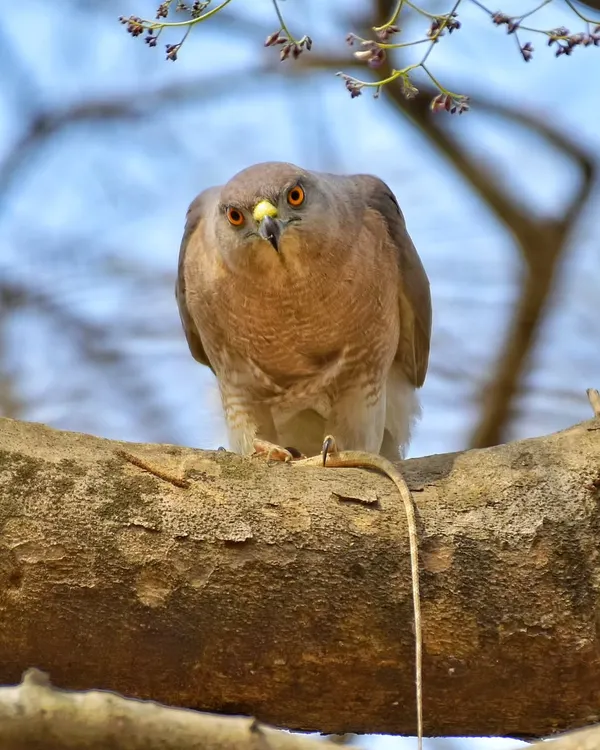
Poised with purpose. This majestic raptor, likely a Shikra, sits patiently on a branch against a painterly blue sky. Its sharp eyes are constantly scanning, reminding us of the precision of a natural hunter.
A Black Kite stands proudly on a rocky outcrop. This ground-level shot gives a sense of its size and power, with its sharp beak and strong yellow talons clearly visible.
A portrait of a Lesser Kestrel against a clean green background. The subtle colours of its plumage, from the grey head to the spotted chest, are beautifully rendered in this shot.
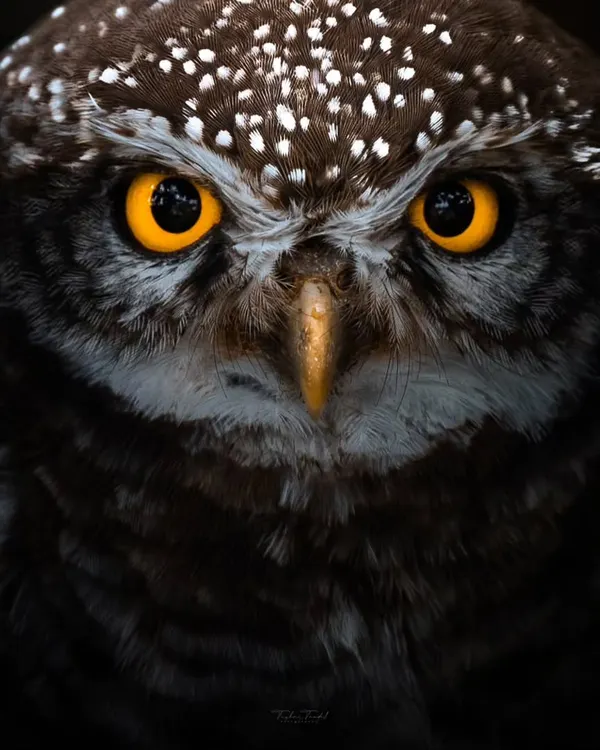
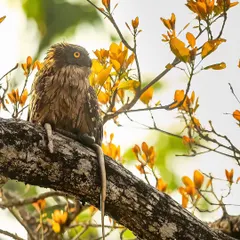
A Jungle Owlet stares directly into my lens. These small owls are masters of camouflage, and capturing one out in the open during the day is always a treat.
A Spotted Owlet peeking out from the dense foliage of a tree at IIT Powai. Its large, forward-facing eyes give it that classic, wise expression.
A Marsh Harrier calls out, perched amidst vibrant green leaves. This shot captures a moment of communication, with its beak open and feathers slightly ruffled.
A full-body portrait of a Lesser Kestrel perched on a rock. The soft morning light highlights the warm tones on its back and the cool grey of its wings.
A female Great Hornbill, distinguished by her smaller casque and different eye colour. She is perched on the edge of her nest, a powerful and dedicated mother.
About Birds of Prey: Hunters of the Sky
Raptors require a different kind of patience. Unlike songbirds, they often sit still for hours. When I shoot them, I do not use heavy camo or aggressive baiting. My approach relies on field knowledge, understanding the local thermal currents and roosting habits in places like the Karnala forests or the outskirts of Lonavala, to get that close-up without disturbing their hunting routine.
The Art of the Raptor Shot
Capturing a raptor in the frame is less about quick reflexes and more about anticipation. Whether it is the intense stare of a female Amur Falcon near Lonavala or a Black Kite scanning the terrain around IIT Powai, these birds demand respect. My goal is to capture them as they are, maintaining a respectful distance while using the reach of my Sony 200-600mm lens to bring out the details in their feathers and talons.
Why Field Knowledge Matters
Photography in the wild is 90% observation. You cannot just walk into a forest and expect a raptor to pose. I spend significant time studying the habits of the Marsh Harrier and the hunting patterns of the Jungle Owlet. This preparation allows me to be in the right position before the light hits the subject. It is about understanding the landscape—the rocky outcrops where a kestrel might perch or the dense foliage a spotted owlet prefers to hide in.
Ethical Birding and Technical Skill
Ethics come first. I never stress the subject. If a bird is nesting, I keep my distance and use focal length to compensate. For my clients, I share these same practices. During my mentorship sessions, we focus on manual settings, understanding aperture for background separation, and shutter speeds required to freeze a diving falcon. We work on histogram analysis and post-processing techniques, like shadow recovery, to ensure the final image reflects the true colours of the subject.
Similar work from other experts
Browse through Curated picks from other experts on mytribe
 19
19
Masters of the Sky: Eagles, Owls & Raptors
 24
24
Raptors of the Open Sky: Portraits of Nature's Hunters
 29
29
Raptors: Hunters of the Sky
Birds of Prey and Wetland Photography
 4
4
Majestic Birds of Prey Photography in India
 23
23
Hunters of the Sky: Raptor and Bird of Prey Photography
More from Nature and Wildlife Photography by Mandar Kamble