The Hundred Languages: Storytelling, Literacy & Early Expression
Children communicate in a hundred different ways long before they can read or write. We honour every gesture, mark, and story as the foundation of early literacy.
Language flourishes in the context of play. This child is "building a city, one sentence at a time," using blocks and toys to create a world where new vocabulary and grammar concepts come to life in a meaningful, engaging way.
The Reggio Emilia concept of "The 100 Languages of Children" is central to our philosophy. We believe children express themselves not just with words, but through every sound, gesture, and creation.
There are endless ways to speak, and children use them all. When we honor every language, verbal or not, we build stronger connections and create richer learning opportunities.
A child might paint a question, dance out a story, or build a tower to explain a feeling. Each of these is a valid and powerful form of communication that we strive to understand and nurture.
True listening involves more than just our ears. By observing a child's hands, posture, and rhythm with attention, we begin to understand the deeper meaning behind their actions and expressions.
Expression through many languages is not just creative. It supports emotional release, identity formation, and confidence, allowing children to feel seen and understood, especially when they don't yet have the words.
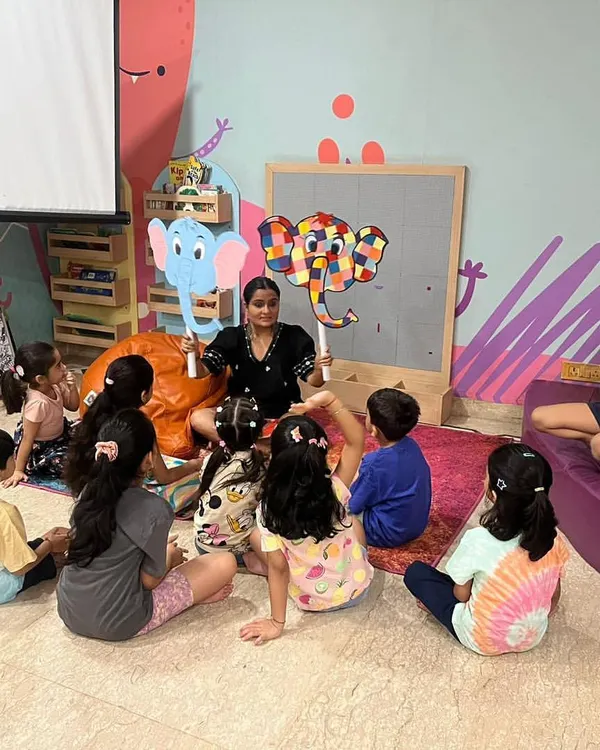
Storytime is a sacred space in our day. With eyes full of wonder, children gather to listen, imagine, and travel to new worlds. This shared experience builds vocabulary, listening skills, and a lifelong love of stories.
Before a child reads, they must first play with sound and find joy in stories. This is emergent literacy, the growing awareness that language has rhythm, structure, and the power to connect us.
In a cozy corner, two children share a quiet moment with books. They are not just looking at pictures; they are building the foundations of literacy, learning to handle books, follow a narrative, and find personal joy in reading.
A love of books is one of the greatest gifts we can give a child. Here, a toddler explores a large picture book in our outdoor area, connecting the stories on the page with the world around her.
About The Hundred Languages: Storytelling, Literacy & Expression
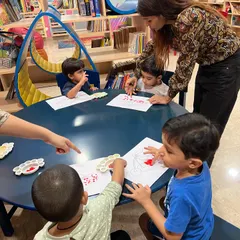
When you see a child’s paper covered in what look like scribbles, you might just see a mess. We see 'mark-making'—the vital first stage of writing. Our educators sit with the child to hear the story behind those lines, carefully writing down their dictated captions. By validating these early attempts, we teach the child that their voice has meaning, and that symbols can carry their thoughts, long before they master the alphabet.
Our approach to literacy is rooted in the Reggio Emilia philosophy. We believe that 'The Hundred Languages of Children' refers to all the ways a child expresses themselves—through paint, clay, movement, music, and the spoken word. We do not force reading through rote workbooks or repetitive drills, as these often extinguish the joy of discovery.
The Path to Emergent Literacy
We foster a relationship with language that is deeply rooted in curiosity. In our classrooms, you will find children exploring phonics not by memorising letter sounds in isolation, but by playing with rhythm in music, engaging in shadow-play storytelling, and identifying sounds in the natural world.
Why Process Matters
When we introduce literacy, we prioritize the process over the product.
- Storytime: More than a passive activity, it is a space for dialogue where we ask questions that invite children to predict, imagine, and connect narratives to their own lives.
- Mark-Making: We provide an array of tools—from charcoal to fine-tipped markers—to encourage different hand pressures and grips. This builds the foundational motor skills required for writing without the pressure of 'correct' handwriting.
- Documentation: You will notice our walls are filled with the children's work, accompanied by our notes about their process. This makes learning visible and tells the story of how the child came to their conclusion.
By treating the classroom environment as the 'third teacher,' we create nooks that invite quiet reading and tables that encourage collaborative storytelling. We do not rush children to decode words. Instead, we nurture the desire to communicate, knowing that when the joy of language is established, the mechanics of reading and writing will follow naturally.
Similar work from other experts
Browse through Curated picks from other experts on mytribe
Early Reading & Writing Programs for Kids
Learning Through Play: Where Curiosity Meets Wonder
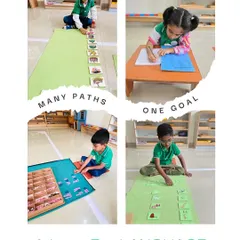
Nurturing a Love for Language through Montessori Methods
Learning Through Joyful Discovery
 7
7
Snapshots from Our Playful Learning Sessions
Fun with Phonics & Stories Classes
More from Early Childhood Education & Enrichment by Learning Matters
More services by Learning Matters