Learning in Action: Developing Skills Through Play
Play is the serious work of childhood. At Learning Matters, we turn natural curiosity into skill-building adventures, focusing on process over product to help your child grow with joy.
Using child-safe scissors to snip spinach leaves is a practical life activity that builds serious skills. This simple, focused task strengthens hand muscles, refines hand-eye coordination, and fosters a sense of independence and concentration.
This occupational therapy engagement focuses on developing a tripod grasp, a key fine motor skill for writing. By using clips to pick up and sort objects, the child strengthens intrinsic hand muscles and improves precision.
In this occupational therapy session, a child explores different textures, moving from dry flour to oily sooji. Hiding beads to be strung on a skewer adds purpose to the play, building tactile tolerance and fine motor skills simultaneously.
A child practices writing numbers on a whiteboard. We see this not as a test, but as a developmental stage. Reversed numbers and uneven lines are milestones, showing a brain that is learning to coordinate hand, eye, and an understanding of symbols.
Beating a drum is a joyful way to explore rhythm, but it's also a powerful tool for development. This activity builds coordination, supports sensory regulation, and encourages self-expression through music and movement.
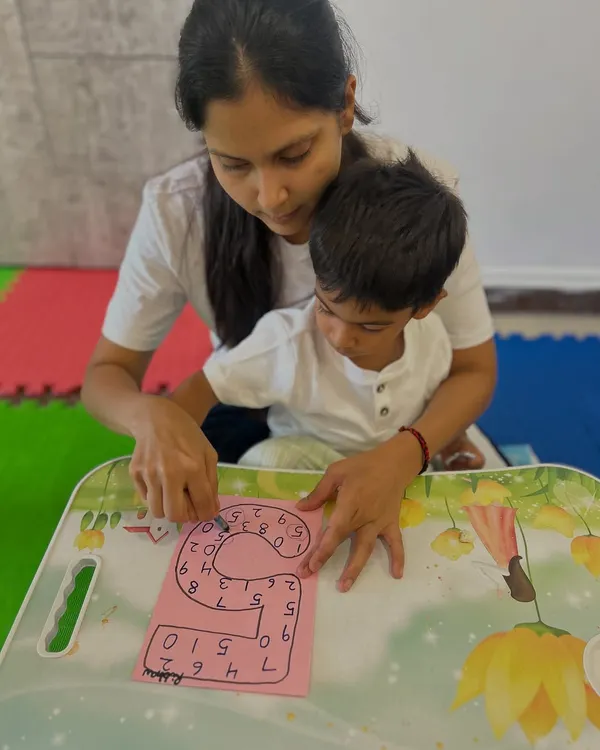
Before a child writes their name, they scribble. These marks are not random; they are the foundations of literacy. This is pre-writing in action, where a child explores lines and shapes, building the motor skills and confidence needed to form letters.
This "How Are You Feeling Today?" chart is a tool for building emotional literacy. By drawing faces to represent feelings, children learn to identify, name, and understand their emotions and those of others, a core component of social-emotional learning.
Cutting playdough with scissors is an excellent way to build hand strength and bilateral coordination. The resistance of the dough provides great feedback to the muscles, preparing hands for more precise tasks like cutting paper.
A simple science experiment with Eno and water captivates a group of young learners. They observe, predict, and collaborate, using language to describe the "bubbly" reaction. This is child-led scientific inquiry at its best.
A simple science experiment with Eno and water captivates a group of young learners. They observe, predict, and collaborate, using language to describe the "bubbly" reaction. This is child-led scientific inquiry at its best.
About Learning in Action: Developing Skills Through Play
We don't use worksheets to teach hand-eye coordination or literacy. Instead, you'll see children snipping spinach leaves, sorting beads with clips, or writing in sensory trays. These are deliberate, muscle-strengthening engagements that build the precise physical control and confidence needed for future academic success, all while the child thinks they are simply having fun.
Children are wired to learn through experience. When you walk into our centers in Green Park, Vasant Vihar, or Max Towers, you will not find children sitting in rows with rote workbooks. You will see them in motion.
Why We Prioritize Process Over Product
Our programs, whether it is our parent-toddler sessions or after-school workshops, focus on the process rather than the result. When a child learns to use a tripod grasp by sorting clips or strengthening their wrists by kneading dough, they are building the physiological foundation required for writing. We see these activities as neuro-affirmative, meaning we adapt to the child, not the other way around.
Building Foundations for Life
- Fine Motor Precision: We use everyday items like spinach leaves, beads, and dough to challenge hand muscles. It is not just messy play, it is neuromuscular training for coordination and strength.
- Emotional Literacy: Through tools like our 'How Are You Feeling' charts, we help children identify and name their emotions. This fosters resilience and self-regulation before they even start formal schooling.
- Scientific Inquiry: Simple experiments, like mixing Eno and water, invite children to observe, predict, and collaborate. They are not memorizing facts, they are learning to think like scientists through active investigation.
Our Philosophy
Inspired by the Reggio Emilia approach, we treat the environment as the 'third teacher.' We use natural materials and light-filled spaces to encourage discovery. Whether your child is 18 months old or 8 years old, our goal is to nurture their inherent curiosity, not to dictate their growth path. If you are looking for a space that values your child’s unique pace, we invite you to join our community.
Similar work from other experts
Browse through Curated picks from other experts on mytribe
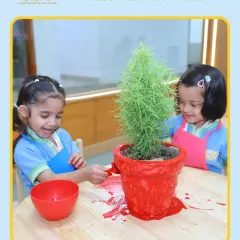
Learning Through Play & Discovery
Hands-On Skill Development Programs for Kids
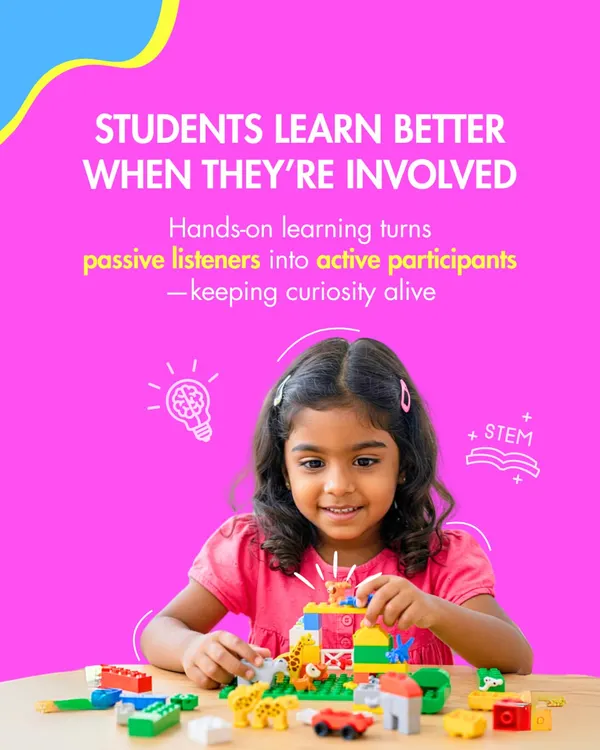 4
4
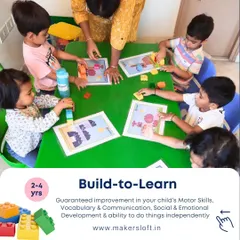
Building Blocks for Early Learners: Hands-on Play in Bangalore & Kolkata
 10
10
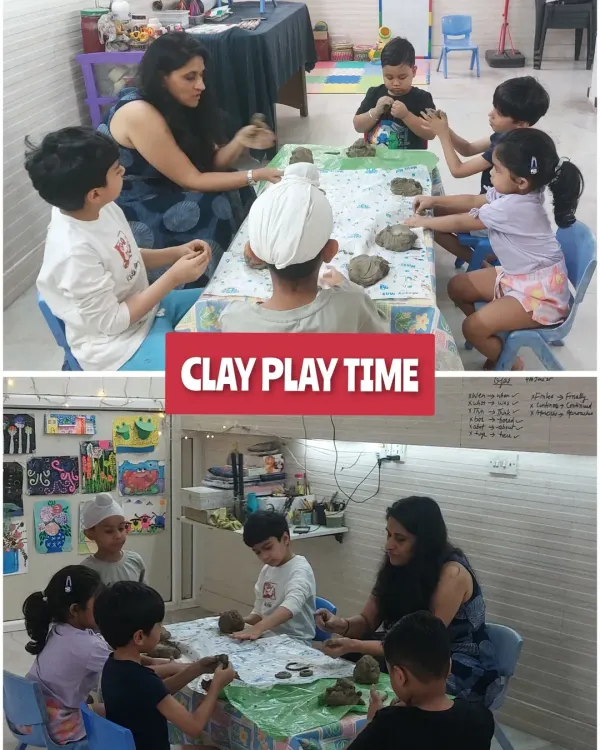
Sensory and Clay Play Classes for Kids
Learning Through Play Activities for Kids
 25
25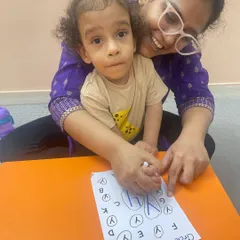
Early Learning and Focused Play Classes for Toddlers
More from Early Childhood Education & Enrichment by Learning Matters
More services by Learning Matters