Photographing Tigers in India's Jungles
The jungle is not just a place to visit. It is a stage where every tiger has a story, from the historic ruins of Ranthambhore to the deep Sal forests of Bandhavgarh.
A classic peek-a-boo moment with a tiger in Bandhavgarh. Using the tree as a natural frame adds depth and a sense of mystery to the portrait.
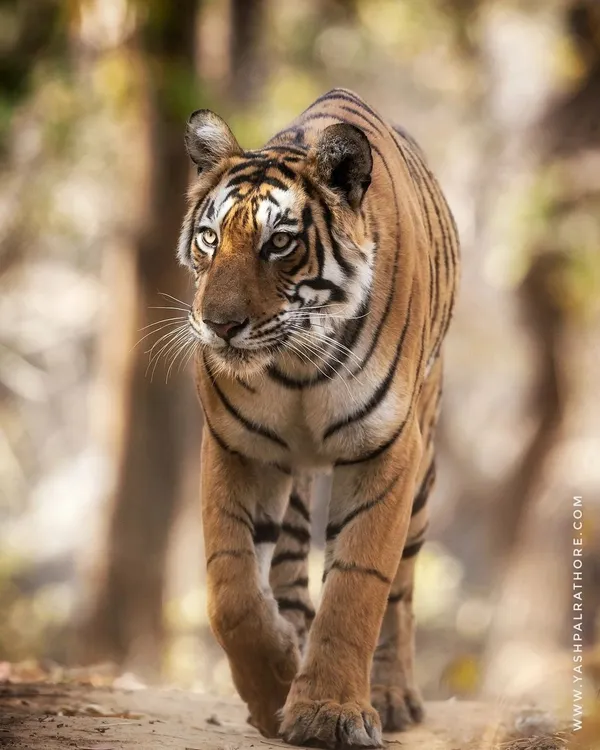
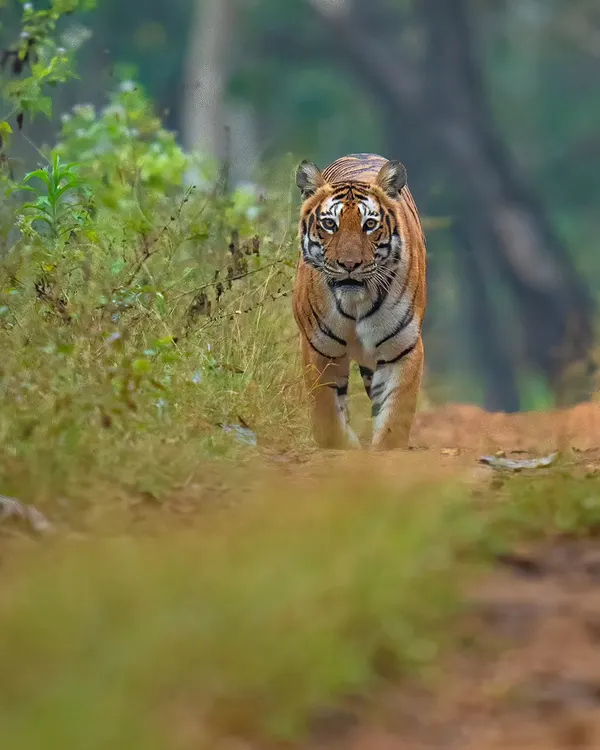
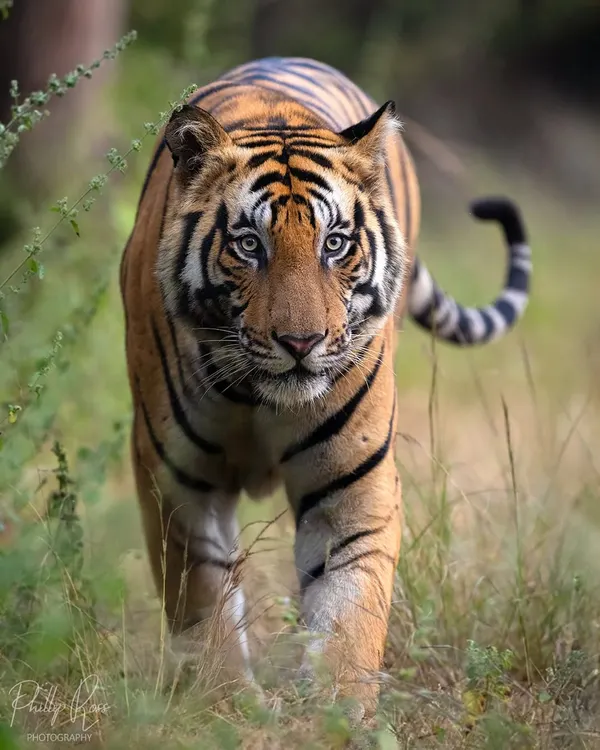
A young tigress, Choti Madhu, walks head-on in Tadoba. Capturing this intense gaze and powerful walk is a signature shot for any wildlife photographer.
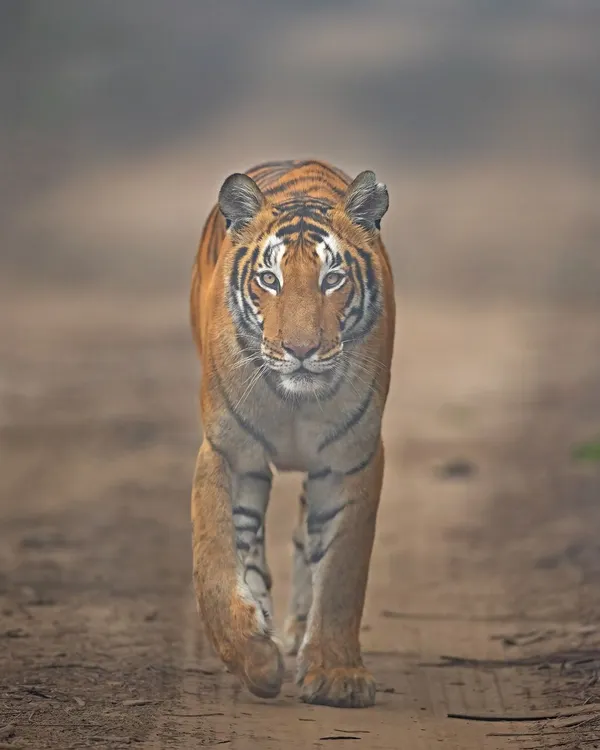
Ganesh, the T-120 tiger, confidently striding down a jungle path in Ranthambhore. The soft, diffused background helps the subject stand out, creating a classic portrait.
Another head-on shot of Choti Madhu from Tadoba, showcasing her determined approach. Each tiger has a unique personality, and my goal is to capture it.
A tiger emerges from the morning mist in Ranthambhore. I teach how to use atmospheric conditions like fog to create moody and dramatic wildlife images.
The focused gaze of a tiger on the move. Notice the slight tongue-out, a small detail that adds character to the portrait.
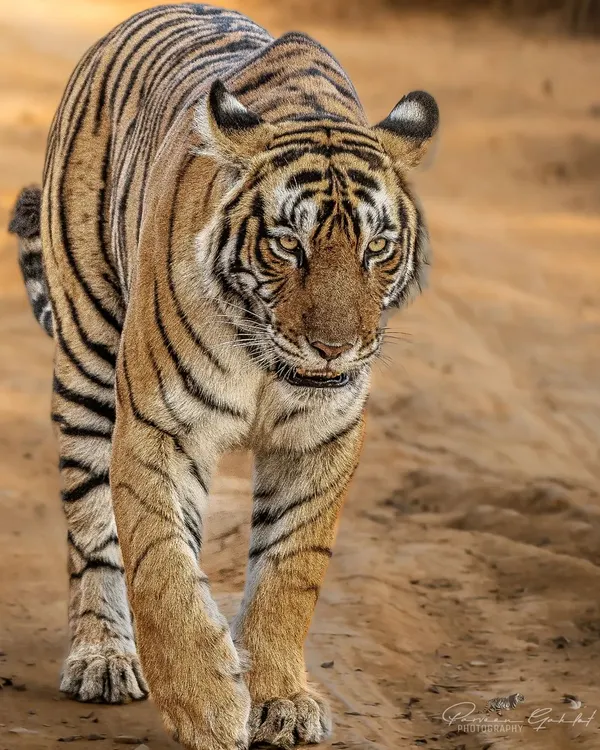
A powerful male tiger walking with purpose in Ranthambhore. The low angle makes the tiger appear even more dominant and majestic.
A different perspective of the tiger in the Tadoba thunderstorm. This wider view shows the scale of the downpour, emphasizing the animal's resilience.
A tiger walks past the ancient ruins of Ranthambhore, a place where nature has reclaimed history.
The tigress Riddhi framed by the iconic "Khemcha Kund" structure in Ranthambhore, blending wildlife with architectural elements.
About Tigers of India's Jungles
I do not believe in mass tourism drives where we just rush from one spot to another. When we track, we look for behavior, not just a snapshot. You will spend your time learning to read alarm calls and anticipating movement in the dense undergrowth, ensuring your images capture the animal's raw personality rather than just their stripes. It is about patience, understanding the light, and knowing when to hit the shutter.
Tracking a tiger is a dance between you and the wild. In my expeditions, we focus on the nuances that make a great image. Whether it is the ancient, mossy ruins of Ranthambhore providing a cinematic backdrop for a walk, or the thick Sal forests of Bandhavgarh where light filters through the canopy in golden shafts, the environment is just as important as the subject.
Where We Shoot
- Ranthambhore National Park: Famous for its architectural ruins and tigers that walk along forts and lakes. It is where history and nature collide.
- Bandhavgarh National Park: This is where you find the dense, deep-jungle feel. The bamboo and Sal trees here create a mood that is moody and intense.
- Tadoba Andhari Tiger Reserve: My go-to for raw action. We often run full-day safaris here to bypass the crowds, giving us the dawn to dusk advantage to track predators without the morning exit pressure.
The Technique
Photography here is not about pointing a lens and praying. We talk about:
- Anticipation: Listening to langur alarm calls and reading pugmarks to know where the cat will emerge.
- Light: Using the harsh midday sun to create contrast or waiting for the blue hour for that ethereal, misty look.
- Composition: Framing the tiger within its habitat to tell a story of scale and power, rather than just zooming in for a portrait.
Come with the hunger to learn, and leave with frames that speak louder than just pixels. This is not a tour; it is a workshop in the wild.
Similar work from other experts
Browse through Curated picks from other experts on mytribe
 37
37Tiger Photography Expeditions: Learn to Track and Shoot
 23
23
Big Cats of the Jungle: Tiger & Leopard Photography
 8
8
The Tigers of India: Wildlife Photography Expeditions
 54
54
Tracking Tiger Legends: The Living History of the Wild
 15
15
Bengal Tiger Photography Tours & Wildlife Safaris
 24
24
Big Cat Photography Expeditions
More from Wildlife Photography Tours & Safaris by Kapil Sharma
More services by Kapil Sharma