Personalized Therapy Sessions for Children
We design custom therapy plans—from ABA to speech—focused on your child’s unique needs. We start exactly where they are, using play-based methods to build confidence and essential life skills, one step at a time.
A high-five after a successful puzzle activity is more than just a celebration. It's a key moment in our language therapy sessions, building confidence and reinforcing positive learning behaviors in a one-on-one setting.
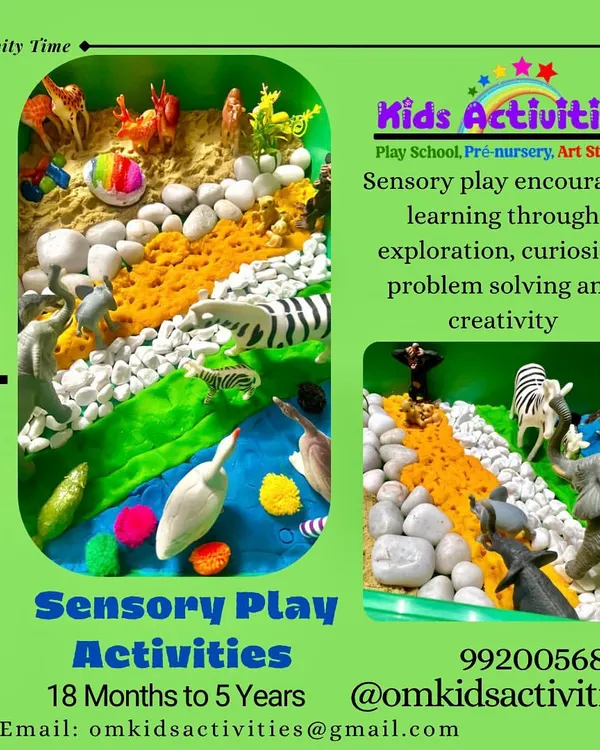
This ABA therapy session uses a hands-on activity to improve focus and fine motor skills. The child is guided to place colorful stones along a path, a task that builds concentration and hand-eye coordination.
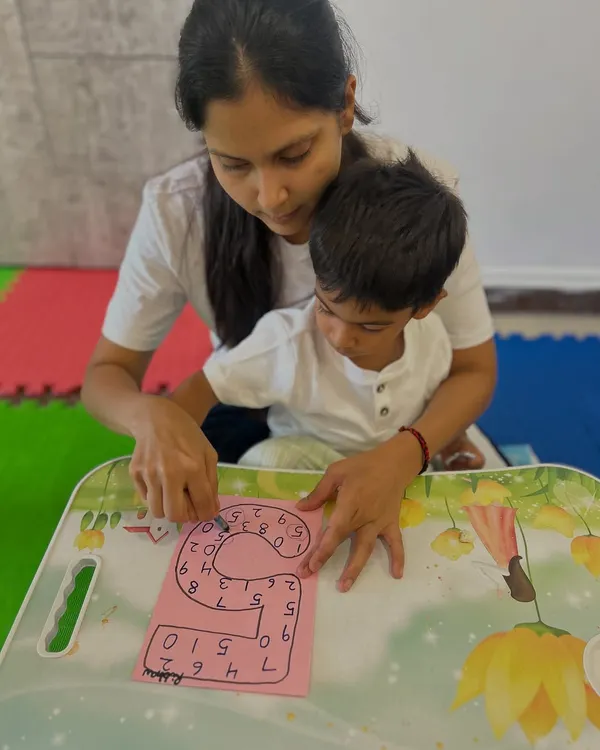
In our special education sessions, we focus on foundational academic skills. Here, a therapist works with a child on pre-writing exercises using tactile materials to improve grip and cognitive understanding before moving to paper.
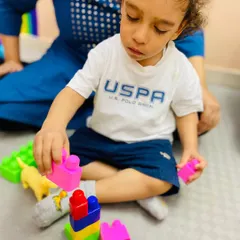
We break down complex goals into small, achievable steps. In this occupational therapy exercise, a child focuses on stacking blocks, which enhances fine motor skills, concentration, and early math concepts like counting.
This picture card matching activity is a core part of our visual learning program. It helps improve a child's memory, visual scanning abilities, and object recognition, with a toy airplane used as a fun reinforcer.
This brain gym activity, known as the "lazy 8," is a simple yet powerful exercise. Tracing the infinity symbol with both hands helps calm a restless mind, improve focus, and enhance visual tracking skills.
Following instructions is a key goal in our sessions. Here, a therapist uses the "Head, Shoulders, Knees and Toes" rhyme to make learning body parts and following commands an enjoyable and interactive experience.
We use sensory tools to create a focused learning environment. In this occupational therapy session, a lava lamp provides gentle visual stimulation, helping the child remain calm and engaged with the therapist.
This object imitation activity is fundamental for developing early communication and cognitive skills. The therapist demonstrates an action, and the child learns to copy it, building a foundation for more complex learning.
Pretend play is a powerful tool in speech therapy. By imitating the act of pouring and drinking tea, this child practices social routines, turn-taking, and the language associated with daily activities in a guided setting.
About Personalized Therapy Sessions
Before we dive into any complex therapy, we focus on baseline readiness. If your child struggles to sit, follow simple instructions, or maintain eye contact, that is where we start. Our therapists use play-based techniques—like turning a structured task into a 'High five' moment—to ensure your child feels secure and engaged, not overwhelmed, before we begin formal interventions.
Our Approach to Growth
We understand that every child has a unique pace. That is why we avoid cookie-cutter formulas. Whether your child needs support with autism, ADHD, or simply finding their focus, we start with a 60 to 90-minute assessment to map their behavioral baseline—from sitting tolerance to response to instructions.
Building Foundations Through Play
Learning feels like play here. By using techniques like Applied Behavior Analysis (ABA) within a fun, low-pressure environment, we turn therapy into an engaging activity. Whether it is sorting colored blocks to improve fine motor skills or using picture cards for visual scanning, every activity has a purpose. We believe in celebrating the small wins: a sound, a word, or a successful 'High five' are all milestones we cherish together.
Why Personalized Plans Matter
- Individualized Goals: We tailor plans to meet your child exactly where they are, whether that involves communication, daily living skills, or emotional regulation.
- Supportive Environment: Our centers are designed to be safe, using sensory-friendly tools to keep your child comfortable and ready to learn.
- Parental Involvement: We believe in working as a team. We guide parents on how to continue the support at home, ensuring the progress we make in the session carries over into daily life.
Our therapists are trained to recognize when a child needs a break or a shift in activity. We prioritize a child’s emotional comfort over completing a task, because we know that when a child feels happy and understood, they are naturally more willing to learn.
Similar work from other experts
Browse through Curated picks from other experts on mytribe
Personalized One-on-One Sessions for Kids
Language and Communication Support Through Play
 5
5
Early Intervention and Developmental Support for Young Children

Pediatric Physiotherapy & Special Needs Care
 25
25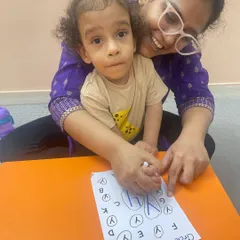
Early Learning and Focused Play Classes for Toddlers
 6
6
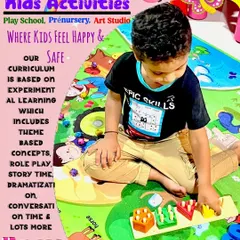
Hands-On Sensory Exploration
More from Behavioral Therapy by Sankalp and Gurukul
More services by Sankalp and Gurukul