Language and Communication Support Through Play
We believe children find their voice when they feel safe and understood. Our approach to communication is patient and play-driven, focusing on building connection before correcting patterns.
Communication is built through connection. Here, a therapist and child use drawing and a familiar song to practice sounds, gestures, and shared attention, creating a joyful foundation for language development.
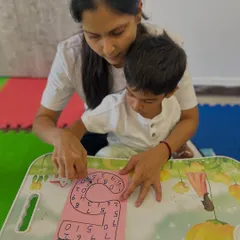
Before children write letters, they scribble. These marks are not random; they are the beginning of literacy. This is a child communicating ideas and building the fine motor skills and confidence needed for future writing.
Number and letter formation develops in stages. Reversed numbers or uneven lines are not mistakes, but important milestones in a child's journey toward mastering the fine motor control and spatial awareness required for writing.
"How are you feeling today?" This simple check-in helps children build an emotional vocabulary. By drawing their feelings, they learn to recognize and name their internal states, a critical first step in emotional regulation and communication.
This infographic explains Emergent Literacy, the foundational awareness that language has rhythm, structure, and meaning. We nurture this by playing with sounds and finding joy in stories, long before formal reading begins.
This post announces an Instagram Live session focused on decoding language milestones. We believe in empowering parents with expert advice and practical tips to support their child's communication journey.
About Language & Communication: Finding Your Voice
Before a child says a word, they communicate through intention. We don't treat speech as a task to be checked off a list. In our sessions, we might spend forty-five minutes exploring the rhythm of a song, the texture of clay, or the meaning behind a scribble because language emerges when a child feels safe, seen, and connected enough to express their inner world.
Building Communication Through Connection
At our center in Green Park, we observe that communication is not just about articulation or vocabulary; it is about the desire to connect. Many families come to us worried about 'milestones,' but we focus on the foundation that makes those milestones possible: regulation, trust, and shared attention.
Our Approach to Speech & Literacy
- Emergent Literacy: We don't use flashcards. We use stories, songs, and sensory experiences to show children that language has rhythm and meaning. This is the stage where children realize their marks on paper are symbols, and their sounds have power.
- Neuro-Affirmative Support: We don't fix children. If a child communicates through gestures, sounds, or alternate methods, we meet them there. We work on speech and language within the context of their unique neuro-profile.
- Parental Partnership: Communication doesn't stop when the session ends. We provide practical strategies you can use at home, during dinner, or while playing, ensuring the support is consistent and low-pressure.
Why Process Matters
When we look at a drawing or listen to a child play, we are looking for the 'why.' Are they using that line to represent a thought? Are they waiting for a turn in the song to practice shared focus? These are the moments where real learning happens. By valuing the process over the product, we lower the anxiety around speech, allowing confidence to grow naturally.
Whether your child needs support with articulation, social communication, or early literacy foundations, our team in New Delhi is here to facilitate that journey with patience and professional insight.
Similar work from other experts
Browse through Curated picks from other experts on mytribe
Learning Through Play for Speech and Development
Fun with Phonics & Stories Classes
Playful Phonics & Brain Gym Classes
Play-Based Learning Programs for Kids
Little Voices, Big Stage: Building Child Confidence
Early Reading & Writing Programs for Kids
More from Child Therapy & Learning Support by Learning Matters
More services by Learning Matters