Master Sprint Technique and Speed Drills
I'm Amit Khanna, India's former fastest man. I don't just teach you to run; I teach you to break your personal best by fixing your technique from the ground up.
The race is often won or lost in the first few seconds. I teach my athletes the three most common mistakes beginners make at the start, focusing on correct hand and leg opposition, foot placement, and body angle to ensure an explosive takeoff.
Did you know that running on the outer edge of your lane in a 200m or 400m race can add up to 3.5 meters to your distance? I teach my athletes to run the tangent on the curve, minimizing distance and maximizing speed.
Many runners think the first 10 steps of a 100m sprint should be short and quick. That's a myth. I teach that the first steps must be powerful and long, pushing the ground away to build momentum from zero speed.
A classic block start drill. The focus here is on exploding out of the blocks and maintaining a powerful drive phase for the first 20-30 meters.
This is a great workout to improve acceleration. By giving some runners a head start, the chasers are forced to accelerate faster to catch up, creating a competitive and effective training environment.
Mastering the 200m curve is a skill. We drill the slight inward lean, compact arm swing, and foot strike needed to maintain speed through the turn and explode into the final straight.
Speed drills on grass. These short, explosive sprints help improve stride frequency and ground contact time, which are essential for building top-end speed.
Sprinting on a curve is about control and technique. We practice maintaining a slight inward lean, driving the arms efficiently, and using the inside leg for stability to explode into the straight.
A simple but effective drill to improve acceleration. The slower runner gets a head start, forcing the faster runner to accelerate at their maximum potential to overtake them.
This is my "catch up" trick for acceleration. By placing faster runners behind, they get a moving target to chase, pushing them to extend their limits and improve their acceleration phase.
About Sprint Technique & Speed Drills
Most runners think the first 10 steps of a 100m sprint should be short and quick. That's a mistake. You need powerful, long steps to push the ground away and build momentum from zero. We fix these biomechanical flaws, like your foot placement and arm swing, so you stop wasting energy and start cutting down your time.
Decoding the Drive Phase
The first 30 meters of a 100m race are the backbone of your performance. If your start is shaky, you spend the entire race playing catch-up. In our sessions at IIT Delhi and Vasant Kunj, we use resistance bands and drag sleds to force you into the correct posture. We look at your block positioning, your reaction time, and that initial drive phase to ensure every ounce of power goes into moving you forward, not just up.
Mastering the Curve
Running a 200m or 400m race is different from a straight dash. If you run wide on the curve, you can add 3.5 meters to your total distance. I teach my athletes to 'run the tangent'—leaning in from the ankles, not the waist. We drill compact arm swings and foot strikes on the inside edge to keep you tight to the line and maintain speed through the turn so you explode into the straightaway.
Why Technique Beats Raw Speed
At Go Speed, we don't just tell you to run faster. We fix your gait. Whether it's flat-foot running, improper arm opposition, or just a lack of rhythm, we use video analysis to show you exactly where you're losing milliseconds. We train 6 days a week for competitive athletes, focusing on cycle-based planning to ensure you peak exactly when it's time for state or national trials. If you are ready to put in the work—and I mean real, tough work—we will help you find that extra gear.
Similar work from other experts
Browse through Curated picks from other experts on mytribe
Sprint & Speed Development Coaching
Track Training and Speed Development
Sprint and Speed Training for Athletes in Gurugram
Running Form and Speed Training in Noida
 7
7
Hurdle Mastery Training
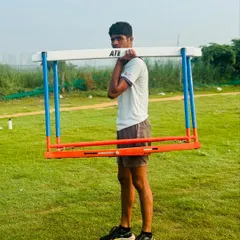
Hurdle Training in Greater Noida: Master Your Technique
More from Athletics Coaching (Track & Field) by Amit Khanna
More services by Amit Khanna