Screen-Free Coding & Computational Thinking Workshops
See how we replace screens with logic, mazes, and real-world problem-solving for kids aged 5 to 12. We teach them to think like coders, not just follow commands.
This is what my workshops are all about: kids gathered together, learning through play. Here, a group is using a floor mat and game pieces to understand coding logic, all without a single screen in sight. It’s collaborative, fun, and builds a strong foundation for computational thinking.
In this video, you'll see my unplugged coding activities in action, from kids navigating floor mazes to solving logic puzzles at the table. A parent shares her experience, explaining how my approach teaches children to actually think like problem solvers, not just follow on-screen instructions.
This collage captures the essence of my screen-free coding program. You can see children engaged in various hands-on activities that build logical thinking, from floor games that teach sequencing to block puzzles that introduce algorithmic concepts, all designed for young, curious minds.
Here, a young student from my senior group (6 to 9 years) is deeply focused on a grid-based puzzle. This activity teaches spatial reasoning and how to follow sequential instructions, which are fundamental skills in coding. It shows how I tailor activities to be age-appropriate and challenging.
This short video gives you a glimpse into the core components of my workshops. I cover everything from engaging unplugged activities and a basic introduction to coding, to algorithm debugging and understanding the language of binary, all while building persistence and confidence.
I use simple, everyday examples to explain complex ideas. This image shows how even a daily routine like brushing your teeth is an algorithm, a set of step-by-step instructions. It’s a perfect example of how I make computational thinking relatable and easy for kids to grasp.
Nothing makes me happier than hearing from parents. This testimonial from Zynah's mother highlights the impact of my screen-free approach on building logical concepts, problem-solving skills, and creativity. It’s wonderful to see students take ownership of their learning.
This graphic explains a core belief behind my program. In an age where AI can provide answers, I focus on teaching skills that cannot be replaced: critical thinking, decision-making, and real-life problem-solving. My goal is to prepare children to think beyond technology, not just use it.
About Featured
When I say screen-free, I mean it. We use large floor grids where kids physically act out algorithms—basically becoming the 'program' themselves to understand sequences, loops, and bugs before they ever touch a keyboard. It is messy, loud, and incredibly effective at teaching them how to think through a problem.
Most coding programs focus on getting a child to drag blocks on a screen. At Code-Riite, we focus on the logic that makes the code work in the first place. This is what computational thinking is all about.
Why Screen-Free Matters
Kids are already glued to screens for entertainment and school. By stripping away the device, we force them to engage with the core mechanics of coding. They learn pattern recognition, sequence building, and debugging by playing games, folding origami, and solving puzzles. They aren't just memorizing commands, they are learning how to break big, complex problems into small, manageable steps.
What Your Child Will Learn
We tailor our workshops to build real-world skills that apply far beyond computer science:
- Algorithmic Thinking: Learning that daily routines, like brushing teeth, are actually step-by-step algorithms.
- Debugging Logic: Using 'mystery games' to find out why a sequence didn't work and how to fix it.
- Spatial Reasoning: Navigating physical floor mazes to understand how robots and characters move.
- Binary Basics: Using colored beads and bracelets to understand the 0s and 1s that form the foundation of tech.
Whether you are looking for a workshop at our center or want us to come to your society in Mumbai, we keep batch sizes small (approx 1:8 ratio) to ensure every child gets the personalized attention they need to have that 'aha!' moment.
Similar work from other experts
Browse through Curated picks from other experts on mytribe
Coding Without Screens: Logic & Robotics for Kids
Hands-on Coding Classes for Kids and Teens
Fun Online Coding and Math Classes for Kids
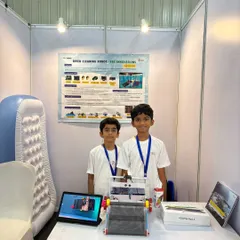
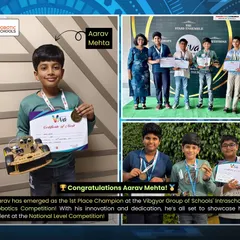
Robotics & Coding Classes for Kids in Bangalore
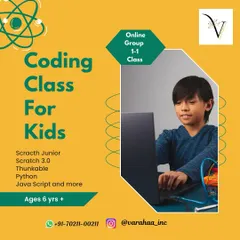
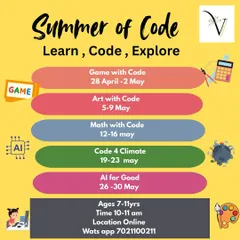
Coding & App Development Classes for Kids
Coding & Game Development Workshops for Kids in Noida
More from Screen-Free Computational Thinking Workshops by Code-Riite
More services by Code-Riite